
8+ years growing brands on KPIs, now with AI
Accessory-brand growth, measured in ROAS
We turn low-AOV impulse buys into repeat customers with creative testing and retention built for accessories.
Google Ads, Meta & TikTok partners · 8+ years · brands scaled from $0 to $500k/mo


Get your free Growth Gap Analysis
Senior strategist review · response within one business day
Prefer to reach out directly?
The Challenge
Running an Accessory Brand's Marketing Is Harder Than It Looks From the Outside
Your Meta dashboard refreshes every few minutes and you're watching it. A ROAS dip at 9 AM means you're pulling spend by noon, renegotiating creative briefs by 2 PM, and second-guessing your entire channel mix by dinner. That's not a bad day. That's Tuesday.
The economics of accessories are unforgiving. Your median AOV on paid channels sits somewhere around $74, and the median CPA on Meta across DTC brands in 2025 was $38.19. That math leaves almost no room for error: one weak creative rotation, one attribution gap, one over-discounted BFCM, and your contribution margin (the number that actually tells you if you're profitable, after COGS, refunds, and ad spend) collapses fast.
Seasonality compounds the pressure. Q4 is your Super Bowl. Accessories are a top gifting category, and it can represent 40%+ of your annual revenue, but November CPMs spike 41% and December follows close behind. If you haven't identified your top-performing creative assets 6–8 weeks before the peak, you're paying premium prices to run B-tier ads against competitors who did the work in September.
And then there's the repeat-purchase problem. Unlike consumables, accessories have a 25–35% repeat rate for most brands. That means the majority of customers you acquire through paid media will never buy again. Every dollar of CAC has to be recouped quickly, typically within 60–90 days, which means your email and SMS retention program isn't a nice-to-have. It's the difference between a profitable brand and one that's growing revenue while quietly bleeding margin.
The agencies you've hired before didn't understand any of this. They talked about reach, impressions, and 'brand awareness.' They reported campaign-level ROAS instead of blended ROAS or MER. They ran the same audience targeting playbook they use for everyone else. And when you asked hard questions about contribution margin, they changed the subject.

The Opportunity
The Accessory Brands Winning Right Now Have One Thing in Common: Creative Velocity
The top 10% of DTC accessory brands on Meta aren't winning because they found a secret audience or cracked some targeting trick. They're winning because they test more than 20 new creative assets every month, and they find their hooks, hold rates, and winning angles before their competitors even notice the trend.
The gap between a 2.9x blended ROAS and a 6.0x blended ROAS, which top performers actually hit, isn't audience strategy. It's creative strategy. The brands at the top are running UGC that feels authentic enough to stop a scroll, iterating on hooks weekly, and using performance data to kill losing angles fast instead of letting them drain budget for a month.
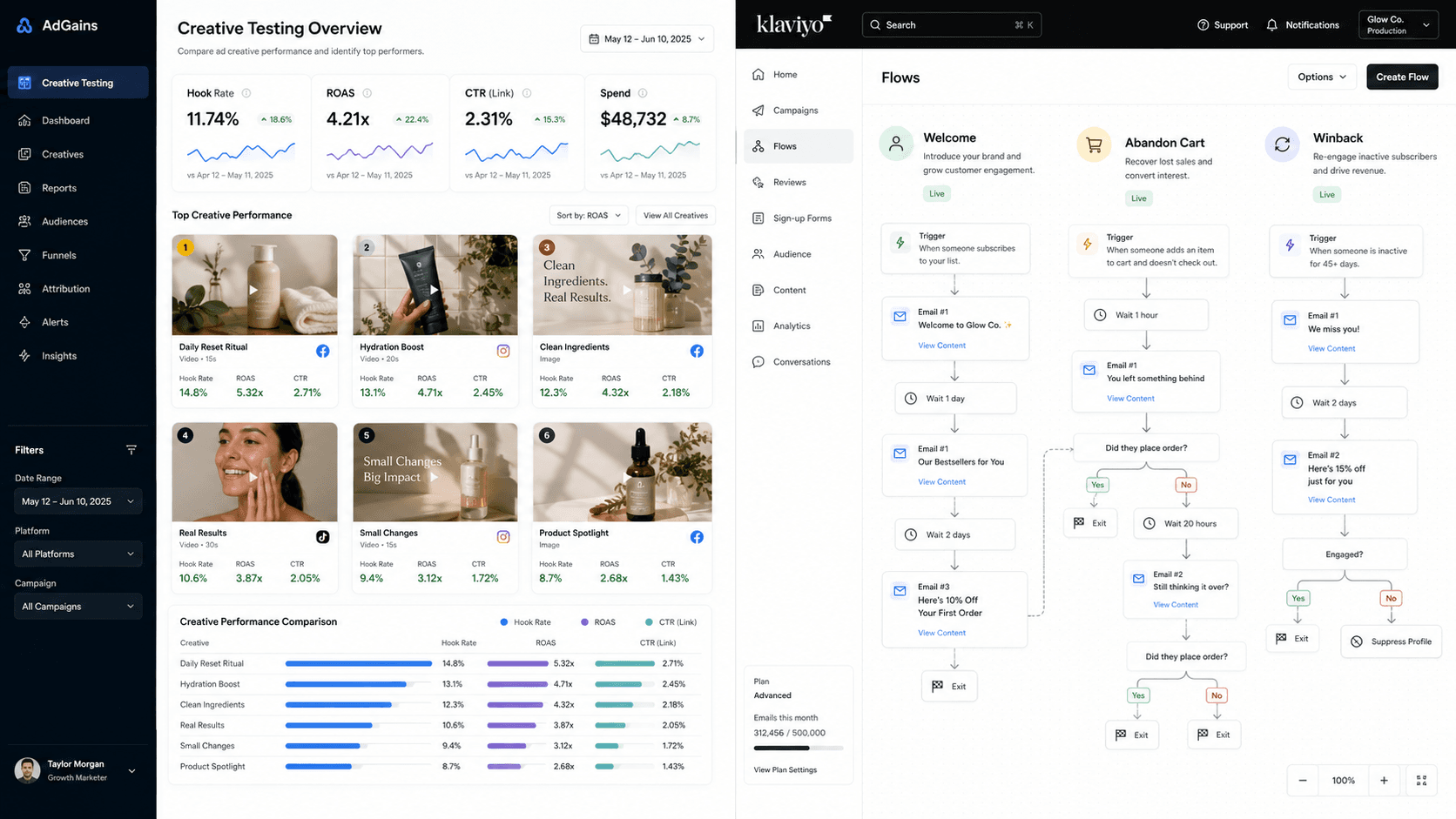
There's also a significant retention opportunity most accessory brands leave on the table. Email marketing averages around 36:1 ROAS because it targets people who already bought from you at near-zero marginal cost. Most brands have the Klaviyo account. Few have the flows (welcome, abandon cart, post-purchase upsell, winback) actually built and optimized. That's recoverable revenue sitting idle.
Valentine's Day and Mother's Day are gifting spikes that jewelry and fashion accessory brands should be engineering campaigns around months in advance, not scrambling to activate two weeks out. January, when CPMs run about 22% below annual averages, is one of the best windows of the year to acquire new customers cheaply and build the retention program that makes those customers profitable.
The brands that will own this category in 24 months are the ones building systematic creative testing and retention infrastructure now, while most competitors are still running static ad sets and hoping Q4 bails them out.
What Most Get Wrong
What Most Accessory Brands (and the Agencies They Hire) Get Wrong
Reporting campaign ROAS instead of blended ROAS
A campaign showing 4x ROAS looks great until you account for the organic and direct revenue it's cannibalizing. Blended ROAS, total revenue divided by total ad spend, is the only number that tells you if your marketing is actually profitable. Agencies that report campaign-level ROAS without MER context are hiding the real picture.
Running creative until it dies instead of testing before it fatigues
Creative fatigue in accessories is fast: your audience is small, your CPMs are rising, and the same UGC clip loses its hook rate within weeks. Brands that test one or two new assets per month are always behind. By the time they notice performance declining, they've burned budget on a fatigued rotation and have nothing ready to replace it.
Over-investing in narrow interest-based audience targeting
Meta's algorithm has made granular interest targeting largely obsolete. Brands using broad targeting consistently achieve 29–37% better ROAS than those still building detailed interest stacks. Agencies pitching 'proprietary audience segmentation' as their edge are selling a 2019 playbook.
Ignoring email and SMS until the brand is 'big enough'
With a 25–35% repeat rate and a $38 median CPA, accessories brands cannot afford to treat every customer as a one-time transaction. Without a functioning Klaviyo welcome series, abandon cart flow, and post-purchase sequence, you're paying to acquire customers and then watching them disappear, while your contribution margin stays thin.
Going into Q4 without pre-tested creative
November CPMs spike 41%. Running creative testing during BFCM is expensive and slow: the algorithm needs time to optimize. Brands that don't identify their top performers in September and October are paying Q4 prices to learn Q4 lessons, which destroys the margin advantage the gifting season is supposed to create.
Why Now
Why the Next 12 Months Are a Defining Window for Accessory Brands
The accessory category is crowded, but it's not equally contested. Most brands are running the same Meta playbook (broad creative, seasonal pushes, a Klaviyo account with three flows) and wondering why their blended ROAS is stuck at 2.9x while they keep hearing about brands hitting 5x or 6x.
The gap is now being created by AI-assisted creative operations. The brands pulling ahead are testing 20+ creative assets per month not because they have bigger teams, but because they've built systems that generate, test, and iterate on creative faster than any manual process allows. They're catching attribution errors that inflate their reported numbers. They're shifting budget toward winning angles in days, not weeks.
Most of your direct competitors haven't built this. They're still briefing one UGC creator at a time, waiting 3 weeks for content, running it for 6 weeks, and then starting over. That's a 9-week creative cycle against a market that rewards weekly iteration.
The gifting calendar doesn't wait. Valentine's Day, Mother's Day, and Q4 are fixed dates. The brands that build systematic creative and retention infrastructure before the next gifting spike will own the high-intent search and social inventory at the moment CPMs justify the investment. The ones that wait will pay more for worse results.
This is the window. Not because AI is new, but because the operators who know how to use it in performance marketing, not as a gimmick but as a production and analytics multiplier, are just now separating from the field.
The Mechanism
Where AI Actually Creates Edge for Accessory Brands (and Where It Doesn't)
Real productivity, not AI theater. Here's where it actually moves a number for accessory brands.
Creative
What AI does: AI-assisted creative production and systematic hook testing: generating multiple concept variations, scripting UGC briefs, and analyzing hook rate and hold rate data to identify which angles stop the scroll before scaling spend behind them.
The result: Test 15–20+ creative angles per month instead of 3–4, identify your top performers before CPMs spike, and kill losing creative in days instead of weeks.
Why it matters here: In accessories, where creative fatigue hits fast and visual identity is the brand, creative velocity is the primary performance lever. The brands at 6x blended ROAS aren't smarter; they're testing more. AI compresses the production cycle without sacrificing the aesthetic control founders care about.
Analytics
What AI does: AI-powered attribution modeling that reconstructs the real customer journey, from a TikTok view to a Google branded search to a direct purchase, so you can see blended ROAS and MER accurately instead of relying on last-click numbers that overcount Meta and undercount everything else.
The result: Stop making budget decisions based on inflated campaign ROAS. Know which channels are actually driving new customer revenue versus cannibalizing organic.
Why it matters here: Attribution is broken by design in multi-touch accessory purchases: a customer sees an Instagram ad, searches your brand name two days later, and buys direct. Without accurate modeling, you'll cut the channel that actually drove the sale and scale the one that just claimed credit.
Paid Social (Meta & TikTok)
What AI does: AI-driven budget pacing and bid optimization across Meta and TikTok, shifting spend toward winning creative and high-intent placements in near real time, and pulling back from fatiguing assets before they drag down account-level performance.
The result: Budget follows performance signals daily instead of sitting in a static allocation decided at the start of the month.
Why it matters here: In a category where Q4 CPMs spike 41% and January CPMs drop 22% below average, flat monthly budgets are money left on the table or burned at the wrong time. Dynamic pacing is the difference between owning the gifting season and overpaying for it.
What AI does: AI-optimized Klaviyo flow sequencing (welcome series, abandon cart, post-purchase cross-sell, and winback) with send-time optimization, subject line testing, and product recommendation logic built around purchase history and browsing behavior.
The result: Turn a 25–35% repeat rate into a retention engine that generates revenue at near-zero marginal cost, improving CAC payback period without increasing ad spend.
Why it matters here: Email averages around 36:1 ROAS because it targets people who already know your brand. For an accessories brand where most paid-acquisition customers never buy twice, a functioning retention program is the single highest-leverage place to improve contribution margin.
Conversion Optimization
What AI does: AI-assisted landing page and product detail page analysis that identifies friction points in the purchase flow, tests social proof placement, optimizes for mobile (where most accessory purchases originate from social traffic), and improves the path from ad click to completed checkout.
The result: More revenue from the traffic you're already paying for, without increasing ad spend.
Why it matters here: With a $38 median CPA and a $74 median AOV, there is almost no margin for a leaky funnel. A 10% improvement in site conversion rate has the same effect on blended ROAS as a 10% reduction in CPMs, but it costs nothing in media spend to capture.
Ready to see what this looks like for your accessory brands business?
No obligation. A senior strategist will show you exactly where the wins are.
The Strategy
What a Real Advertising Strategy Looks Like for a DTC Accessory Brand
The strategy for an accessory brand is built around three things in this order: get the measurement right, build creative infrastructure, then scale what's working.
Start with measurement. If your blended ROAS number isn't trustworthy, if you're relying on Meta's reported ROAS and calling it good, every budget decision downstream is built on a guess. Before we scale anything, we establish a clean MER baseline: total revenue divided by total ad spend, tracked weekly, with multi-touch attribution modeling layered in so we understand which channels are actually acquiring new customers versus claiming credit for purchases that were going to happen anyway.
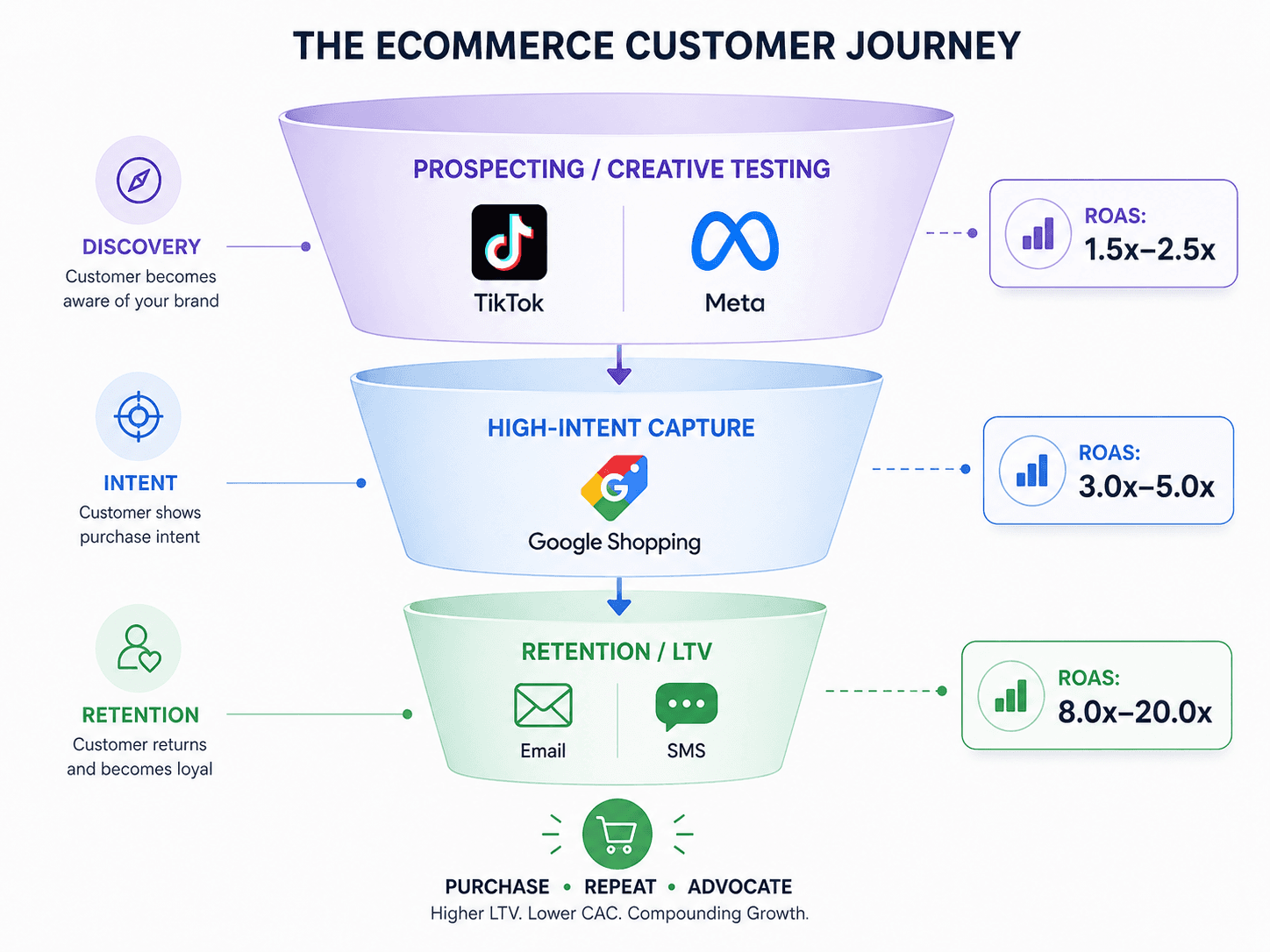
Then build the creative engine. Meta and TikTok are the primary prospecting channels for accessories: Meta for reach and retargeting depth, TikTok for top-of-funnel discovery and TikTok Shop impulse conversion. Both channels reward creative velocity above almost everything else. The strategy is to run a consistent creative testing cadence: 15–20 new assets per month, each with a distinct hook, tested for hook rate and hold rate in the first 48–72 hours, with budget shifted toward winners and losers killed fast. Google Shopping and PMax run in parallel to capture high-intent branded and category searches ('gold hoop earrings,' 'leather crossbody bag gift'); these convert at higher ROAS and anchor the blended number.
Retention runs simultaneously from day one, not after the paid channels are 'figured out.' Klaviyo welcome, abandon cart, post-purchase, and winback flows are built and optimized before we scale acquisition spend, because the math only works if a meaningful percentage of paid-acquired customers buy again.
The gifting calendar governs the pacing. Creative testing for Valentine's Day starts in December. Q4 creative is in testing by September. January's low-CPM window is used for new customer acquisition at better economics. The budget is never flat: it follows the calendar and the data.
The one number that governs this
The governing KPI is blended ROAS (total revenue ÷ total ad spend), tracked weekly alongside contribution margin. Campaign-level ROAS is a diagnostic tool, not the scorecard.
How We Help
Here's Exactly What We'd Build for Your Accessory Brand
We'd start by getting your measurement right, establishing a clean blended ROAS baseline and fixing any attribution gaps that are inflating or obscuring your real numbers. From there, we build the creative and channel infrastructure the strategy calls for, and we run it with the same urgency you'd expect from someone whose success is tied directly to yours.
Paid Social (Meta & TikTok)
Primary prospecting channels for accessory brands. We manage creative testing cadence, broad-targeting structure, budget pacing against the gifting calendar, and TikTok Shop setup where relevant. Every decision is made against blended ROAS, not campaign-level numbers.
Google Ads & Shopping
High-intent capture for branded queries and category gift searches. We build and manage Shopping feeds, PMax campaigns, and branded search to anchor the blended ROAS and capture buyers already in-market for what you sell.
Creative Strategy & Production
We design and manage the creative testing system, briefing UGC, scripting hooks, analyzing hook rate and hold rate data, and iterating weekly so you always have fresh assets entering the funnel before fatigue sets in.
Email & SMS (Klaviyo)
We build or audit your core flows (welcome, abandon cart, post-purchase cross-sell, winback) and optimize send cadence, subject lines, and product recommendations to convert your paid-acquired customers into repeat buyers and improve CAC payback.
Analytics & Attribution
We establish multi-touch attribution modeling and a weekly MER reporting cadence so your budget decisions are based on what's actually driving revenue, not last-click numbers that overcount Meta and miss the full customer journey.
Conversion Optimization
We audit your product pages and checkout flow for mobile friction (where most social traffic lands), test social proof placement, and identify the conversion leaks that are costing you revenue from traffic you're already paying for.
Who's Behind This
Who we are, and what makes us different
Sagum is a performance marketing agency founded in January 2017 in St. George, Utah. We've spent 8+ years growing real brands and being judged on KPIs, not vanity metrics.
We deliberately limit how many clients we take so each one gets senior attention. We treat your numbers like our own, we never run generic playbooks, and your strategy is built for your business, because shouldn't your brand's marketing be custom to your brand?
Sagum.ai is our AI arm: the same proven operators now build AI into the work wherever it creates real edge, not as theater, but as leverage applied with discipline.
- 8+ years growing brands on performance KPIs, not vanity metrics
- Limited client roster, with senior attention on every account
- An extension of your team; your success is tied to ours
- Custom strategy per brand, never a generic playbook
- AI built in where it moves a number; judgment over hype
“Sagum is a performance marketing agency that's spent 8+ years growing brands by treating their numbers like our own. We take on few clients, never run generic playbooks, and now build AI into the work wherever it creates real edge, not hype. Your strategy is built for your business, and our success is tied to yours.”

“Sagum roughly doubled our bottom line. They treat the work like it's their own business.”
Proof
$255k → $555k in 2 months, ROAS 2.9x → 5.5x+
Nickel & Suede
Challenge
Nickel & Suede, a DTC accessories brand, had real creative assets and a loyal customer base, but their paid social performance had plateaued. Their ROAS was stuck at 2.9x and revenue growth had stalled. They needed a systematic creative testing approach and a channel strategy that could scale without sacrificing the brand aesthetic their customers recognized.
What we did
We rebuilt their Meta and TikTok creative testing cadence, introduced a higher volume of concept variations, and shifted budget dynamically toward top-performing assets as performance data came in. Creative decisions were made on hook rate and hold rate data, not gut feel, and the retention layer was tightened to improve repeat purchase rates from paid-acquired customers.
Result
In two months, revenue went from $255k to $555k. ROAS moved from 2.9x to 5.5x, peaking at 7.95x, and site conversion improved 34%. The full case study is at sagum.com/case-studies/.
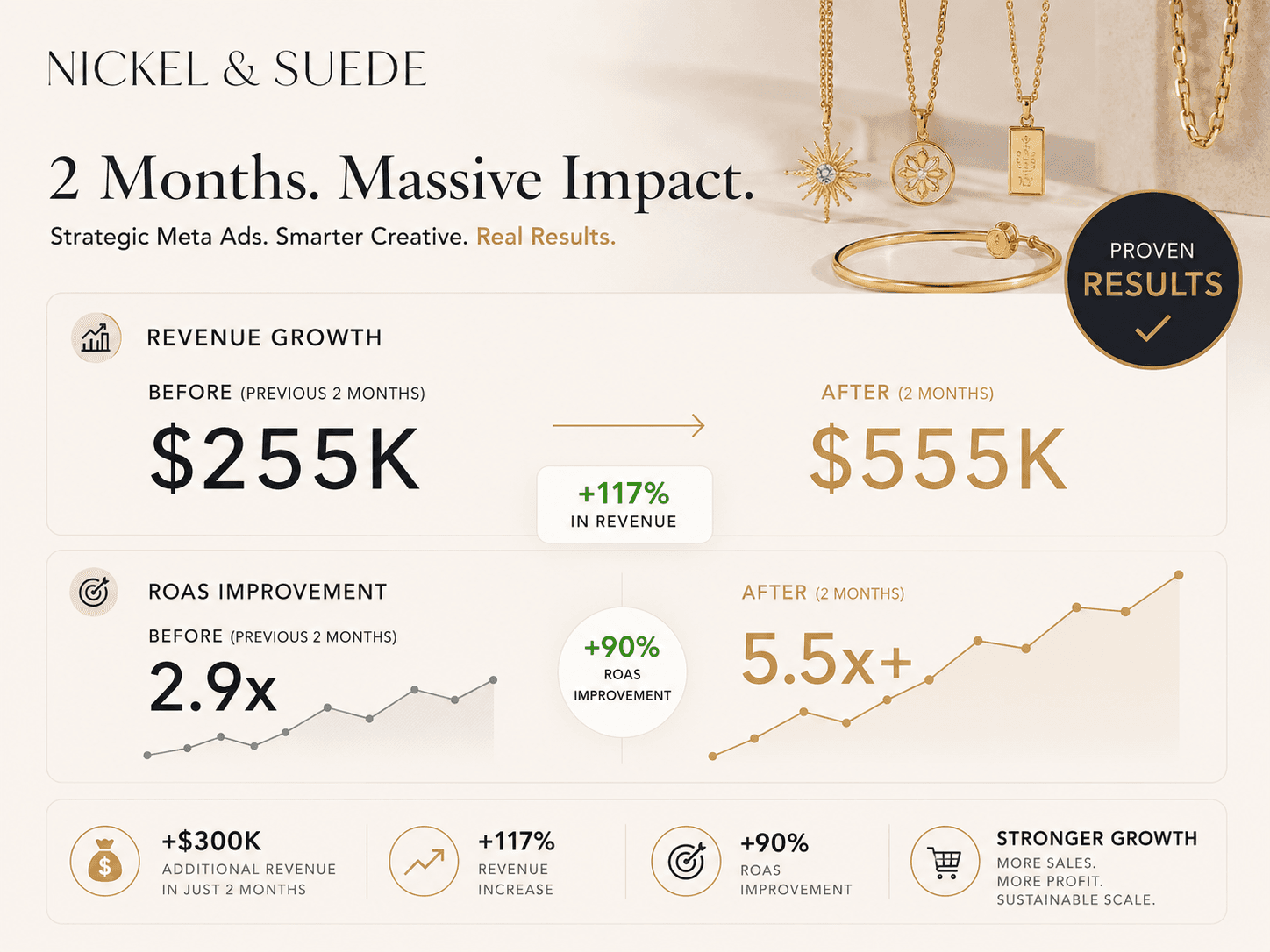
- Revenue
- $255k → $555k (2 mo)
- ROAS
- 2.9x → 5.5x+ (peak 7.95x)
- Site conversion
- +34%
If Your Blended ROAS Is Stuck and You're Not Sure What's Actually Working, Let's Talk
No obligation, no generic pitch deck. We'll look at your actual numbers, tell you where we see the gap, and show you exactly how we'd approach your brand. Built for accessory brands, not adapted from a template.
Sagum · January 2017 · St. George, Utah · 8+ years