

8+ years growing brands on KPIs, now with AI
Amazon Ads That Build Organic Rank
We manage Sponsored Products, Brands, and Display to lower your TACoS quarter over quarter, not just clean up your ACoS.
8+ years of performance marketing · Google, Meta & TikTok partner · now with AI


Get your free Growth Gap Analysis
Senior strategist review · response within one business day
Prefer to reach out directly?
The Challenge
Amazon Ads Buy Sales Easily. Turning Them Into Organic Rank Is Hard.
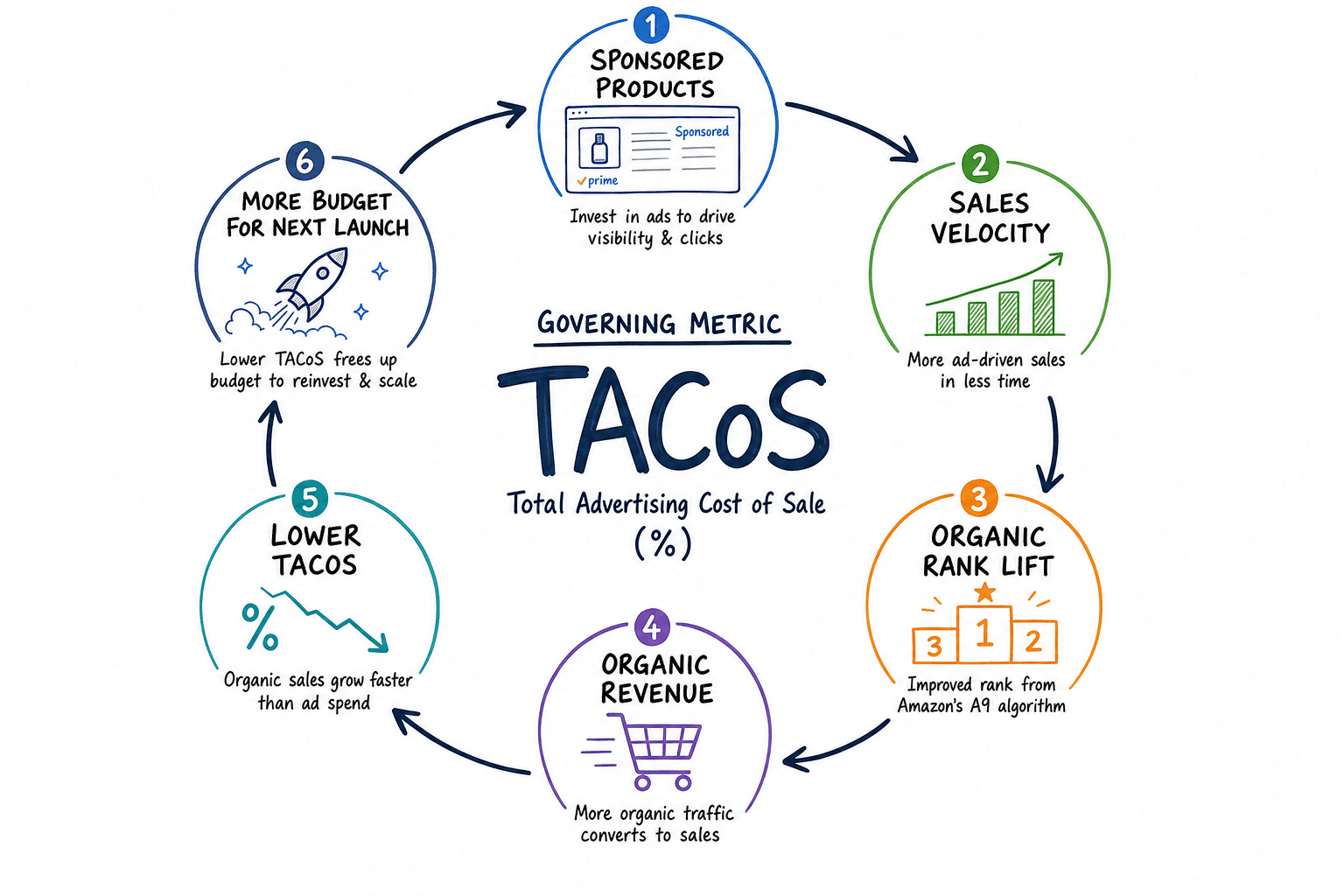
You know the flywheel: Sponsored Products drive sales velocity, velocity lifts organic rank, rank brings in sales you don't pay for, and TACoS falls as revenue grows. Most sellers buy sales without building rank, so their TACoS sits barely below their ACoS.
Amazon doesn't report TACoS anywhere; you stitch Advertising Console data to Seller Central total revenue by hand. Most agencies hand you an ACoS report instead, leaving you guessing whether spend builds organic equity or rents placement.
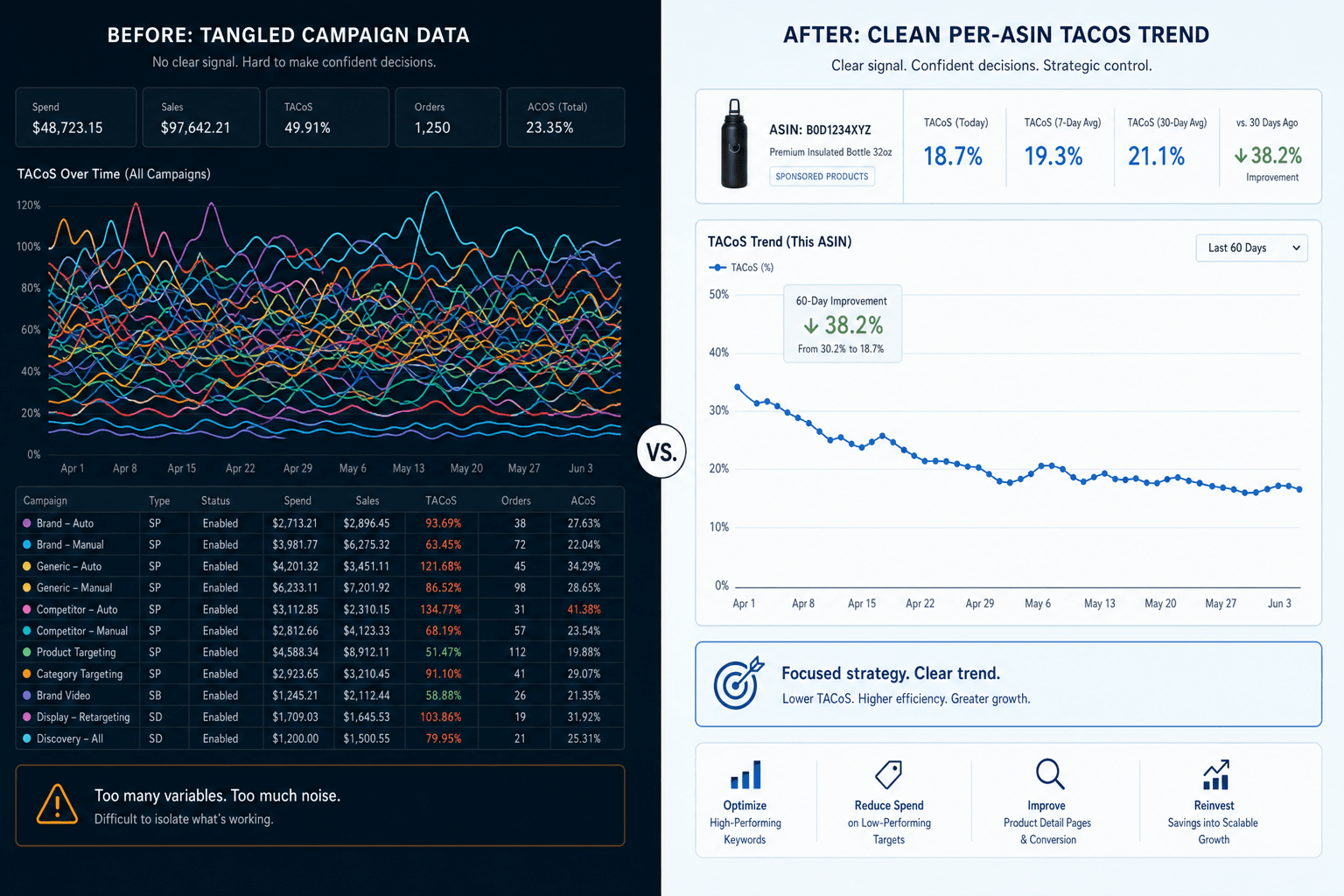
Your catalog adds complexity: a hero ASIN in its growth phase, a mature ASIN defending Top of Search, and a new variation launching into a competitive subcategory each need different bids and structure. Account-level optimization averages healthy and sick products, masking both winners and problems.
The platform keeps tightening. Third-party trackers put average Amazon CPCs near or above $1 in 2025, up roughly 15–25% from 2023. FBA's ASIN-level quantity caps, back since 2025, can block restocking a specific ASIN even when your account has capacity, and they hit hardest heading into Q4.
The Opportunity
The Money Is in the Gap Between ACoS Optimization and TACoS Compounding
Winning sellers grow organic share of sales quarter over quarter while ad spend holds flat or falls as a percentage of revenue. That's TACoS compounding: owning rank instead of renting it. A mature, well-ranked ASIN should run 8–15% TACoS. If yours sits at 20–30% on products live more than a year, the gap is organic rank you haven't captured.
Sponsored Products take roughly 65% of Amazon ad spend, yet most sellers run them with undifferentiated match types, undisciplined placement bid modifiers, and no negative keyword cadence. Harvesting auto-campaign terms from the Search Term Report into manual campaigns is table stakes for sellers who compound, and most skip it.
Amazon Marketing Cloud (AMC) offers a 25-month lookback on the path to purchase that last-click attribution in the Advertising Console hides, so you can base budget decisions on true new-to-brand acquisition cost.
What Most Get Wrong
What Most Amazon Sellers and Their Agencies Get Wrong
Cutting bids for ACoS while the flywheel stalls
Rank slides two to three weeks later, and rebuilding costs more than you saved. It hurts most when high-ACoS broad match campaigns you paused were ranking your top organic keywords.
Agencies reporting monthly ACoS without computing TACoS
That's a campaign diagnostic posing as a business review. A 20% ACoS looks efficient, but a TACoS within five points of it means ads drive at least three-quarters of sales.
Averaging every ASIN into one account-level TACoS
Averaged, a hero ASIN at 8% and a variation at 42% look like a fine 25% TACoS. Only monthly per-ASIN TACoS shows which products compound and which need structural intervention.
Ignoring quantity caps until they break a launch
Launching into a capped ASIN buys clicks that can't convert at full velocity, hurting rank while you pay to build it. Plan inventory and ads by SKU, especially before Q4.
Black-box auto-bidding with no human decision layer
Tools can chase ACoS and destroy TACoS, blind to an intentional 40% launch ACoS, a Buy Box hijacker, or a dropped IPI. Dashboards look clean while Seller Central results lag.
Why Now
Why Amazon Sellers Should Build a Structural Edge Now
Amazon's ad revenue topped $68 billion in 2025, growing over 20% yearly, and Top of Search competition on high-intent keywords intensifies quarterly. Most sellers and agencies run static bids, match types, and monthly reporting. AI can tune bids more often and more finely than a weekly manual review, and over a quarter that moves TACoS materially.
Few sellers use AMC yet. Its multi-touch conversion paths show which Sponsored Brands touchpoints drive new-to-brand conversion and how many sessions precede a high-consideration purchase, so you can budget beyond last-click ACoS reporting, and the advantage widens the longer you hold it.
Q4 carries the highest stakes. Sellers reaching it with strong organic rank, clean structure, and SKU-level inventory capture disproportionate share; those fixing the flywheel in October buy rank at the worst CPC.
The Mechanism
Where AI Gives Amazon Brand Operators an Edge
Real productivity, not AI theater. Here's where it actually moves a number for amazon sellers.
Digital Ads (Sponsored Products, Brands & Display)
What AI does: AI monitors bids across every ASIN, match type, and placement modifier continuously, judges whether Top of Search modifiers build rank or just inflate ACoS, and harvests auto-campaign keywords into manual campaigns.
The result: Bids and budget follow the ads-to-rank signal in near real time, so you don't overpay for non-compounding placement or underbid keywords building rank.
Why it matters here: Building rank versus renting placement often hinges on days and a few placement-share points. Catch that difference first and TACoS reflects it within a quarter.
Analytics & Attribution (TACoS, AMC, Search Term Performance)
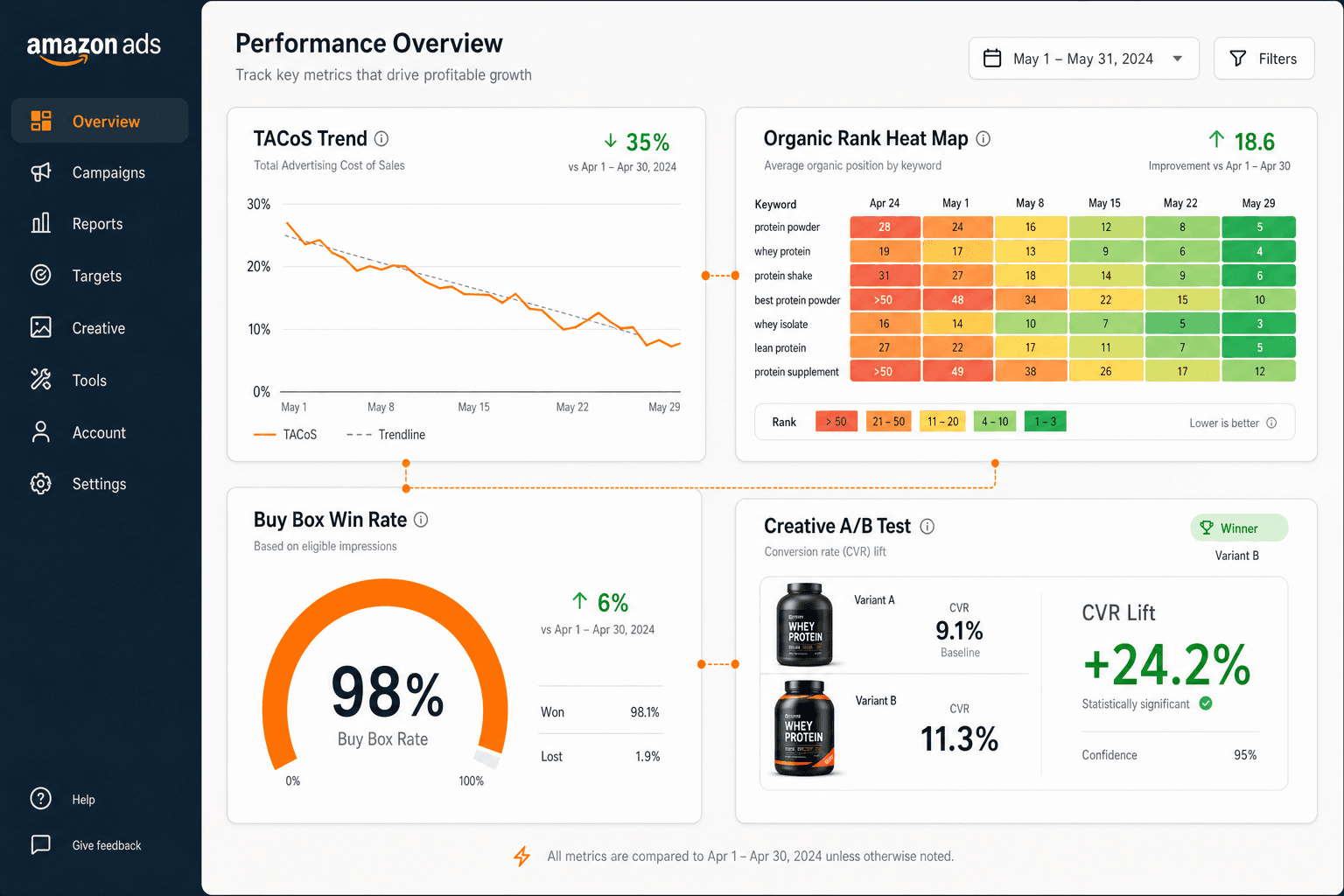
What AI does: AI builds per-ASIN TACoS, flags month-over-month moves above two percentage points with likely causes (CVR drop, competitor rank theft, Buy Box losses, match-type bleed), and puts AMC path-to-purchase data beside last-click ACoS.
The result: You see TACoS by ASIN, updated continuously with anomaly alerts, instead of finding a rank problem six weeks after it started.
Why it matters here: The Advertising Console hides the ACoS trap: campaigns look efficient as organic rank erodes. Early alerts let you protect rank while that's cheaper than rebuilding.
Creative (Listing Copy, A+ Content, Sponsored Brands Video)
What AI does: AI tests multiple Sponsored Brands headline and video script angles at once instead of one creative per quarter, and feeds Search Query Performance language into listings, A+ Content, and ads.
The result: Testing finds the converting message faster, listing copy matches the language of buyers who purchase, and benchmarks (0.3–0.5% CTR, 9–12% CVR average) become diagnostic targets.
Why it matters here: CVR feeds ranking directly: at identical spend, 14% CVR on a primary keyword builds rank faster than 9%. Most sellers treat creative as one-time setup.
Conversion Optimization (Listing Pages, Buy Box Monitoring)
What AI does: AI scans listings continuously for conversion leaks (suppressed A+ Content, missing brand store links, IPI-driven FBA storage limits) and tracks each ASIN's Buy Box, catching hijackers within days, not at monthly audits.
The result: CVR holds at or above category benchmarks. Private-label FBA brands with Brand Registry should hold close to 100% Buy Box share; anomalies get escalated immediately.
Why it matters here: About 82% of Amazon sales go through the Buy Box. Missing a win-rate drop for three weeks mid-launch can outweigh months of bid gains.
Ready to see what this looks like for your amazon sellers business?
No obligation. A senior strategist will show you exactly where the wins are.
The Strategy
The Amazon Advertising Strategy That Compounds
Structure comes first: split Sponsored Products by match type (exact, phrase, broad) into ad groups with their own bid logic and negative keyword libraries.
Run auto campaigns as keyword discovery engines: harvest converting terms into manual campaigns weekly and negate irrelevant ones aggressively. Set Top of Search modifiers per ASIN by whether that position builds rank or only buys visibility.
A new ASIN or variation entering a competitive subcategory warrants 25–40% TACoS on purpose: you're paying for sales velocity and review accumulation to seed the ranking algorithm.
A mature ASIN with strong organic position should run 8–15% TACoS, with Sponsored Products defending its primary keyword and Sponsored Display conquesting competitor ASINs.
Sponsored Brands video belongs at the top of search on branded and category keywords to own full-funnel placement. Treat last-click ACoS as a campaign diagnostic, and let AMC data guide budget across formats and show the new-to-brand cost that justifies Sponsored Brands.
Pull TACoS by ASIN monthly; before the next weekly bid cycle, investigate any move over two percentage points in either direction. Plan inventory per SKU, building FBA restock timelines into pacing so ads never drive velocity into a capped ASIN.
Q4 planning starts in August because the rank you bring to peak season is built months earlier.
The one number that governs this
Track each ASIN's TACoS (its ad spend over its total revenue) monthly and campaign ACoS weekly. Only falling TACoS on growing revenue confirms the flywheel.
How We Help
How We'd Run This for Your Amazon Business
We start where money leaks, fix the foundation, then build compounding structure. ASIN-level TACoS visibility comes before we change a bid, so we don't walk into the ACoS trap.
Amazon PPC Management (Sponsored Products, Brands & Display)
We rebuild campaign structure and set bids against TACoS targets by ASIN lifecycle stage, not a flat account-wide ACoS.
TACoS & Attribution Reporting (Seller Central + Advertising Console + AMC)
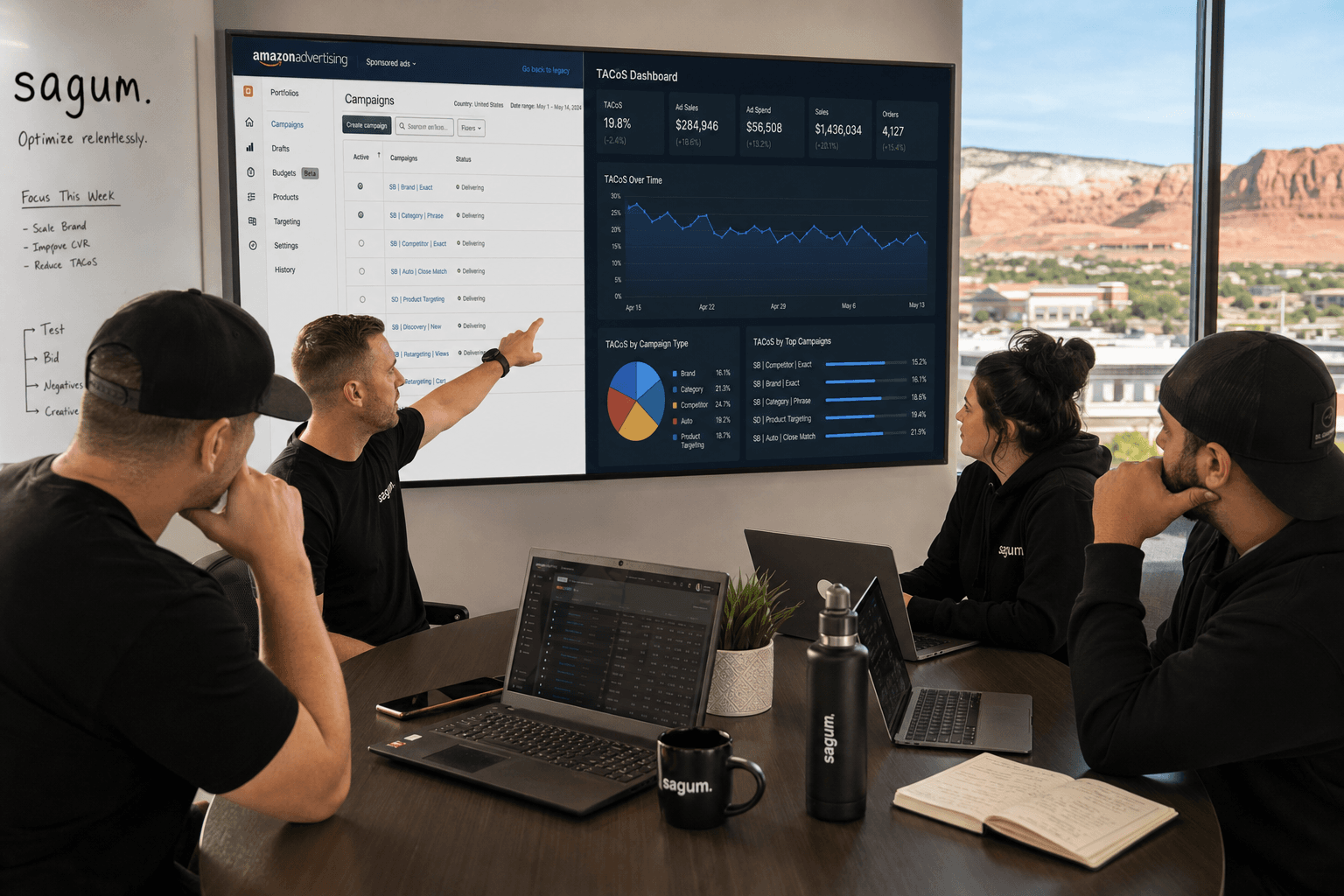
We build the per-ASIN TACoS dashboard and integrate AMC, so budget calls use path-to-purchase data the Advertising Console doesn't show.
AI-Driven Bid Optimization & Anomaly Detection
AI flags TACoS swings, Buy Box win rate drops, and budget exhaustion in real time with the likely cause, and a human makes the call.
Creative Testing (Listing Copy, A+ Content, Sponsored Brands Headlines & Video)
We test Sponsored Brands headlines, tune listings to Search Query Performance language, and build A+ Content to lift CVR toward the 13–15% strong-performer benchmark.
Launch & Lifecycle Strategy
New ASINs get a launch playbook of intentional TACoS investment; mature ASINs get rank defense plus Sponsored Display conquest.
Inventory & Campaign Coordination
We pace ad spend to each SKU's FBA restock timeline and build Q4 strategy in August.
Who's Behind This
Who we are, and what makes us different
Sagum is a performance marketing agency founded in January 2017 in St. George, Utah. We've spent 8+ years growing real brands and being judged on KPIs, not vanity metrics.
We deliberately limit how many clients we take so each one gets senior attention. We treat your numbers like our own, we never run generic playbooks, and your strategy is built for your business, because shouldn't your brand's marketing be custom to your brand?
Sagum.ai is our AI arm: the same proven operators now build AI into the work wherever it creates real edge, not as theater, but as leverage applied with discipline.
- 8+ years growing brands on performance KPIs, not vanity metrics
- Limited client roster, with senior attention on every account
- An extension of your team; your success is tied to ours
- Custom strategy per brand, never a generic playbook
- AI built in where it moves a number; judgment over hype
“Sagum is a performance marketing agency that's spent 8+ years growing brands by treating their numbers like our own. We take on few clients, never run generic playbooks, and now build AI into the work wherever it creates real edge, not hype. Your strategy is built for your business, and our success is tied to yours.”
“After six years, Sagum is our most important partner: trusted, communicative, and caring about our business as if it's their own.”
Long-term partner
6-year client
Proof
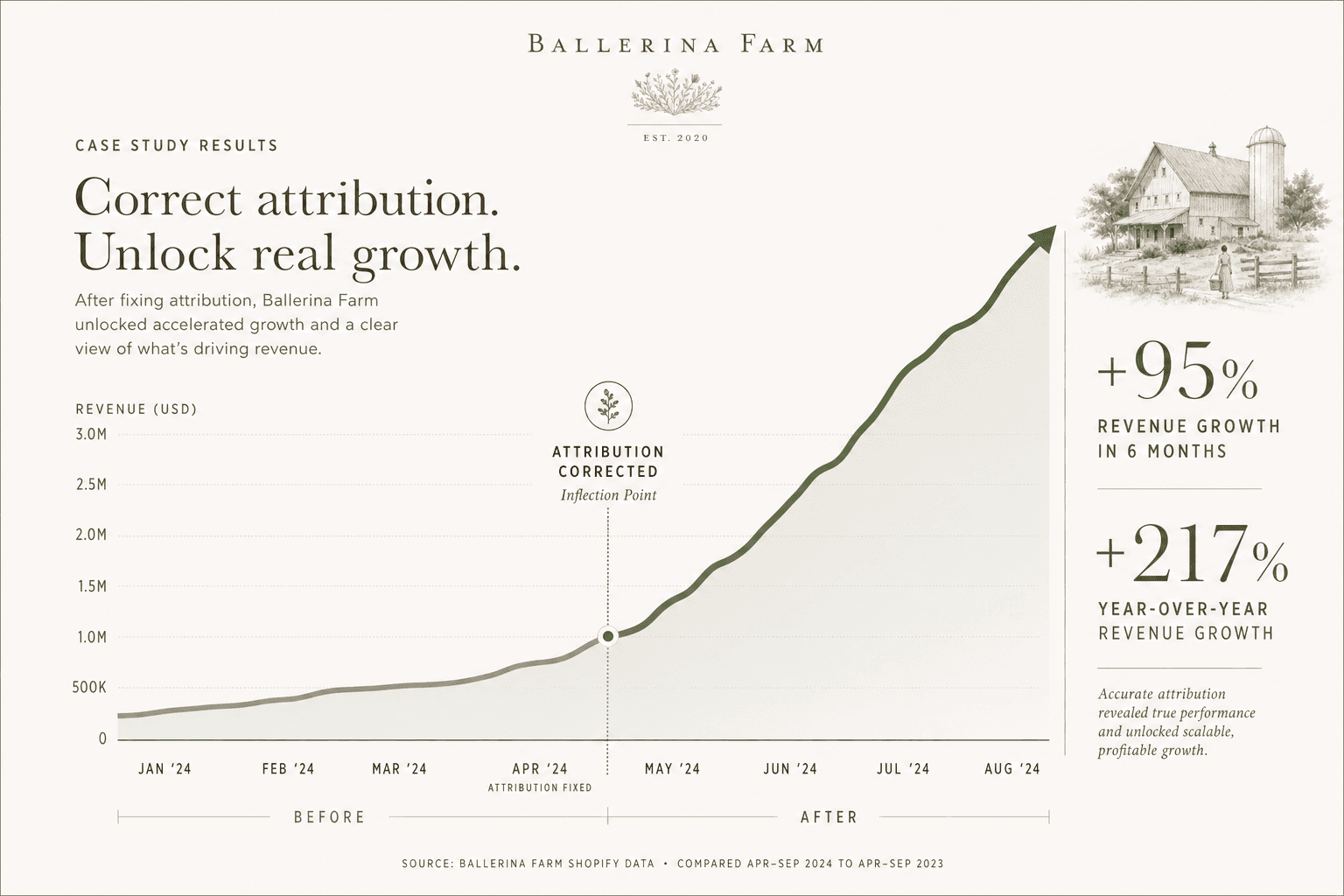
95% growth in 6 months, 217% YoY after fixing a misfiring pixel
Ballerina Farm
Challenge
At Ballerina Farm, a misfiring pixel was inflating numbers and hiding true performance, the same trap an ACoS-only report sets for Amazon sellers.
What we did
We fixed the tracking, then scaled TikTok, Google, and Pinterest.
Result
After the pixel fix, Ballerina Farm hit 95% growth in six months, 217% year-over-year, and 64% better ROAS than planned.
Find Out What Your TACoS Should Be and What's Keeping It There
No obligation. We'll review your ACoS-to-TACoS gap, campaign structure, and organic rank trajectory, and show you where the flywheel stalls and what it would take to fix it.
Sagum · January 2017 · St. George, Utah · 8+ years