

8+ years growing brands on KPIs, now with AI
Stop guessing at your athleisure ROAS
We run paid media and creative on the profit number your platform dashboards keep hiding from you.
Google Ads · Meta · TikTok partners · 8+ years growing DTC brands · results measured in revenue, not impressions


Get your free Growth Gap Analysis
Senior strategist review · response within one business day
Prefer to reach out directly?
The Challenge
Athleisure Brands Past $3M Need a Different Playbook to Keep Growing
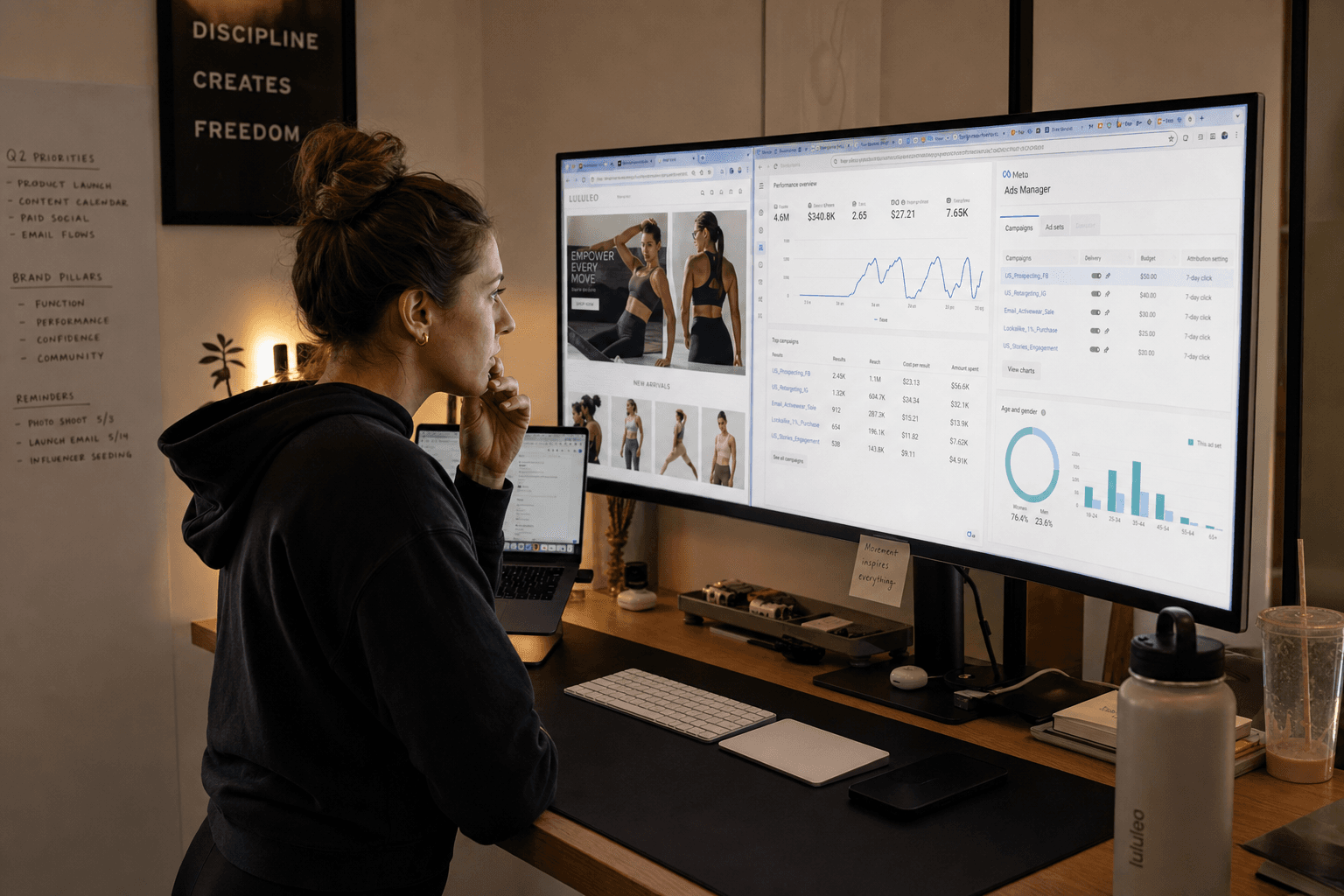
You got here on founder intuition, a hero SKU (the legging or jogger that became 40% of revenue), and paid social that worked before CPMs crept up. That mix stalls between $3M and $5M, almost always because you budget on last-click ROAS and gut feel instead of blended ROAS and cohort LTV.
Well-funded challengers, not Nike, chase your DTC customer on the same platforms with deeper creative budgets. An estimated 4,500+ new athleisure brands launched globally between 2022 and 2024, Vuori drew an $825M investment at a $5.5B valuation in late 2024, and Alo and Gymshark keep expanding.
Meta CPMs keep rising, iOS attribution gaps make your platform dashboard hard to trust, and every Q4, holiday discounting (roughly 31% average online discount depth in North America in 2024) squeezes gross margin in your highest-volume quarter.
Breakout brands don't always have the best product. They get measurement right, build creative infrastructure that keeps pace with TikTok and Meta, and stop renting revenue one campaign at a time.
The Opportunity
Athleisure Demand Is Waiting on TikTok, in Email, and in Creator Content
TikTok is a proven athleisure revenue channel: apparel and accessories clear a 2.49 ROAS there, the only industry above 2.0, and brands that crack creator-native creative see 30–50% lower CAC than equivalent Meta spend. Most competitors still treat it as an experiment.
Email and SMS generate 20–30% of DTC fashion revenue, returning $42–$45 per dollar spent. If your Klaviyo flows aren't fully built and segmented by first-purchase product, you're leaving your highest-margin revenue on the table.
Influencer-sourced UGC delivers 30% lower CPA than brand-produced creative, and micro-influencers in fitness niches (Pilates, trail running, functional fitness) beat mega-influencers on cost-per-conversion. Brands piping that content systematically into paid channels hold ROAS while others slide.
What Most Get Wrong
What Most Athleisure Brands (and Their Agencies) Get Wrong
Running on platform ROAS instead of blended ROAS
iOS attribution gaps mean a 4x Meta ROAS may hide a 2.1x blended ROAS that only Shopify reconciliation reveals. Budgeting on platform numbers alone is budgeting on fiction.
Judging channels on first-order ROAS instead of cohort LTV
Organic search customers show 20–30% higher LTV than paid social ones. You underfund SEO and email, which build repeat purchases, and overweight paid social, which rents customers without owning them.
Letting creative fatigue kill your TikTok channel
TikTok punishes creative fatigue faster than any other platform. Brands that launch one or two creatives and wait see them deprioritized within days as engagement velocity drops.
Treating the hero SKU as the whole strategy
If all prospecting rides on the SKU driving 40%+ of revenue, one return spike (athleisure returns typically run 24–50%) exposes the whole funnel, so creative must build the brand too.
Hiring agencies with a generic DTC playbook
An agency treating table-stakes claims like 'squat-proof' and '4-way stretch' as differentiators writes look-alike creative. With an estimated 4,500+ brands launched in 2022–2024, you pay for ads that blend in.
Why Now
Athleisure Brands That Build Before Q4 Will Be Harder to Catch
Most DTC athleisure brands still run their 2021 playbook (a Meta-heavy budget, a few creatives refreshed quarterly, a half-built Klaviyo account), and it costs more and works less each quarter as CPMs and competition rise.
AI now lets a focused operator, without a 20-person in-house team, test creative at TikTok's velocity, catch attribution errors before they misdirect budget, and segment email by cohort LTV, at a cost competitors without these tools can't match.
Q4 and the New Year's resolution window (January 1–15) are athleisure's two highest-intent, highest-conversion periods. Brands that enter Q4 with tested creative, clean attribution, and email flows already driving repeat purchases compound both periods; brands that start building that setup in November spend Q4 firefighting. Pre-load creative and inventory before December to capture the January burst.
The Mechanism
Where AI Gives Athleisure Brands an Edge
Real productivity, not AI theater. Here's where it actually moves a number for athleisure brands.
Creative
What AI does: Speeds briefing by generating multiple hook angles, copy variations, and visual concepts each week, so you can test at TikTok's required velocity.
The result: You find purchase-driving hooks faster and retire losing creative before it drags down ROAS.
Why it matters here: Creative is your product demo (moving fabric, squat-proof performance, your fitness tribe's look). Brands testing 10 angles weekly instead of 2 find winners before competitors.
Analytics
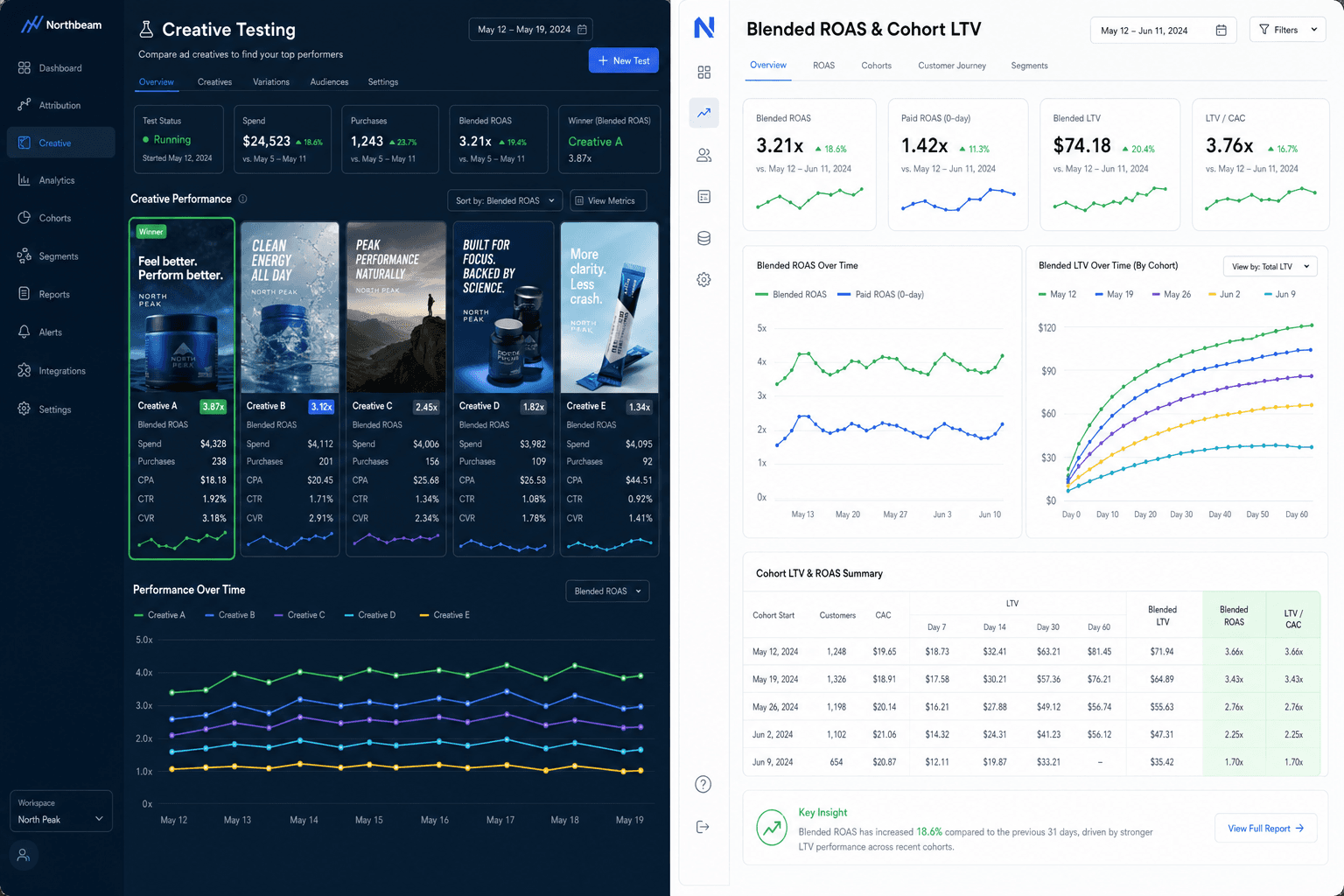
What AI does: Tracks blended ROAS across Meta, TikTok, Google, and email, flags where platform-reported ROAS diverges from Shopify revenue, and catches a misfiring pixel or broken UTM that's inflating numbers.
The result: Budget decisions rest on accurate blended data instead of platform-reported last-click ROAS.
Why it matters here: Post-iOS 14, Meta-reported and Shopify revenue can differ by 30–50% on some campaigns. Catching a misfiring pixel early is often the account's highest-ROI fix.
Digital Ads
What AI does: Adjusts budget pacing and bids across Meta and TikTok in real time, moving spend toward the campaign, audience, and creative combinations with the strongest blended ROAS.
The result: Spend follows performance signals instead of a static monthly allocation, so underperformers stop wasting the week's budget.
Why it matters here: Demand and CPMs spike at New Year's, Q4, and August back-to-school; moving budget to what's working during spikes beats flat spend on revenue per dollar.
What AI does: Segments Klaviyo post-purchase flows by first-purchase product, times win-backs by cohort LTV, and finds the segments likeliest to buy again.
The result: Email and SMS treat a $150 hero-legging customer differently from a $30 loss-leader customer from day one, building toward each cohort's 24-month LTV.
Why it matters here: Email is your highest-margin channel. With returns this common, post-purchase flows keep customers who returned an item from becoming customers you pay to reacquire.
Conversion Optimization
What AI does: Reviews product and landing pages for click-to-purchase friction and continuously tests size-guide, social proof, and product video placement.
The result: Higher conversion lifts blended ROAS without more ad spend; our heated-apparel client Ravean hit its growth target on less traffic with a 32% conversion-rate lift.
Why it matters here: In athleisure, fit anxiety is the main conversion barrier. Brands surfacing trust signals (UGC reviews, size-inclusivity callouts, a visible return policy) convert more paid traffic.
Ready to see what this looks like for your athleisure brands business?
No obligation. A senior strategist will show you exactly where the wins are.
The Strategy
How an Athleisure Brand's Channels Should Work Together
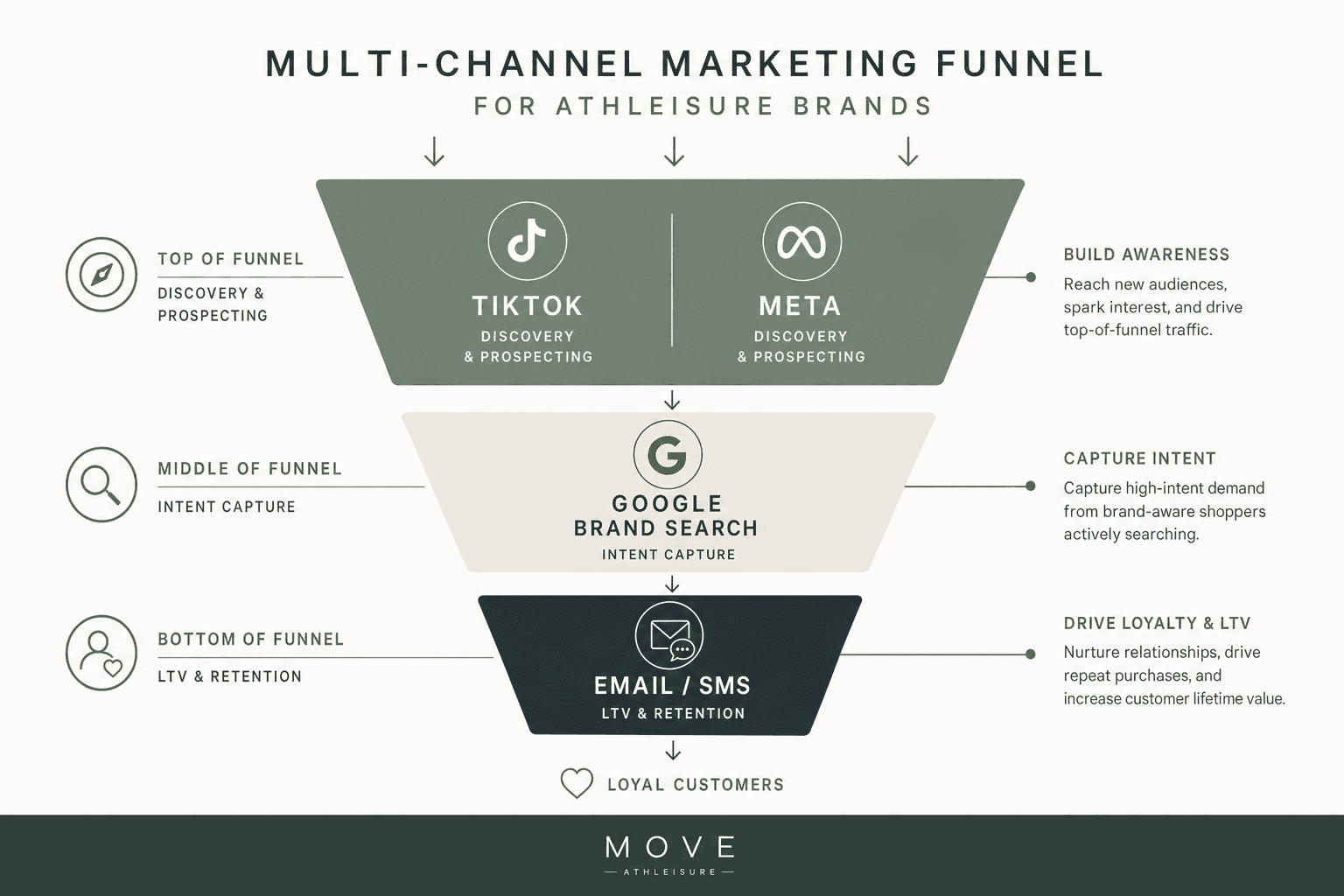
Most athleisure brands treat Meta as the whole strategy and everything else as a side experiment. Give each channel a job and judge the system on blended ROAS.
Meta (Instagram and Facebook) is your prospecting engine. Creative fatigue there sets in within weeks, so keep dynamic product ads stocked with fresh UGC and influencer content.
TikTok is your highest-upside discovery channel, so give it creative-first treatment from day one: creator-native content built for TikTok and hooks rotated weekly.
Google Brand Search captures demand Meta and TikTok created: the shopper who saw your legging on Instagram, thought about it for three days, then searched your brand name. You already paid to generate that demand, so never underfund the search that captures it.
Email and SMS are your LTV engine. Run Klaviyo flows (abandoned cart, post-purchase, win-back) as infrastructure, not campaigns, and segment them by cohort; that's where repeat purchase rate is built or lost.
Influencer and UGC content feeds every other channel. A systematic micro-influencer pipeline separates brands with a creative advantage from brands always scrambling.
The one number that governs this
Judge budget, channel, and creative calls by blended ROAS: total revenue over total ad spend on every channel. Platform-reported ROAS is only directional.
How We Help
What We'd Do for Your Athleisure Brand
We sequence the engagement around how athleisure brands grow and limit our client roster so each account gets senior attention. We measure success by your blended ROAS and cohort LTV.
Attribution & Analytics Setup
Before touching ad spend, we fix measurement: blended ROAS tracking, pixel health audits, UTM architecture, and Shopify reconciliation against platform numbers.
Paid Social (Meta & TikTok)
We restructure Meta and TikTok around a creative-testing cadence and seasonal budget pacing.
Creative Strategy & Production Briefing
We build micro-influencer UGC briefs, TikTok hook frameworks, and a testing matrix showing which angles win and why, not just which ad ID leads.
Google Ads (Brand Search & Shopping)
To capture the demand paid social creates, we run brand search that doesn't leak to competitors, plus Shopping built around hero SKUs and margin tiers.
Email & SMS (Klaviyo)
We build or audit your Klaviyo flows so hero-SKU and discount-entry customers get different automation.
Conversion Rate Optimization
We review product and landing pages for athleisure-specific friction, from fit anxiety to size guide placement, and test fixes continuously.
AI Systems & Reporting
We add automated creative monitoring, blended ROAS dashboards, and audience segments fed by cohort LTV.
Who's Behind This
Who we are, and what makes us different
Sagum is a performance marketing agency founded in January 2017 in St. George, Utah. We've spent 8+ years growing real brands and being judged on KPIs, not vanity metrics.
We deliberately limit how many clients we take so each one gets senior attention. We treat your numbers like our own, we never run generic playbooks, and your strategy is built for your business, because shouldn't your brand's marketing be custom to your brand?
Sagum.ai is our AI arm: the same proven operators now build AI into the work wherever it creates real edge, not as theater, but as leverage applied with discipline.
- 8+ years growing brands on performance KPIs, not vanity metrics
- Limited client roster, with senior attention on every account
- An extension of your team; your success is tied to ours
- Custom strategy per brand, never a generic playbook
- AI built in where it moves a number; judgment over hype
“Sagum is a performance marketing agency that's spent 8+ years growing brands by treating their numbers like our own. We take on few clients, never run generic playbooks, and now build AI into the work wherever it creates real edge, not hype. Your strategy is built for your business, and our success is tied to yours.”
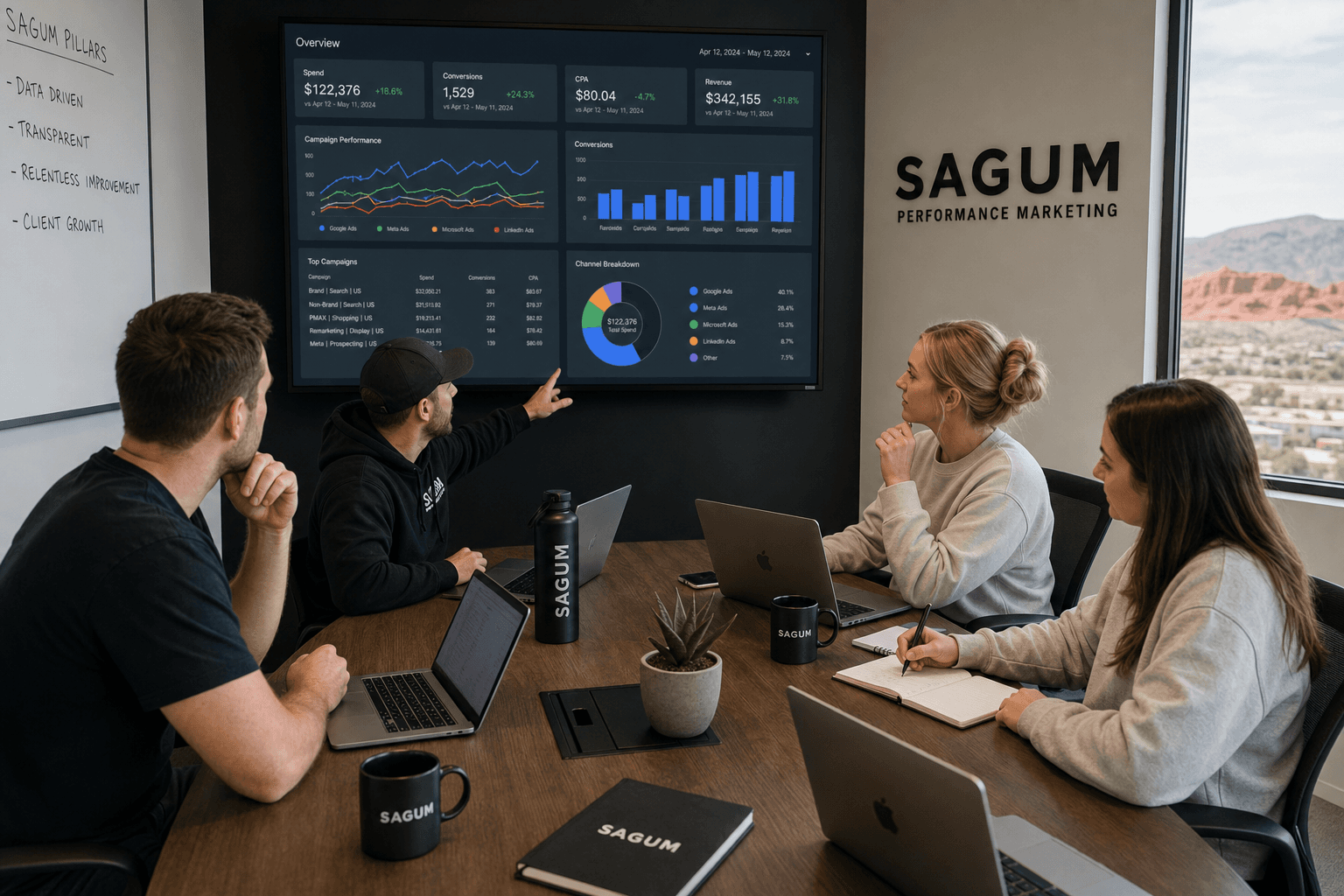
“Sagum roughly doubled our bottom line. They treat the work like it's their own business.”
Rachel Nilsson
CEO, RAGS
Proof
15:1 ROAS across all ad spend, plus hundreds enrolled in the Stevie Rep program
Shop Stevie
Challenge
Shop Stevie, an apparel brand, set out to establish a 15:1 ROAS, drive profitable new customer acquisition, and generate leads for its Stevie Rep program.
What we did
We ran creative retargeting and remarketing across Facebook and Instagram, and built landing pages and a sales funnel with a dedicated creative campaign for the Stevie Rep program.
Result
Shop Stevie hit 15:1 ROAS across all ad spend, scaled sales with new expansion campaigns at positive ROI, and enrolled hundreds in Stevie Rep through reliable-CPL Instagram lead ads. That creative discipline applies to athleisure.
- ROAS
- 15:1
- Rep program
- Hundreds enrolled
- Sales
- Scaled at positive ROI
Find Out Why Your Blended ROAS Isn't Where It Should Be
No obligation. We'll review your channel mix, attribution setup, and creative cadence and name the gap honestly. If we're not a fit, we'll say so; if we are, we'll show exactly what we'd do.
Sagum · January 2017 · St. George, Utah · 8+ years