

8+ years growing brands on KPIs, now with AI
More Revenue From Your Attentive SMS
We build the journey depth, list growth, and segmentation that turn SMS into your cheapest revenue dollar.
8+ years growing ecommerce brands · Google, Meta & TikTok partner · now with AI


Get your free Growth Gap Analysis
Senior strategist review · response within one business day
Prefer to reach out directly?
The Challenge
Getting Attentive SMS to 20%+ of Revenue Takes More Than Running It
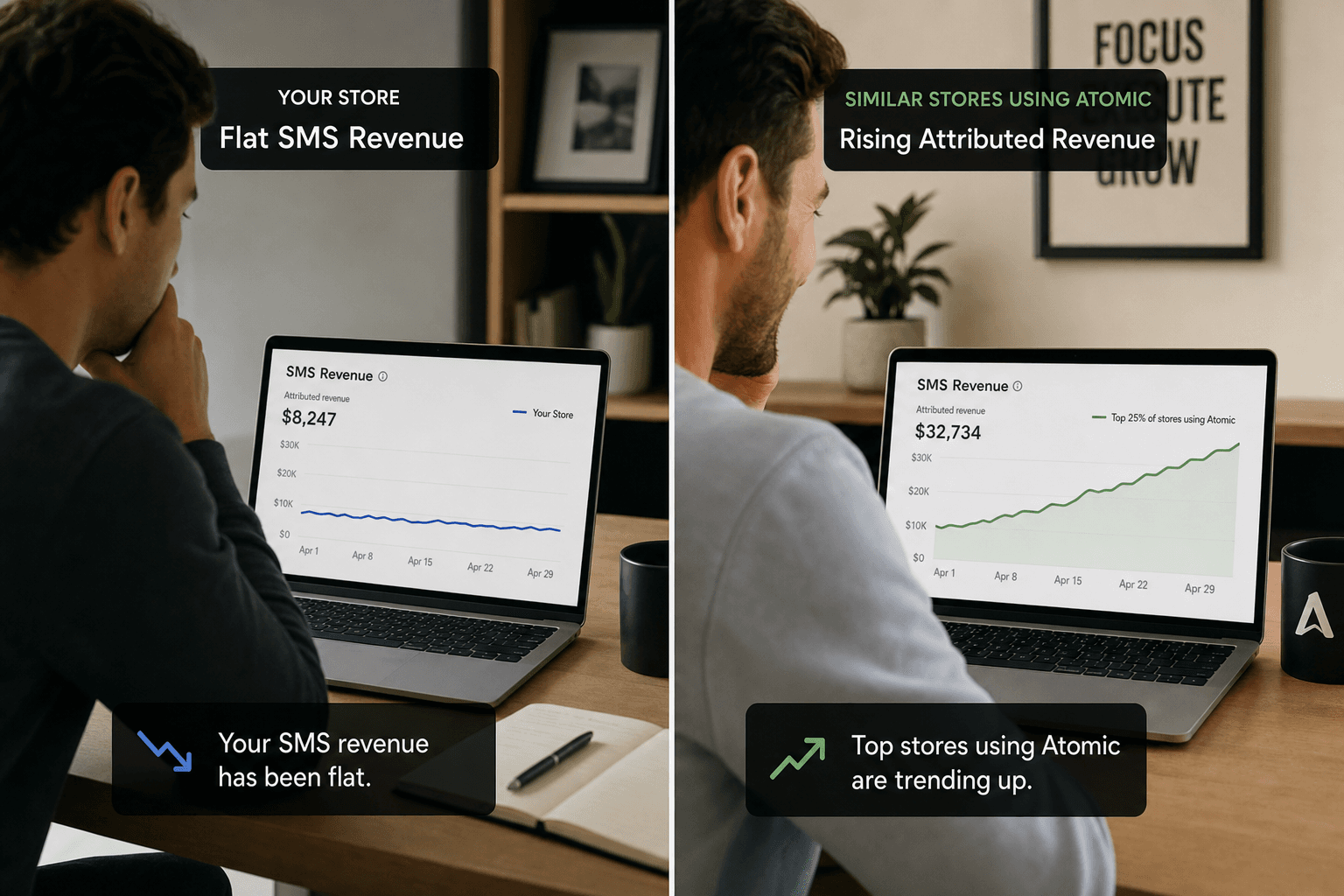
You run Attentive with a welcome series, an abandoned cart flow, maybe a browse abandon, and a CSM who checks in quarterly. Attentive probably credits SMS with between 8% and 14% of your revenue; the benchmark is 20–30%.
The gap almost always comes from the program, not the platform: journeys set live once and never revisited, batch-and-blast campaigns eating your EPM (earnings per message), and segmentation that stopped at 'active vs. inactive.' Rather than sending more, operators winning on Attentive run deeper journeys, tighter RFM (recency, frequency, monetary) segmentation, AI-timed sends, and Two-Tap™ list growth.
Triggered flows are 7.6% of sends but drive 45.2% of total SMS revenue, so a campaign-heavy program leaves the highest-ROAS messages unbuilt while you pay Attentive $8K–$15K/month.
Compliance makes 'just send more texts' a liability: TCPA statutory damages run $500–$1,500 per message, the FCC expanded opt-out rules in April 2025, and Texas SB 140 went live in September 2025.
The Opportunity
Built Right, SMS Is the Cheapest Revenue Dollar in Your P&L
SMS economics are unlike any other channel's: businesses average $71 for every $1 spent on SMS, and even conservative benchmarks put it at $21–$41 per dollar, against email's $10–$36. Paid media funds acquisition; SMS converts the list you already own.
SMS click rates run structurally higher than email's: flows average near 10% with top performers above 16%, and campaigns hit 8–15% versus email's 2–4%.
Most Attentive brands capture the easy half: welcome and abandoned cart run, but winback is thin, browse abandon is one message, post-purchase upsell doesn't exist, and Attentive Concierge™ is off or unoptimized, so inbound replies go unconverted.
Top performers, at 25–30% of revenue, have built the full journey map, use Audiences AI to segment high-purchase-intent subscribers before they go cold, and review SMS ROAS weekly by message type, not just in aggregate.
What Most Get Wrong
What Most Attentive Brands (and Their Agencies) Get Wrong
Treating Attentive like a batch-and-blast tool
Campaign-heavy programs generate $5–$15 SMS ROAS; triggered journeys generate $80+ on abandoned cart alone. Defaulting to weekly broadcasts optimizes for the lowest-returning message type and speeds list fatigue.
Never revisiting segmentation logic after launch
As your list grows, it stratifies into intent tiers. If you never revisit RFM segmentation, EPM falls quarter over quarter because every tier still gets the same message.
Ignoring the Attentive vs. Klaviyo attribution war
If Klaviyo runs your email, Attentive's last-touch window and Klaviyo's combined tracking assign credit differently on shared journeys, so the numbers don't reconcile and you budget on inflated SMS revenue.
Under-investing in list growth
If you rely on one website pop-up, you miss in-store Text-to-Join, post-purchase opt-in flows, social integrations, and AI Grow sign-up units. A thin list compounds into thin revenue.
Assuming the platform handles compliance
Attentive handles TCPA architecture; you own execution. FCC rules require honoring email, voicemail, and informal-language opt-outs, and Texas SB 140 added a private right of action on commercial SMS.
Why Now
Attentive's AI Tools Reward Brands That Build Program Depth First
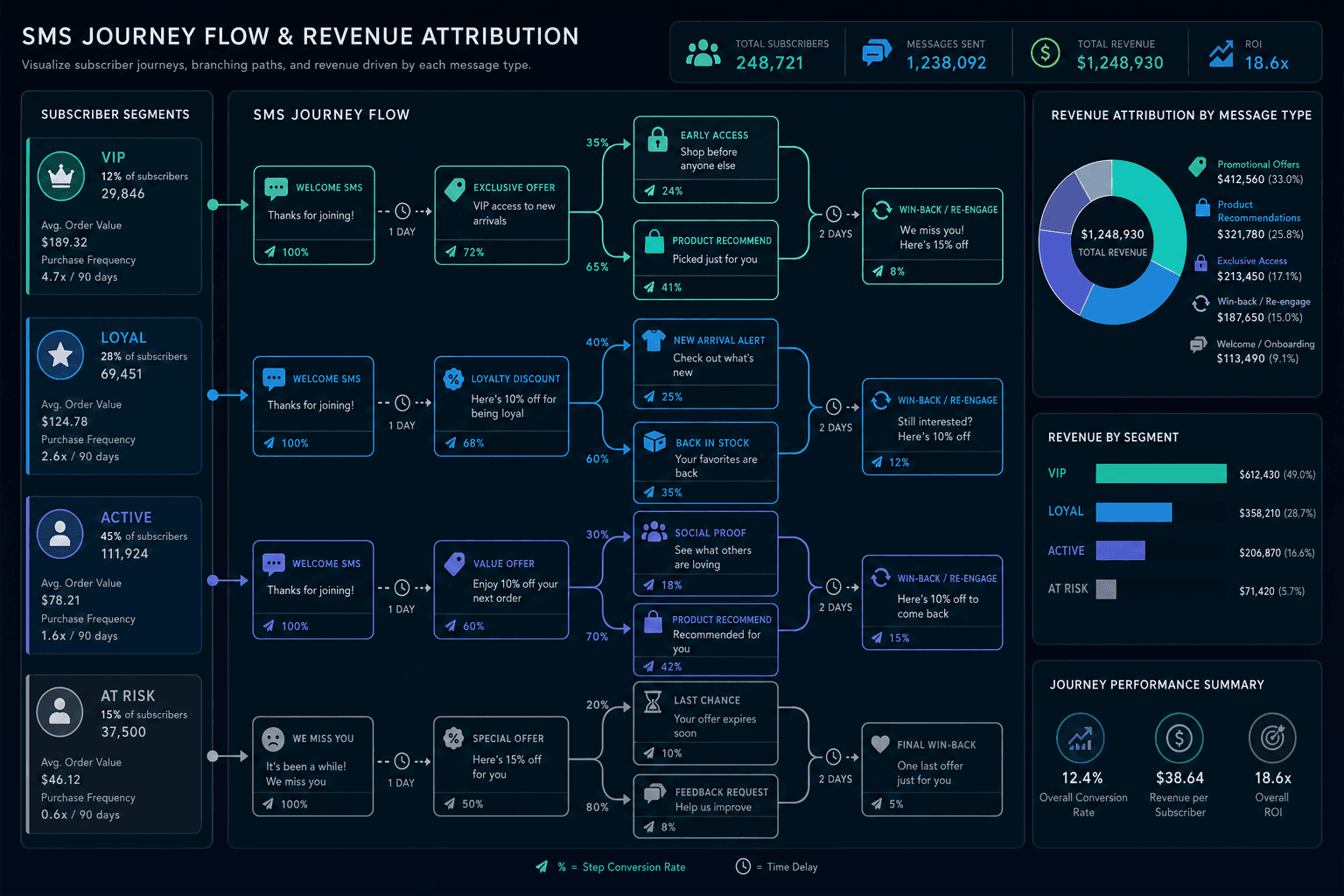
Attentive already offers an AI layer, but most brands run it partially enabled or off. AI Journeys individualizes timing, copy, link, and message count per subscriber; Audiences AI surfaces high-purchase-intent subscribers in real time; Send Time AI staggers delivery to each subscriber's optimal moment.
When Yotpo sunset its SMS capabilities in late 2025, it named Attentive its preferred partner, and many brands moved over without built programs. Postscript competes on price and Shopify-native simplicity, Klaviyo SMS on unified attribution. Operators building program depth now (journeys, segmentation, list quality, compliance infrastructure) will hold a structural revenue advantage over brands that only switched platforms.
Brands that activate AI Journeys, tighten RFM segmentation, and fix attribution before peak season will compound on a stronger foundation; brands that wait will be catching up.
The Mechanism
Where AI Creates Real Edge Inside Attentive
Real productivity, not AI theater. Here's where it actually moves a number for attentive sms brands.
Journey Architecture & AI Journeys
What AI does: We pair AI Journeys with our testing framework so each subscriber's behavior sets timing, copy variant, send count, and link destination instead of a static decision tree.
The result: A single-message abandon becomes a multi-touch journey that adapts to each subscriber, which is how abandoned cart out-earns batch sends on ROAS.
Why it matters here: Top-decile brands beat the median almost entirely on journey depth and personalization, not send volume; top-10% SMS flows exceed $5 RPR (revenue per recipient).
Segmentation & Audiences AI
What AI does: We maintain RFM segments with Attentive's native RFM analytics and Audiences AI, surfacing high-purchase-intent subscribers and suppressing low-intent ones before they opt out.
The result: Campaigns reach subscribers primed to buy, so EPM rises (fewer sends, same revenue) and list health improves once over-sending stops.
Why it matters here: Carriers (AT&T, Verizon, T-Mobile) score deliverability on engagement, so opt-outs from over-messaged cold segments tank your sender reputation; tight segmentation protects it.
List Growth & Sign-Up Unit Architecture
What AI does: We rebuild every capture point (mobile Two-Tap™, desktop Reply Y, AI Grow units, post-purchase flows, Text-to-Join for retail or events, and social integrations) with co-capture units built to TCPA's explicit, separate-consent requirement.
The result: AI Grow sign-up units alone drive 25% more opt-ins and 35% more welcome series revenue; capturing on every surface compounds list growth and quality.
Why it matters here: At $8K–$15K/month, Attentive pays off only with a growing, qualified list; brands relying on one website pop-up pay enterprise pricing for a mid-market list-growth strategy.
Analytics & Attribution Reconciliation
What AI does: We adjust Attentive's attribution window, reconcile SMS revenue with Klaviyo's email attribution, and build a deduplicated SMS revenue view instead of last-touch-inflated revenue.
The result: Budget and journey decisions rest on trusted numbers, and SMS ROAS by message type (campaign, welcome, abandon, winback) shows where to invest or pull back.
Why it matters here: The most common reason Attentive brands underinvest in SMS is that they can't reconcile what it drives; clean attribution underpins every other decision.
Compliance Infrastructure
What AI does: We audit opt-in/opt-out handling against TCPA, FCC, and Texas rules, confirm A2P 10DLC registration with The Campaign Registry is current and Litigator Defender active, and check co-capture consent stays separate from email.
The result: Your compliance posture is documented: the Enhanced Audit Assistant provides records for rapid TCPA complaint response, and Litigator Defender auto-suppresses known litigant numbers.
Why it matters here: TCPA statutory damages run $500–$1,500 per message with no cap on total liability, so at high volume a non-compliant campaign is an existential financial risk.
Ready to see what this looks like for your attentive sms brands business?
No obligation. A senior strategist will show you exactly where the wins are.

The Strategy
The SMS Strategy That Gets Attentive Brands to 20–30% of Revenue
Brands getting that share of total ecommerce revenue from SMS run a different operating model on the same platform. Start with attribution: adjust Attentive's window, account for Klaviyo overlap, and split SMS ROAS by message type before optimizing.
List growth is the compounding lever. Capturing subscribers on every surface, from Two-Tap™ to Text-to-Join, builds list quality, and quality matters because carriers eventually filter lists with high opt-out rates.
Journey depth is where the revenue lives. Build, test, and maintain every flow, from welcome and abandoned cart to winback and joined-a-segment; AI Journeys individualizes each message while you own the map and segmentation.
Review RFM segments weekly: they separate subscribers primed to buy from those who'll opt out if messaged again. Audiences AI and Send Time AI also need active management to maintain EPM.
Compliance sets the floor, so audit it actively instead of trusting the platform.
The one number that governs this
Manage to SMS's share of total revenue (benchmark 20–30%), SMS ROAS targets by message type ($80+ triggered, $25+ all-message), segment EPM, and store-wide blended ROAS.
How We Help
What We Do for Attentive Brands
We run that strategy, starting with your program's biggest opportunity. We take few clients, so your program gets senior attention and isn't handed to a junior coordinator after kickoff.
Attribution Audit & Model Setup
We reconcile Attentive's attribution with your Klaviyo data and build a deduplicated SMS revenue view before optimizing anything.
List Growth Architecture
We audit and rebuild every subscriber capture point, with co-capture units built to TCPA's separate-consent rule.
Journey Build & Optimization
We build the full triggered journey map and activate AI Journeys to individualize each subscriber's messages.
Segmentation & Audiences AI Management
We build RFM segments and Audiences AI targeting, suppress low-intent subscribers, and manage it all weekly.
Campaign Strategy & Creative
We plan sends against your promotional calendar, test copy and offers by segment, and replace batch-and-blast with targeted sends that protect EPM.
Compliance Audit & Infrastructure
We audit opt-in/opt-out handling, verify A2P 10DLC and Litigator Defender, and document your posture for TCPA inquiries.
Paid Media (Google, Meta, TikTok) for List Growth
When list growth is the constraint, we run Meta and TikTok lead formats and Google search to drive qualified opt-ins.
Who's Behind This
Who we are, and what makes us different
Sagum is a performance marketing agency founded in January 2017 in St. George, Utah. We've spent 8+ years growing real brands and being judged on KPIs, not vanity metrics.
We deliberately limit how many clients we take so each one gets senior attention. We treat your numbers like our own, we never run generic playbooks, and your strategy is built for your business, because shouldn't your brand's marketing be custom to your brand?
Sagum.ai is our AI arm: the same proven operators now build AI into the work wherever it creates real edge, not as theater, but as leverage applied with discipline.
- 8+ years growing brands on performance KPIs, not vanity metrics
- Limited client roster, with senior attention on every account
- An extension of your team; your success is tied to ours
- Custom strategy per brand, never a generic playbook
- AI built in where it moves a number; judgment over hype
“Sagum is a performance marketing agency that's spent 8+ years growing brands by treating their numbers like our own. We take on few clients, never run generic playbooks, and now build AI into the work wherever it creates real edge, not hype. Your strategy is built for your business, and our success is tied to yours.”

“After six years, Sagum is our most important partner: trusted, communicative, and caring about our business as if it's their own.”
Long-term partner
6-year client
Proof
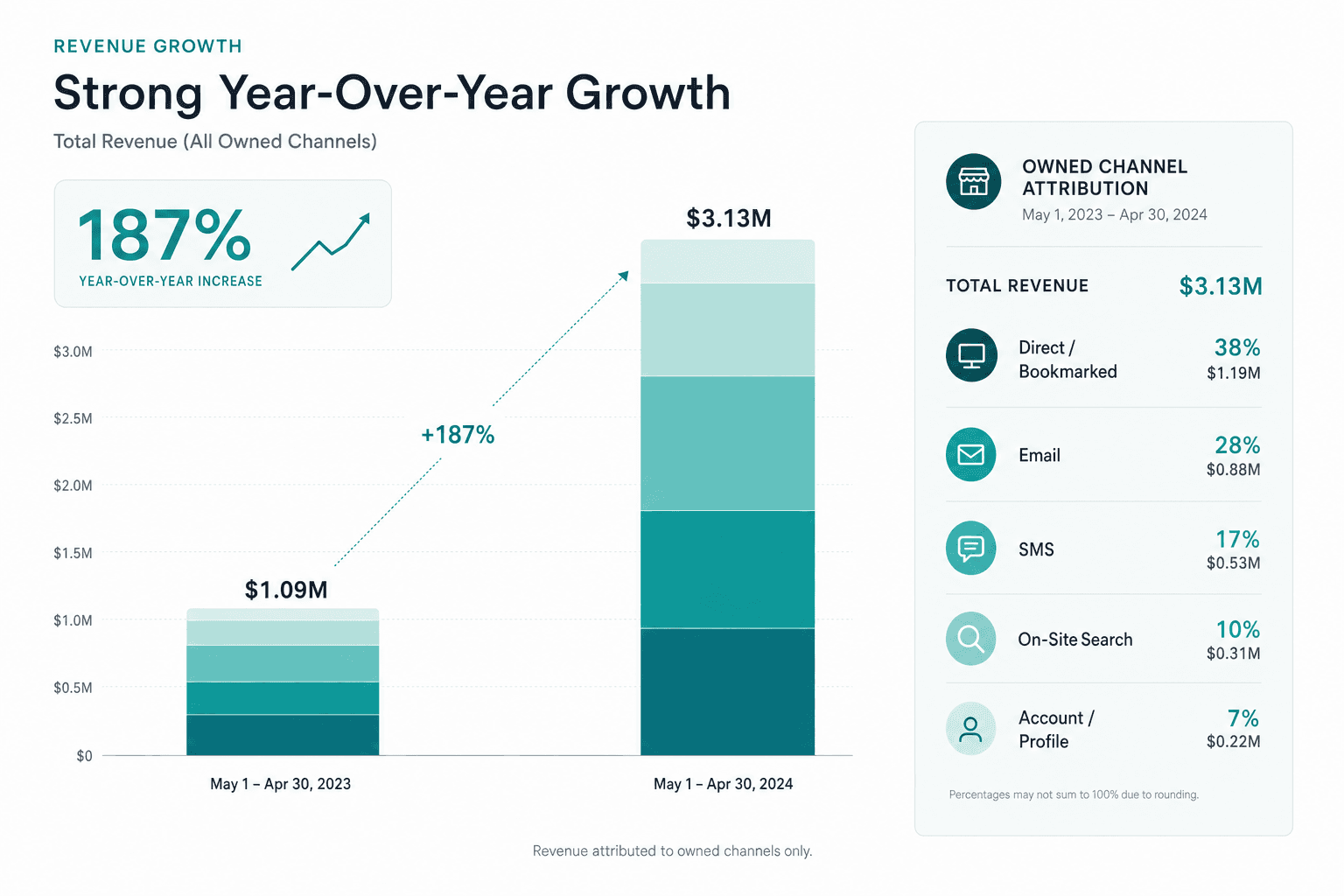
187% YoY, $8+ ROAS on Meta, +79% web conversion
Clean Monday Meals
Challenge
Clean Monday Meals, a food DTC brand, needed to grow across channels.
What we did
We scaled Meta and took over email and Amazon, the same hands-on ownership we bring to an Attentive program.
Result
Clean Monday Meals saw 187% YoY growth, $8+ ROAS on Meta, and a 79% lift in web conversion.
Find Out What Your Attentive Program Should Be Driving
No obligation. We'll show you your program's revenue gap by message type, by segment, and against benchmarks operators at your GMV level are hitting.
Sagum · January 2017 · St. George, Utah · 8+ years