

8+ years growing brands on KPIs, now with AI
More Wholesale Accounts, Higher Reorder Rates
Performance marketing built for B2B sales cycles, net terms buyers, and AOVs your DTC agency has never seen.
8+ years growing ecommerce brands · Google, Meta & TikTok partner · now with AI


Get your free Growth Gap Analysis
Senior strategist review · response within one business day
Prefer to reach out directly?
The Challenge
Wholesale Ecommerce Has Its Own Hard Problems
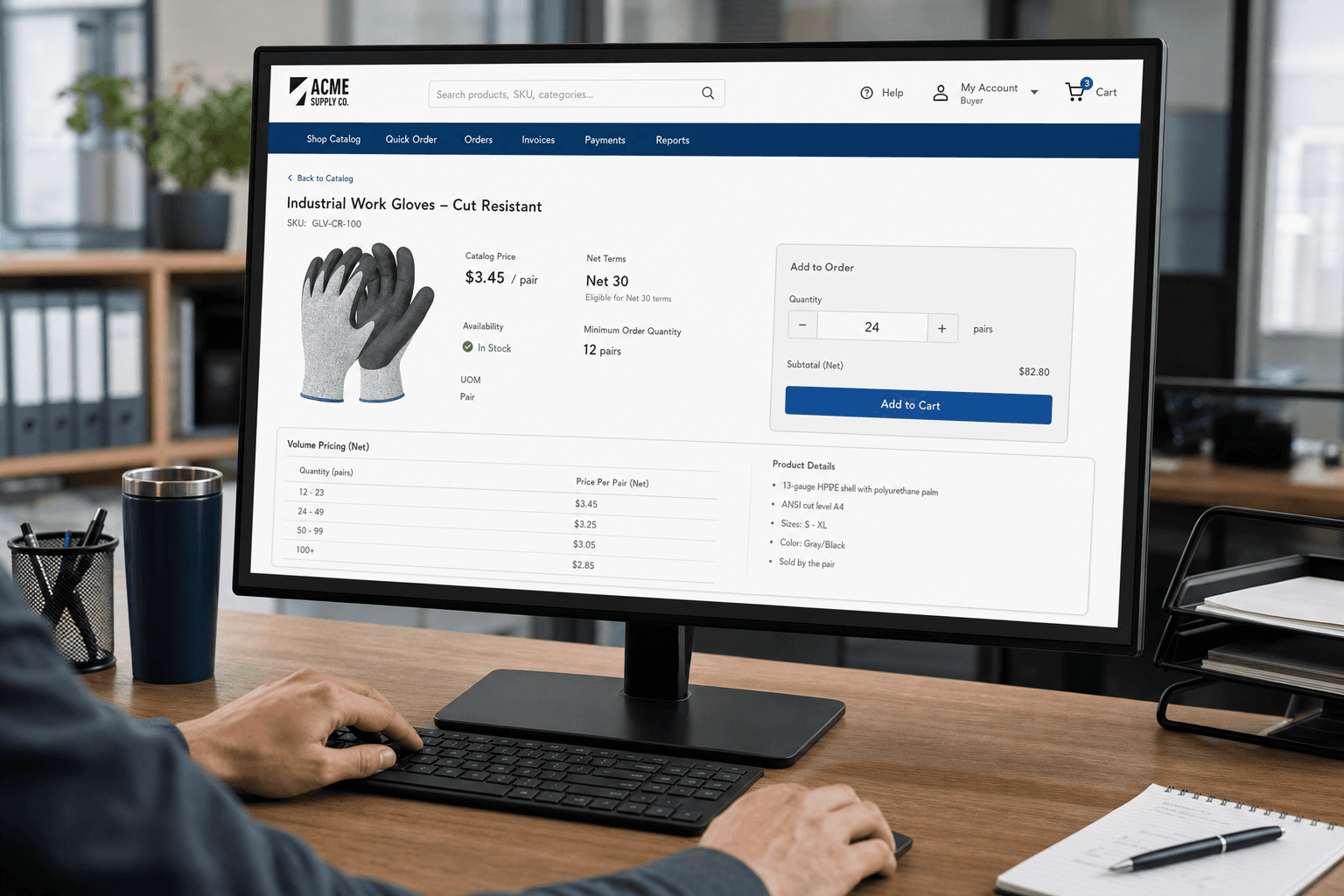
Procurement managers at regional retailers, distributors placing quarterly buy-ins, and resellers managing Net 60 balances run on a different clock than DTC shoppers. They vet suppliers on LinkedIn before issuing an RFQ and need custom catalogs, quantity rules, and payment terms a B2C checkout can't handle.
That checkout gap kills deals. An enterprise buyer with a $25,000 order on Net 60 terms hits a credit-card-only checkout and leaves. That's an architecture problem, not a conversion rate problem.
Attribution breaks too. A procurement manager sees your LinkedIn ad in week one, a colleague clicks through from Google Search in week three, and the order lands in week seven after internal approvals. Last-click attribution credits Google alone and misleads your CFO about pipeline.
You juggle company profiles, catalog assignments, and net terms balances while reps worry digital spend cannibalizes their commissions, even when paid media is opening net-new accounts they'd never reach in the field. You need a partner fluent in Shopify B2B, LinkedIn matched audiences, long attribution windows, and reorder sequences.
The Opportunity
Wholesale Operators Who Market Well Are Pulling Away
Sixty-one percent of B2B buyers prefer rep-free digital buying, an opening for self-serve wholesale portals, account-based search on 'wholesale [category] supplier,' and reorder nudges without rep calls.
B2B AOVs run hundreds to thousands of dollars, so one account from LinkedIn ABM or Google Search can fund months of media. About 67% of B2B buyers are comfortable placing $50,000+ orders online without sales involvement.
Handled well, net terms lift AOV: Net 30 or Net 60 buyers aren't cash-constrained, so they order full quantities, hit volume pricing thresholds, and consolidate orders. Seventy-nine percent of B2B buyers call flexible payment terms essential, so operators who feature terms in ads and landing pages win accounts price-only competitors lose.
Most wholesale competitors still run static, DTC-style search ads and skip LinkedIn, so you can own category search terms and build a compounding account base.
What Most Get Wrong
What B2B Wholesale Brands and Their Agencies Get Wrong
Using DTC attribution on a B2B sales cycle
Last-click attribution on a short DTC-style window suits impulse buys. On 30–90 day cycles with multiple stakeholders it zeroes out LinkedIn, so you defund the channel building your pipeline.
Ignoring LinkedIn as a demand channel
A stale company page and no ICP outreach leave you invisible on LinkedIn while buyers shortlist suppliers, so a competitor is already trusted when they search.
Sending wholesale buyers to a DTC product page
You pay to send a distributor to a consumer page lacking MOQ and net terms details or a catalog request path, so they call a competitor with a wholesale portal.
Bidding on DTC keywords instead of wholesale-intent queries
Agencies bidding on generic keywords buy consumer clicks that never become accounts. 'Bulk order [product] net terms' and '[category] distributor pricing' are lower volume, lower cost, and far higher intent.
No reorder sequence for existing accounts
Reorder rate is wholesale's north-star metric, and email or SMS nudges timed to replenishment cycles cost almost nothing. Skipping them leaves your highest-margin revenue on the table.
Why Now
Shopify B2B Lowers the Wholesale Barrier While Agencies Still Bid by Hand
Two shifts reward wholesale operators who move before their competitors. Shopify's native B2B features can handle company profiles, custom catalogs, and net payment terms from your store, so mid-market operators can sell wholesale without a custom portal. As that barrier falls, more rivals in your category are likely to open wholesale storefronts.
Most wholesale-adjacent agencies still run manual bids, static creative, and spreadsheet attribution. With AI, you can run account-based Google Search on long conversion windows, test LinkedIn creative and audiences faster than a manual team, and catch a pixel undercounting accounts for months before the error compounds into bad budget decisions. Operators who build acquisition and retention now will own category search terms when demand scales.
The Mechanism
Where AI Gives Wholesale Ecommerce Operators an Edge
Real productivity, not AI theater. Here's where it actually moves a number for b2b wholesale brands.
Digital Ads (Google Search + LinkedIn ABM)
What AI does: AI-assisted Google Search bids use your sales-cycle window, not a signal-starving DTC window. On LinkedIn, AI moves budget from dead impressions to company segments, job titles, and formats producing RFQ form fills.
The result: Wholesale-intent terms like 'bulk order [product] net terms' convert into accounts instead of losing auctions to DTC competitors bidding the same keywords for consumer sales.
Why it matters here: B2B deals take longer and involve more stakeholders than DTC orders. A long lookback shows which campaigns generate accounts; a DTC window sees almost nothing.
Analytics & Attribution
What AI does: AI ties HubSpot or Salesforce pipeline stages to LinkedIn and Google touchpoints, flagging anomalies like a misconfigured catalog page event or a checkout pixel firing on quote requests instead of completed orders.
The result: A procurement manager who saw three LinkedIn impressions before searching on Google shows up as a multi-touch conversion, so you budget on accurate pipeline data.
Why it matters here: Last-click shows a $25,000 account that took 60 days and five touchpoints as one Google click, so you defund LinkedIn ABM. Fix attribution first.
Creative
What AI does: Instead of one LinkedIn Document Ad per quarter, AI lets you produce and test five creative angles per month: net terms, MOQ flexibility, reorder automation, catalog depth, and a category proof point.
The result: You find what resonates with procurement managers and retail buyers within weeks, ahead of competitors running the same test.
Why it matters here: Lifestyle imagery, urgency copy, and consumer testimonials miss buyers seeking reliability and payment flexibility. Most operators run one static ad for months; testing faster wins.
Email & Reorder Automation
What AI does: AI times reorder nudges to each buyer's order history, not generic 30-day intervals, and segments by reorder frequency, AOV tier, and payment terms, separating Net 60 key accounts from new prepay accounts.
The result: Reorder rate improves without reps, and accounts that went quiet after one order get re-engaged before a competitor fills the gap.
Why it matters here: A one-and-done account is unrecovered acquisition cost. Reorder sequences are the highest-ROI retention tool, yet most operators run none or send generic blasts.
Conversion Optimization
What AI does: AI audits your wholesale pages and checkout for B2B failure points, like a quote flow with no real-time inventory confirmation, then tests alternative structures against account-creation and RFQ conversion rates.
The result: Fewer buyers abandon at checkout or catalog request because the page covers net terms, volume pricing, and company account setup up front.
Why it matters here: The checkout gap is the biggest structural reason B2B paid media underperforms. Fix it before scaling spend; AI makes each audit fast enough to matter.
Ready to see what this looks like for your b2b wholesale brands business?
No obligation. A senior strategist will show you exactly where the wins are.
The Strategy
How a B2B Wholesale Marketing Strategy Should Run
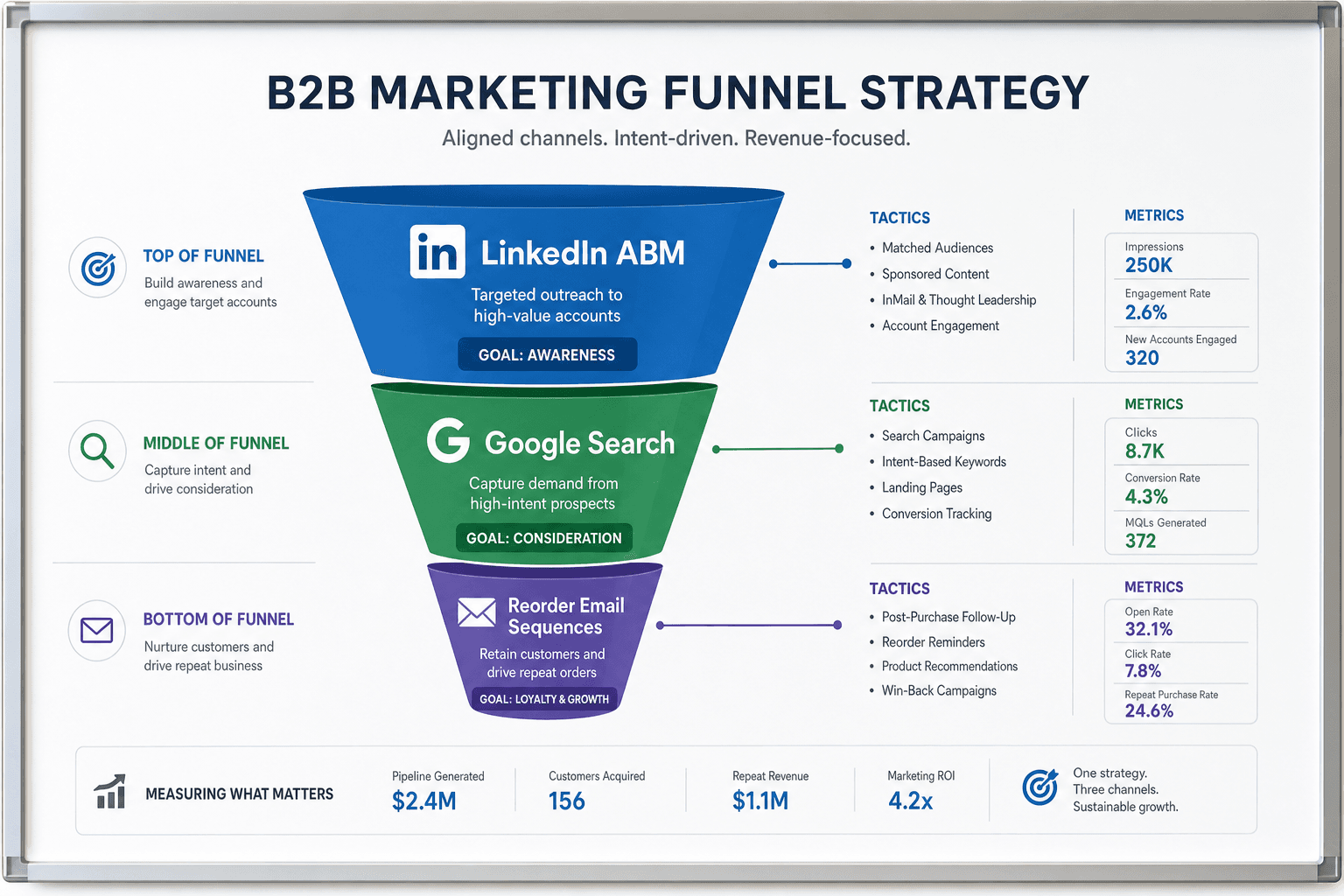
The governing KPI is blended ROAS on a long attribution window; reorder rate and AOV show early whether new accounts are worth keeping.
Google Search captures buyers who already need a supplier, so favor 'bulk [product] distributor' and '[category] net terms pricing' over broad consumer terms.
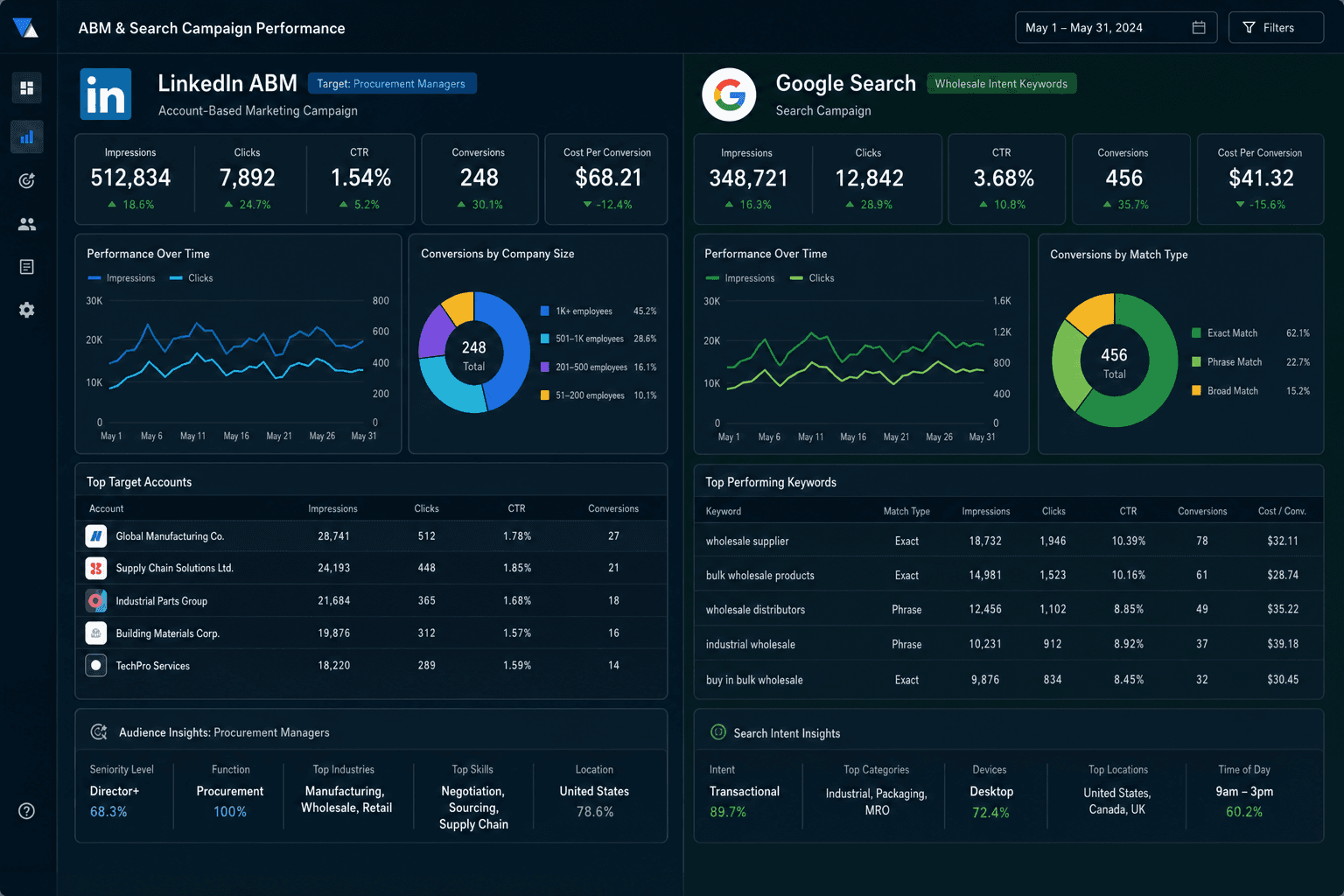
LinkedIn reaches procurement managers, retail buyers, and category directors before they search. It runs in three stages: ungated impressions on ICP company lists and job titles, gated Document Ads or Lead Gen Forms (buyer guide, catalog preview, net terms explainer), then Sponsored Content retargeting CRM contacts toward an RFQ.
Search runs on tightly themed wholesale-intent ad groups with bids set to your sales-cycle window (usually 30–90 days). Campaign UTMs survive your ERP middleware, form fills tie to CRM stages, and accounts are attributed across touchpoints.
Landing pages put net terms, MOQ structure, catalog depth, and account setup above the fold, with a catalog request or RFQ form replacing add-to-cart as the primary action. Checkout extensibility keeps net terms buyers from hitting a credit-card wall.
Retention runs on reorder sequences segmented by account tier, AOV, and replenishment cycle, plus pre-season buy-in campaigns and payment reminders on net terms balances. Shift account management to self-serve where you can, without alienating key accounts that want a rep.
The one number that governs this
Measure blended ROAS on your sales-cycle attribution window (usually 30–90 days), alongside reorder rate by account cohort, AOV by buyer tier, and quote-to-order rate.
How We Help
How We Execute This for Your Wholesale Operation
Measurement comes first, then acquisition and retention. We keep our client list limited so each gets senior attention, and we treat your reorder rate and pipeline ROAS like our own.
Attribution & Tracking Audit
Before we spend a dollar on ads, we tie CRM stages to LinkedIn and Google touchpoints and verify checkout, form, and UTM tracking.
Google Search (Wholesale-Intent Campaigns)
We build tightly themed wholesale-intent ad groups, with bids set to your sales-cycle window and optimized toward account acquisitions.
LinkedIn ABM
We run the three-stage funnel, from ICP company lists to CRM retargeting, and show LinkedIn's role in pipeline.
B2B Landing Page & Checkout Optimization
We fix pages that bury net terms below the fold, offer consumer-only payments, or overload catalog request forms, then optimize for catalog requests and RFQs.
Reorder & Retention Email Sequences
We build segmented reorder nudges and pre-season buy-in campaigns for procurement managers and retail buyers, timed to your order windows.
Creative Production & Testing
We produce and test B2B creative like buyer guides, comparison frameworks, net terms messaging, and catalog depth proof points to find what resonates in weeks.
AI-Assisted Analytics & Reporting
We report blended ROAS, reorder rate, AOV by tier, and quote-to-order rate on the correct attribution window, replacing last-click DTC dashboards that misrepresent your pipeline.
Who's Behind This
Who we are, and what makes us different
Sagum is a performance marketing agency founded in January 2017 in St. George, Utah. We've spent 8+ years growing real brands and being judged on KPIs, not vanity metrics.
We deliberately limit how many clients we take so each one gets senior attention. We treat your numbers like our own, we never run generic playbooks, and your strategy is built for your business, because shouldn't your brand's marketing be custom to your brand?
Sagum.ai is our AI arm: the same proven operators now build AI into the work wherever it creates real edge, not as theater, but as leverage applied with discipline.
- 8+ years growing brands on performance KPIs, not vanity metrics
- Limited client roster, with senior attention on every account
- An extension of your team; your success is tied to ours
- Custom strategy per brand, never a generic playbook
- AI built in where it moves a number; judgment over hype
“Sagum is a performance marketing agency that's spent 8+ years growing brands by treating their numbers like our own. We take on few clients, never run generic playbooks, and now build AI into the work wherever it creates real edge, not hype. Your strategy is built for your business, and our success is tied to yours.”
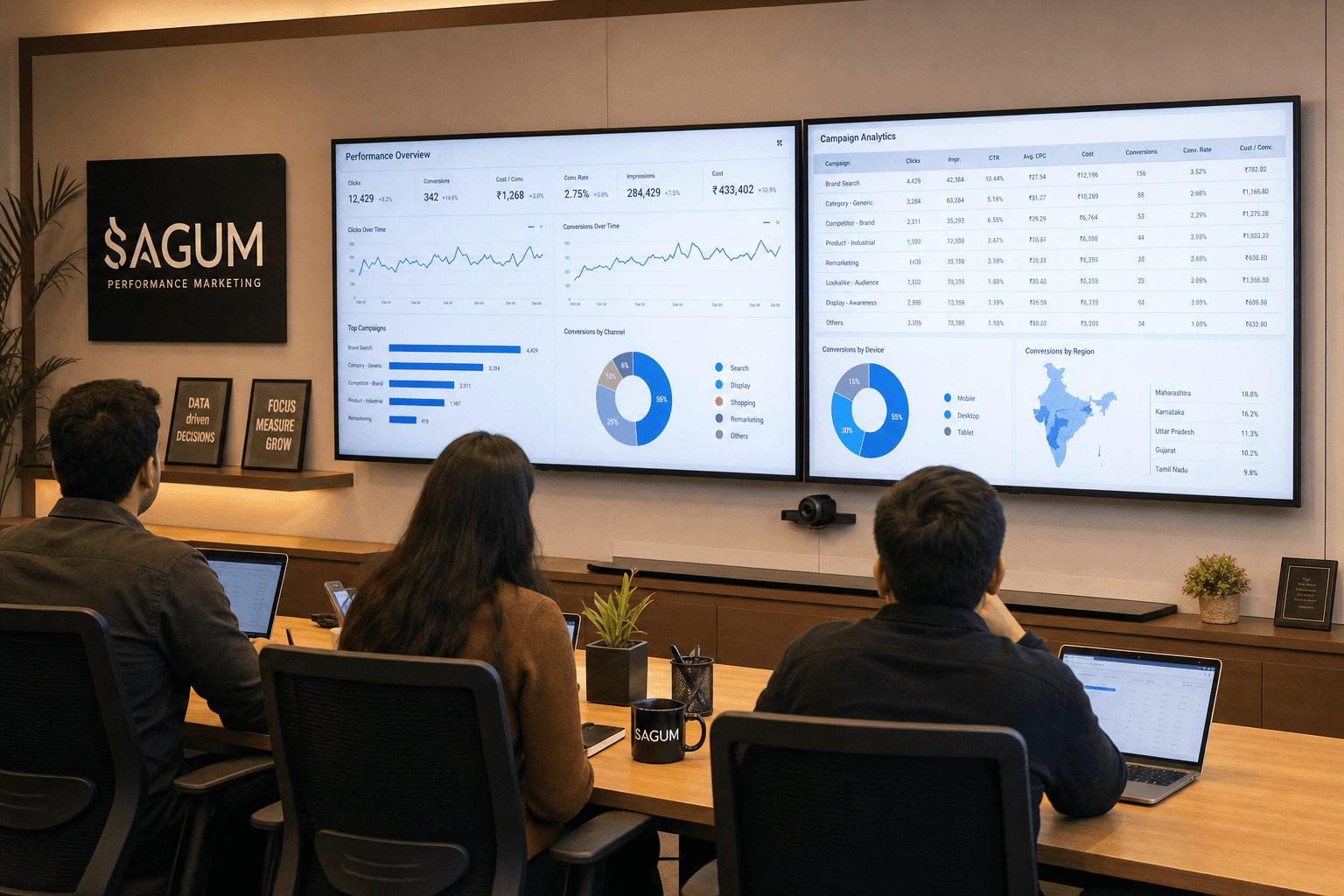
“After six years, Sagum is our most important partner: trusted, communicative, and caring about our business as if it's their own.”
Long-term partner
6-year client
Proof
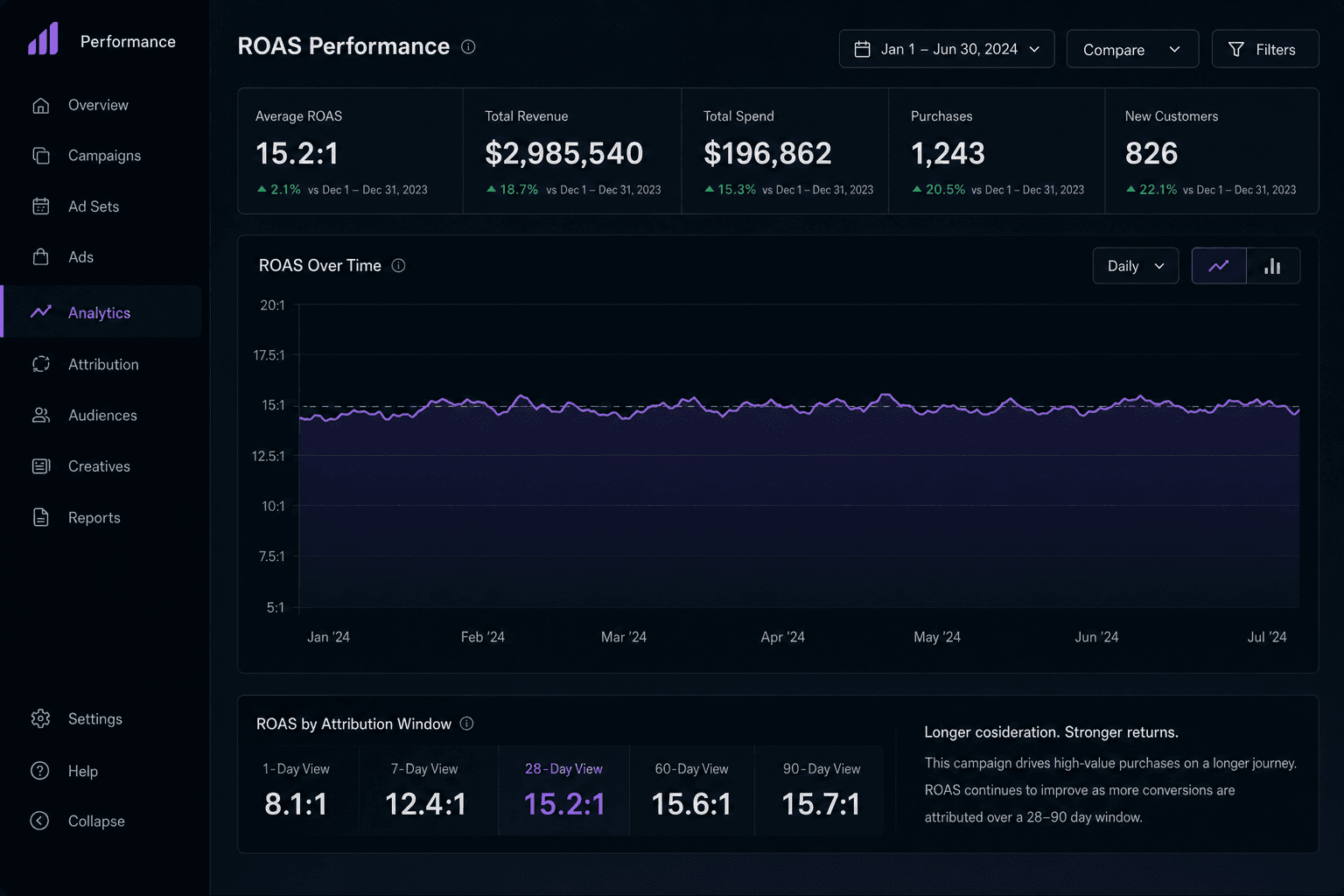
15:1 ROAS on a longer purchase-consideration cycle
Create Room / Original Scrapbox
Challenge
Create Room / Original Scrapbox faced a longer purchase-consideration cycle for a higher-ticket DTC product.
What we did
We built the strategy around that considered buying cycle.
Result
The account held a 15:1 ROAS while respecting the longer consideration window. B2B runs on the same discipline: build around how long your buyers take to decide.
Your Wholesale Channel Deserves a Marketing Partner Who Gets B2B
No obligation. We'll audit your attribution setup, review your wholesale acquisition and retention gaps, and tell you exactly what we'd build before you commit to anything.
Sagum · January 2017 · St. George, Utah · 8+ years