

8+ years growing brands on KPIs, now with AI
The baby & toddler window closes fast
Your buying window is 18-36 months, so we maximize LTV before her next registry replaces you.
8+ years growing ecommerce brands · Google, Meta & TikTok partners · judged on ROAS, not impressions


Get your free Growth Gap Analysis
Senior strategist review · response within one business day
Prefer to reach out directly?
The Challenge
The Hardest Part of Marketing a Baby Brand Is the Clock
Every customer has a biological expiration date. Once she adds you to her registry at week 24 of pregnancy, you have roughly 18–36 months to earn repeat business before her baby outgrows your category.
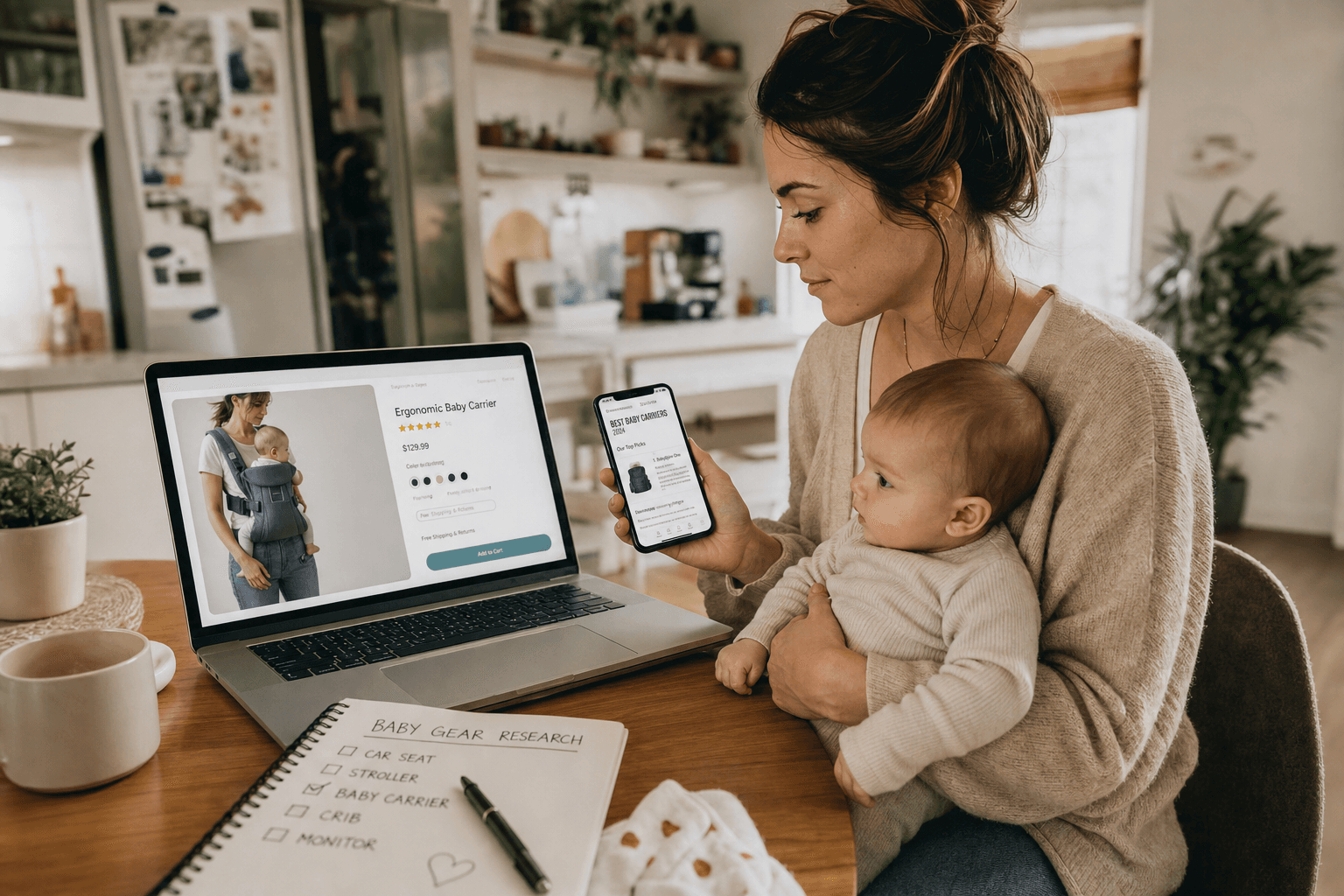
She's ecommerce's most anxious buyer. A Millennial mom vets a sleep sack or skincare line for safety certifications, pediatrician endorsements, real-nursery TikTok UGC, and substantiated OEKO-TEX or BPA-free claims. Miss one trust signal and she's gone to Frida or Lovevery.
Consumables (wipes, skincare, pouches) run $50–$120 AOV and need strong repeat-purchase rates to justify CAC. Gear and furniture can push $250–$500+ per order but face a 1–3 week deliberation cycle and buyers who read every Babylist review. Generic agencies treat them alike.
Life-event targeting makes Meta the core acquisition engine, but creative fatigues faster here than almost anywhere because the audience is emotionally invested and ad-saturated. TikTok Shop grows fastest; some brands report creator-led ROAS that dwarfs Meta's. Amazon is your biggest distribution opportunity and margin threat: third-party undercutters can erode price and brand equity.
The Opportunity
Baby Brands That Earn Trust Early Capture Outsized Wallet Share
A parent who trusts you at week 28 of pregnancy builds her registry around you, brings in gifts from grandparents and coworkers, reorders on Subscribe & Save, and follows you into adjacent categories at each milestone.
Stroller and nursery bundles lifted baby and child product AOV 71% year-over-year in 2024, to around $362 at the high end. Prime Day 2025 baby and toddler sales ran 55% above average June daily levels. Holiday gifting, spring baby shower season, and viral TikTok moments reward brands that plan, not react.
Gifting is an underserved acquisition channel: gift-givers often decide in under 24 hours, buy on emotion, and are willing to spend more than the parent. With registry integration, gift landing pages, and paid gifting creative, you capture sales competitors miss.
Baby and maternity is a growing TikTok Shop category worth claiming early.
What Most Get Wrong
What Baby & Toddler Brands and Their Agencies Get Wrong
Same creative for cold and warm audiences
Cold prospects need real-nursery UGC; stroller cart abandoners need urgency, objection handling, or reviews from parents of similar-aged babies. Identical creative wastes retargeting budget on introductions and burns cold audiences.
Ignoring the registry, the category's highest-intent moment
A mom adding you to her Babylist signals intent and shows you to her gift-givers. Skipping registry landing pages, registry-traffic tracking, and campaigns for pregnancy weeks 20–32 wastes that moment.
Treating Amazon as a passive channel
Amazon leads U.S. online baby product sales, and third-party sellers undercutting your price are a common brand complaint. Passively managed, Amazon costs brands margin, review velocity, and organic rank.
Optimizing blended ROAS without LTV math by product type
A 3x ROAS on a $60 consumable reordered every 30 days differs from one on a $400 stroller bought once. Brands often overfund ROAS-flattering gear that builds no repeat-purchase base.
Underinvesting in milestone-keyed post-purchase flows
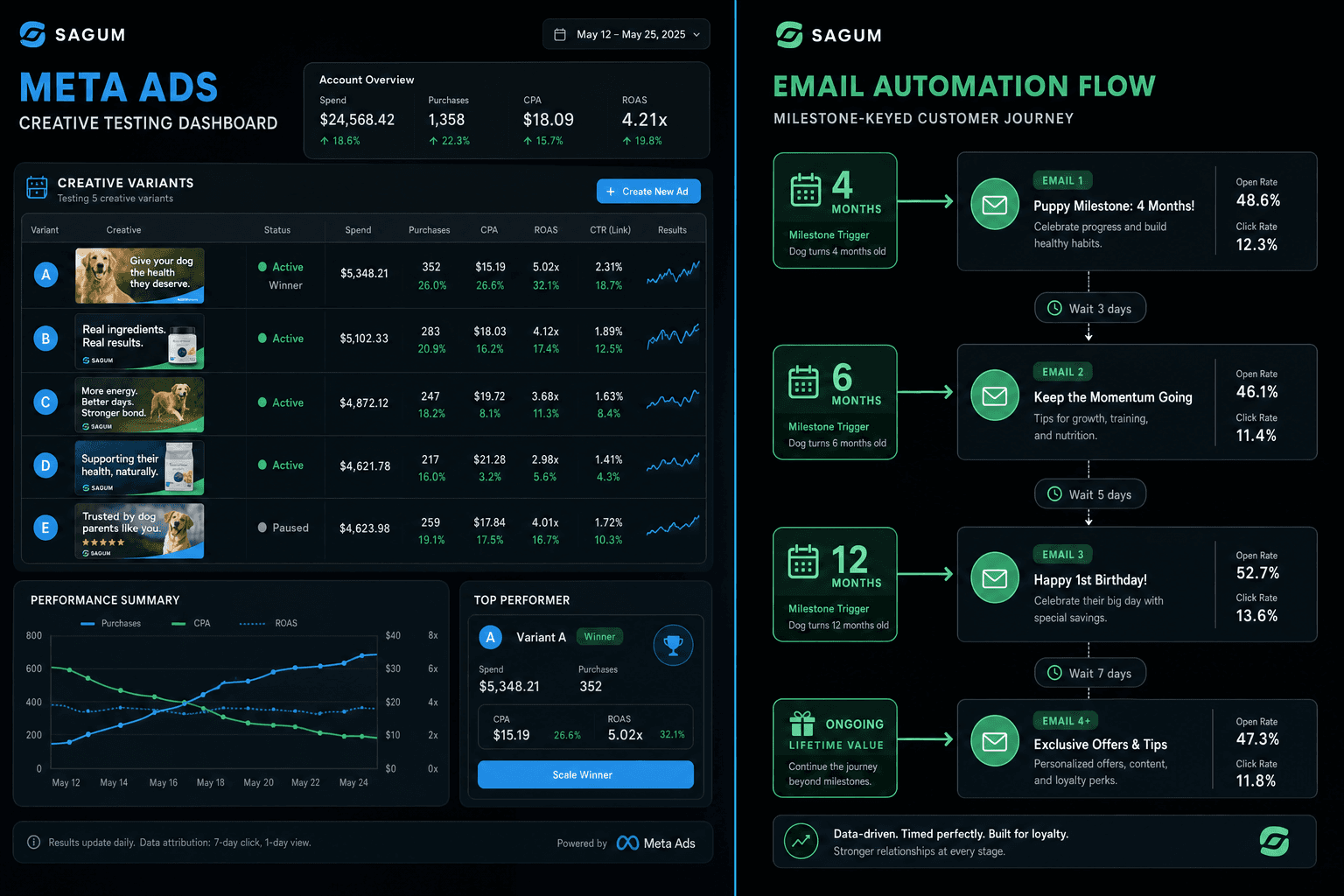
A parent who bought a newborn sleep sack almost certainly buys a 4-month play gym, 6-month high chair, and 12-month first-birthday outfit if emailed on time. Generic promotional emails aren't.
Why Now
Why Baby Brands Should Move Before the Category Catches Up
Waiting costs more: Meta CPMs climb, Amazon PPC rises as more DTC brands bid on the same terms, and TikTok Shop creators stay affordable only until the channel matures.
AI lets you test five creative angles a week instead of one and find the UGC hook that converts anxious moms before competitors do. AI-assisted attribution splits each sale's credit across Meta, TikTok, and Amazon, beyond the last click. Email adapting to each baby's age can now run at a scale impractical two years ago.
Build these systems now and the advantage compounds through Prime Day's July spike, which rewards creative and inventory ready weeks ahead, and Q4, the biggest revenue window. Late movers face competitors who already know which angles convert, from P&G-scale incumbents to DTC insurgents faster on TikTok.
The Mechanism
Where AI Gives Baby & Toddler Brands an Edge
Real productivity, not AI theater. Here's where it actually moves a number for baby & toddler brands.
Creative
What AI does: AI generates and tests multiple UGC-style angles weekly on Meta and TikTok (hooks, safety-claim framings, milestone triggers) to learn what lands with expecting moms, new moms, and gift-givers.
The result: You find converting creative in days, not months, and retire underperformers before they burn your audience.
Why it matters here: In a small, well-targeted audience, a static creative set run for six weeks is invisible by week three.
Analytics
What AI does: AI-assisted attribution maps a new parent's path (TikTok video at pregnancy week 22, Meta retargeting at week 28, Amazon search at week 30) and credits all three channels.
The result: Budget flows to channels that start and close purchases, not those that look best in platform-native dashboards.
Why it matters here: Stroller shoppers hit six to eight brand touchpoints. Last-click attribution undercredits the TikTok and Meta ads that start the journey, so brands cut acquisition spend.
What AI does: AI builds and maintains milestone-keyed email and SMS sequences that adapt to purchase history and estimated baby age, surfacing first foods gear or toddler apparel when intent peaks.
The result: Repeat purchase rate climbs without manual campaigns, and you monetize each customer's full 18–36 month window.
Why it matters here: A baby's age is a known variable, a repurchase trigger no other ecommerce category matches. Without automation, repeat purchases go to whoever emails first.
Conversion Optimization
What AI does: AI reviews product and landing pages for trust signals (safety certification placement, UGC review prominence, return policy visibility, mobile checkout friction) and surfaces the highest-impact tests.
The result: More of the parent traffic you already pay for converts, lifting effective ROAS without more spend.
Why it matters here: A footer-buried OEKO-TEX badge, three-click return policy, or extra mobile checkout step loses sales. With Meta CAC already $45–$90, fixing these is the highest-ROI work.
Social Media
What AI does: AI monitors TikTok and Instagram for emerging baby trends (viral sleep sacks, stroller wagon moments, new swaddle techniques), flagging spikes in time to brief creators and adjust paid amplification.
The result: You put paid spend behind organic momentum before the trend peaks, instead of paying premium CPMs for declining returns.
Why it matters here: Spot a baby fad two weeks before competitors, have creator content ready, and you capture most of the surge; few categories move faster on TikTok.
Ready to see what this looks like for your baby & toddler brands business?
No obligation. A senior strategist will show you exactly where the wins are.
The Strategy
The Marketing Strategy That Fits Baby & Toddler Brands
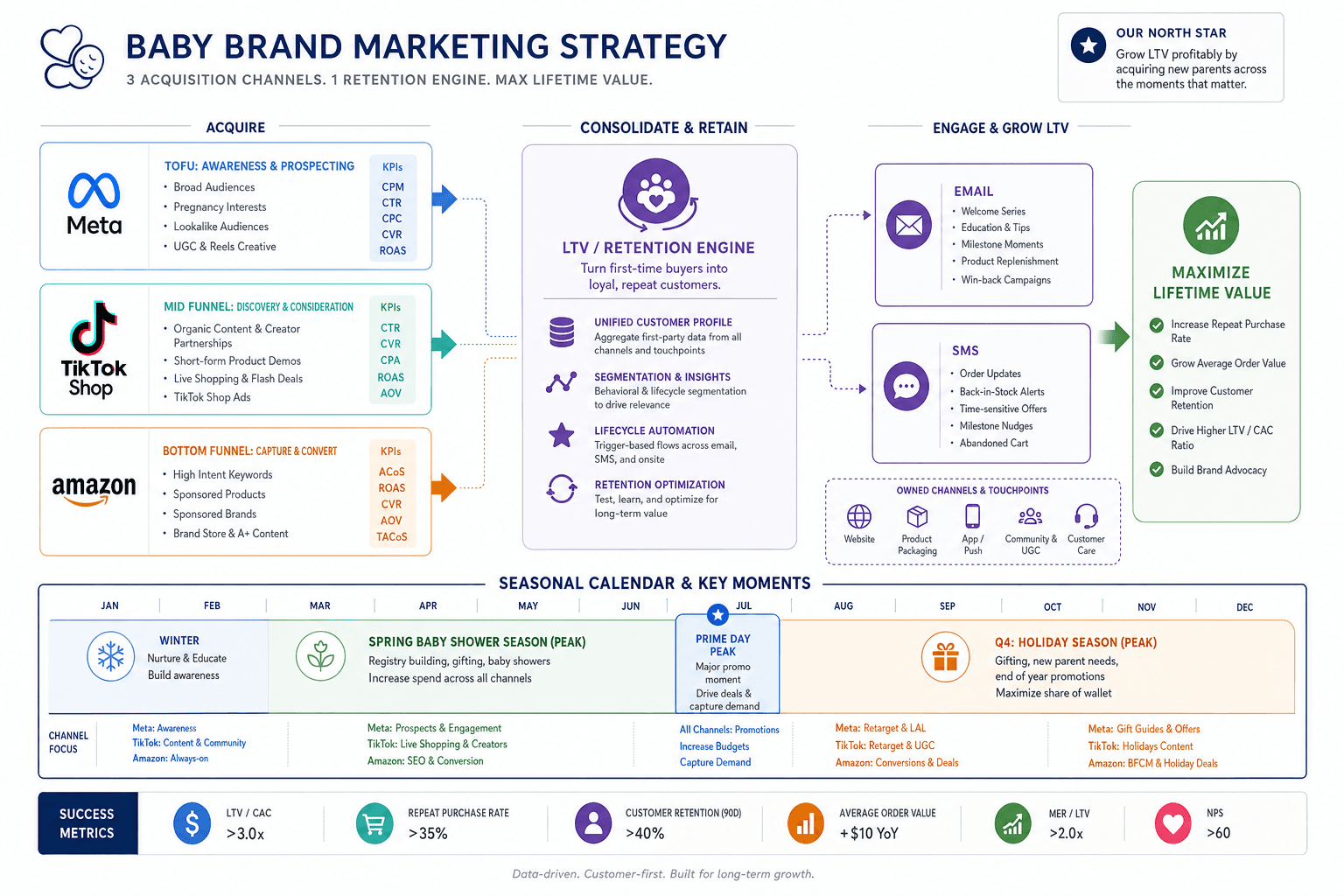
Start by deciding which kind of brand you primarily are: consumables (repeat purchase, LTV-driven, Subscribe & Save) or gear and furniture (high AOV, considered purchase, heavy gifting).
That choice changes channel mix, creative, and KPIs. A wipes brand chasing 90-day CAC payback and repeat purchase rate needs a different Meta structure than a stroller brand with a $350 AOV and a 3-week deliberation cycle.
For most baby brands, Meta (Facebook and Instagram) leads acquisition through life-event targeting, and UGC-style creative is mandatory. TikTok Shop is the growth channel, with paid amplification behind organic creator winners.
Amazon handles retention and discovery and needs active management alongside DTC, effectively a second full-time marketing job. Email and SMS run milestone sequences that turn a one-time registry purchase into a 24-month repeat customer.
Budget follows the pregnancy and parenting calendar: peak spend in the week-20-to-32 registry window, a spring ramp for baby shower season and Mother's Day, Prime Day prep in June, and a Q4 scale-up for holiday gifting.
Multi-touch attribution guides spend, and creative is a performance variable rebuilt for each buyer and funnel stage.
Repeat purchase rate and 12-month LTV are leading indicators of whether growth is sustainable or bought.
The one number that governs this
Blended ROAS across Meta, TikTok Shop, and Amazon, segmented by product type and validated against 90-day new-customer CAC payback, governs every dollar.
How We Help
How We'd Execute This for Your Baby Brand
We fix measurement first, then build in the order that compounds returns: paid acquisition timed to your customer's pregnancy stage, creative that earns her trust, retention flows, and ongoing optimization.
Analytics & Attribution
We audit Meta and TikTok pixels, Amazon attribution, and email, find misassigned credit, and build a blended ROAS and CAC payback dashboard.
Paid Social (Meta & TikTok)
We run Meta life-event campaigns for expecting parents, new parents, and gift-givers, brief TikTok Shop creators, and boost organic winners on a separate ROAS target.
Creative Strategy & Production
We test multiple angles weekly for anxious safety-researchers, registry builders, and gift-givers, brief UGC creators, write scripts, and retire fatigued ads.
Email & SMS Automation
We build milestone flows (play gym, first foods gear, toddler transition products), registry-abandonment sequences, baby shower gifting campaigns, and a Q4 holiday flow.
Conversion Optimization
We audit product pages and checkout for the trust signals anxious parents look for, then run structured tests to lift conversion.
Amazon Channel Management
We manage A+ Content, Brand Registry storefront, Subscribe & Save for consumables, and PPC, capturing Meta- and TikTok-driven demand without ceding margin to third-party undercutters.
Who's Behind This
Who we are, and what makes us different
Sagum is a performance marketing agency founded in January 2017 in St. George, Utah. We've spent 8+ years growing real brands and being judged on KPIs, not vanity metrics.
We deliberately limit how many clients we take so each one gets senior attention. We treat your numbers like our own, we never run generic playbooks, and your strategy is built for your business, because shouldn't your brand's marketing be custom to your brand?
Sagum.ai is our AI arm: the same proven operators now build AI into the work wherever it creates real edge, not as theater, but as leverage applied with discipline.
- 8+ years growing brands on performance KPIs, not vanity metrics
- Limited client roster, with senior attention on every account
- An extension of your team; your success is tied to ours
- Custom strategy per brand, never a generic playbook
- AI built in where it moves a number; judgment over hype
“Sagum is a performance marketing agency that's spent 8+ years growing brands by treating their numbers like our own. We take on few clients, never run generic playbooks, and now build AI into the work wherever it creates real edge, not hype. Your strategy is built for your business, and our success is tied to yours.”

“Sagum roughly doubled our bottom line. They treat the work like it's their own business.”
Rachel Nilsson
CEO, RAGS
Proof
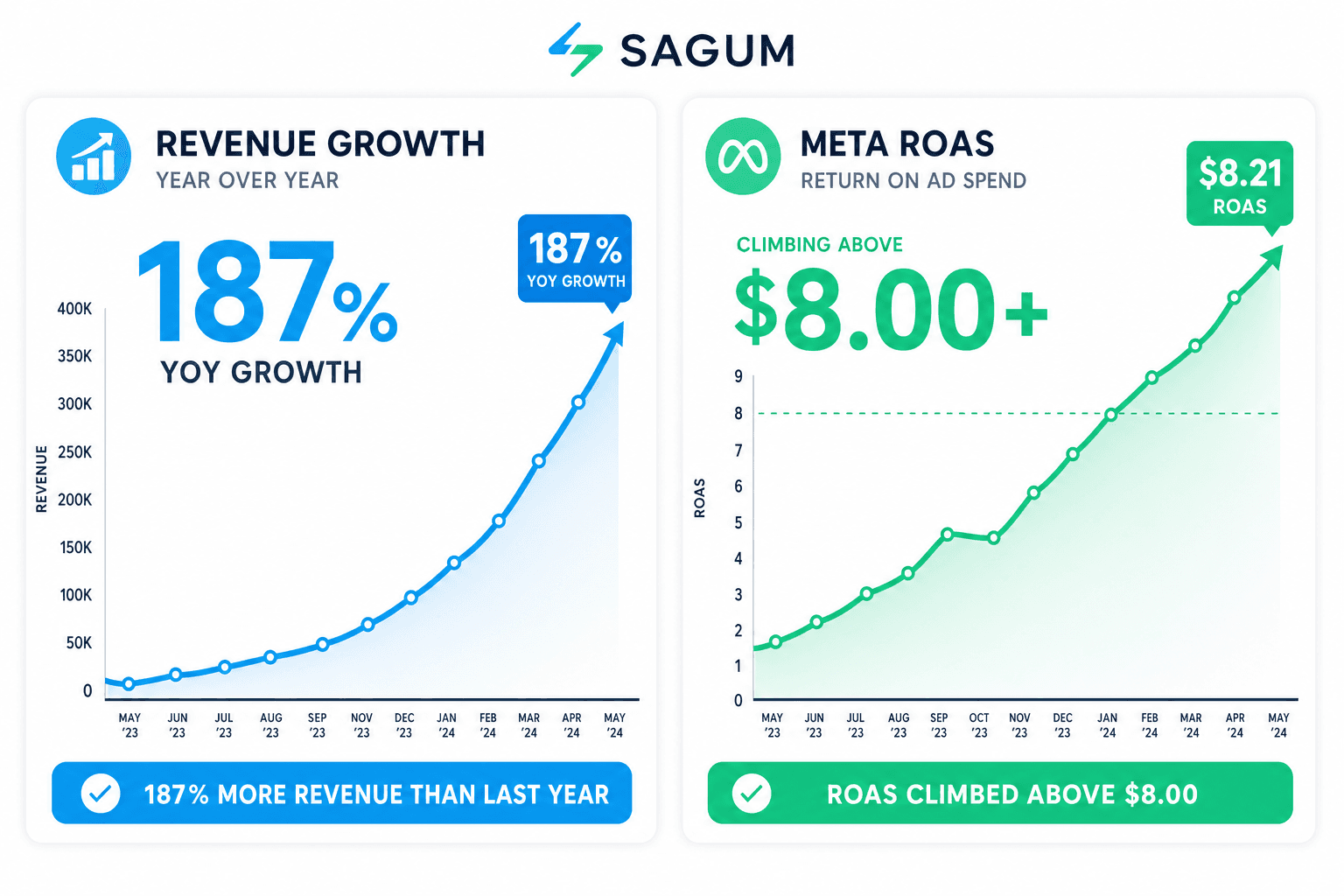
187% YoY, $8+ ROAS on Meta, +79% web conversion
Clean Monday Meals
Challenge
A DTC food brand needed to grow across channels, the same growth problem most baby brands face.
What we did
We scaled Meta and took over the brand's email and Amazon channels.
Result
The brand grew 187% year-over-year, Meta ROAS reached $8+, and web conversion improved 79%. Baby brands can apply the same multi-channel approach inside a compressed LTV window.
Your Customer's Buying Window Is Already Running. Let's Help You Win It.
No obligation. We'll bring a specific read on your channel mix, attribution setup, and biggest opportunities, built around your business model instead of a generic ecommerce template.
Sagum · January 2017 · St. George, Utah · 8+ years