

8+ years growing brands on KPIs, now with AI
Grow Your BigCommerce Store's ROAS
Feed-level precision, blended ROAS strategy, and AI-driven creative, built for how BigCommerce actually works.
8+ years of performance marketing · Google, Meta & TikTok · AI-powered execution


Get your free Growth Gap Analysis
Senior strategist review · response within one business day
Prefer to reach out directly?
The Challenge
BigCommerce's native power adds surface area generic agencies never map
You chose BigCommerce, hardly a beginner's platform, for zero transaction fees on supported gateways, native B2B features Shopify competitors bolt on with expensive apps, and Multi-Storefront for separate brand or regional storefronts from one Control Panel.
On Stencil, theme-code CRO tests and custom page templates a Shopify agency ships in an afternoon need a deploy through the CLI. Checkout events don't reach GA4 cleanly out of the box, so smart bidding runs on incomplete signal, and the default feed exports fields Google ignores or penalizes.
If your GMV nears the Pro plan's $400K annual cap, growth moves you toward a forced upgrade plus $150/month per $200K beyond it, so only margin-positive growth pays.
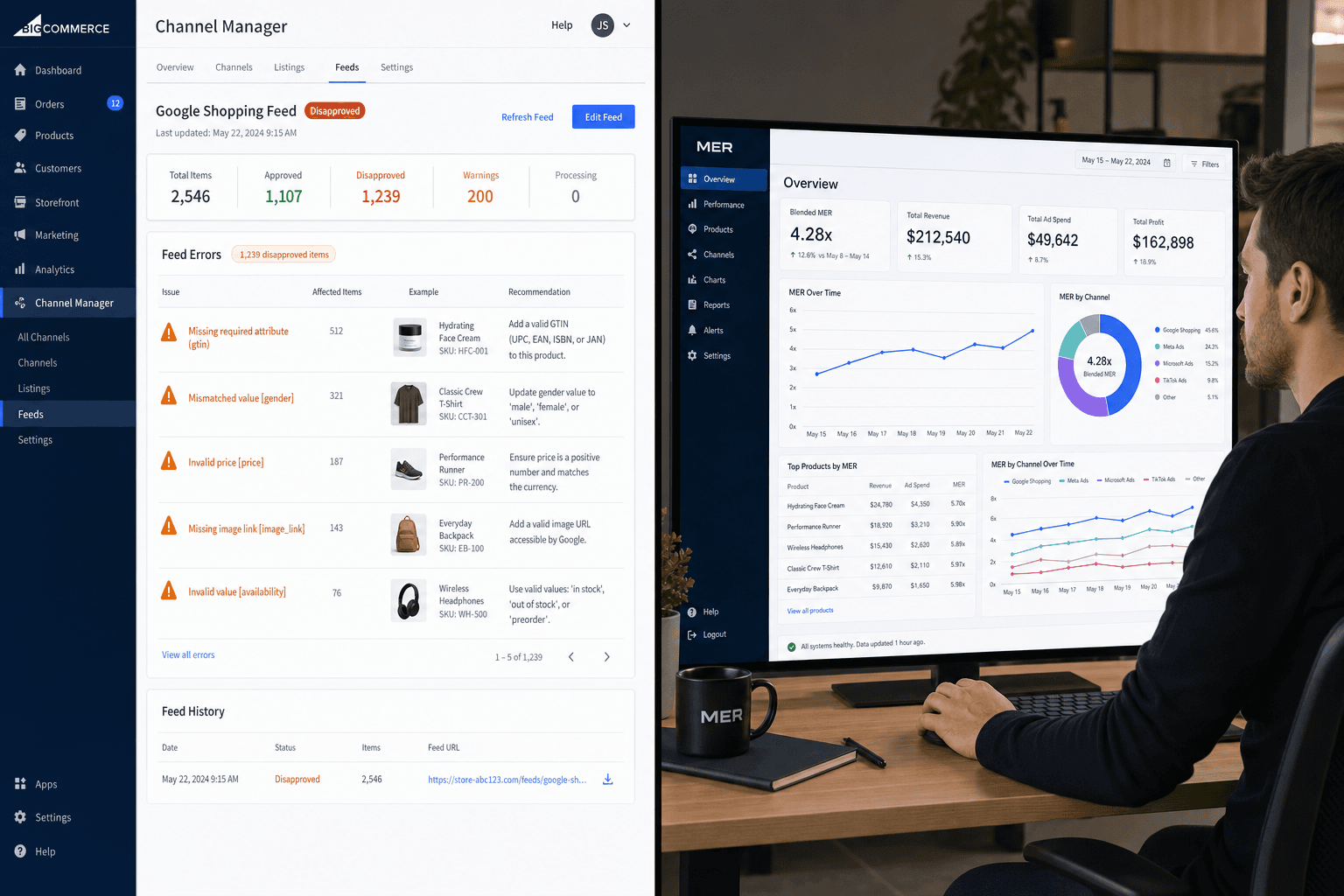
Channel Manager flags feed disapprovals across Google, Meta, and marketplaces, Price Lists must follow every ERP price change, and you supplement BigCommerce Analytics with Triple Whale or Northbeam because native attribution can't support confident blended ROAS calls. An agency that can't tell Cornerstone from Catalyst or rebuild a feed costs you money while appearing to spend it.
The Opportunity
Zero-transaction-fee headroom is ad budget most BigCommerce brands leave unused
At $300K annual revenue, you save roughly $6,000 a year in transaction fees versus a Shopify Basic merchant on a third-party processor. Redirect it into paid media with disciplined ROAS targeting, and your edge widens over time.
A feed rebuild is among your highest-return moves, and most competitors export bare-minimum feeds. Merchants using Feedonomics Surface saw 24% higher YoY GMV growth in November 2025 than peers without it.
Multi-Storefront gives you DTC, B2B, or regional segmentation most platforms can't match. Pair it with segmented campaigns and Price List-aware targeting, and you run a different playbook from single-storefront competitors.
Moving from Stencil to headless Catalyst is also a conversion rate opportunity: better Core Web Vitals lift Quality Scores and organic rankings while cutting CPCs. Brands migrating with performance marketing wired in will pull away from those migrating for dev reasons alone.
What Most Get Wrong
What BigCommerce brands and their agencies keep getting wrong
Running campaigns on a broken conversion signal
Unless Google Ads Enhanced Conversions is custom-wired through checkout, smart bidding trains on garbage data: campaigns chase wrong actions, CPAs inflate, and you can't tell which campaigns drive revenue.
Exporting the default feed without custom labels or GTIN enrichment
Without variant-level mapping or supplemental feeds for high-margin SKUs, Shopping campaigns lose impression share before the auction, pay higher CPCs where they win, and hit a ceiling no budget breaks.
Leaving faceted-navigation crawl bloat unfixed
Category depth and URL parameters can spawn thousands of low-value URLs that dilute crawl budget and fragment rankings, and generic audits miss the Stencil-specific issues costing you organic traffic.
Judging ROAS channel by channel and ignoring blended ROAS
Strong in-platform ROAS can hide organic cannibalization, view-through attribution inflation, or a contribution margin problem after COGS and fulfillment. Blended ROAS shows the whole picture.
Hiring an agency that doesn't know Stencil or Catalyst
Generic agencies lose BigCommerce accounts for not knowing Handlebars, Stencil CLI, or what Catalyst allows beyond Page Builder. Every week a test waits on a deploy is lost conversion data.
Why Now
The window closes once competitors fix their feeds and tracking
Most BigCommerce operators run on broken conversion signals, default feeds, and overstated in-platform ROAS, a gap open to you until platforms mature and competitors catch up. Google increasingly weights feed completeness and conversion signal quality in Shopping auctions. With AI-assisted bidding on an enriched feed and clean Enhanced Conversions data, you gain ground weekly on competitors using a default export and last-click attribution.
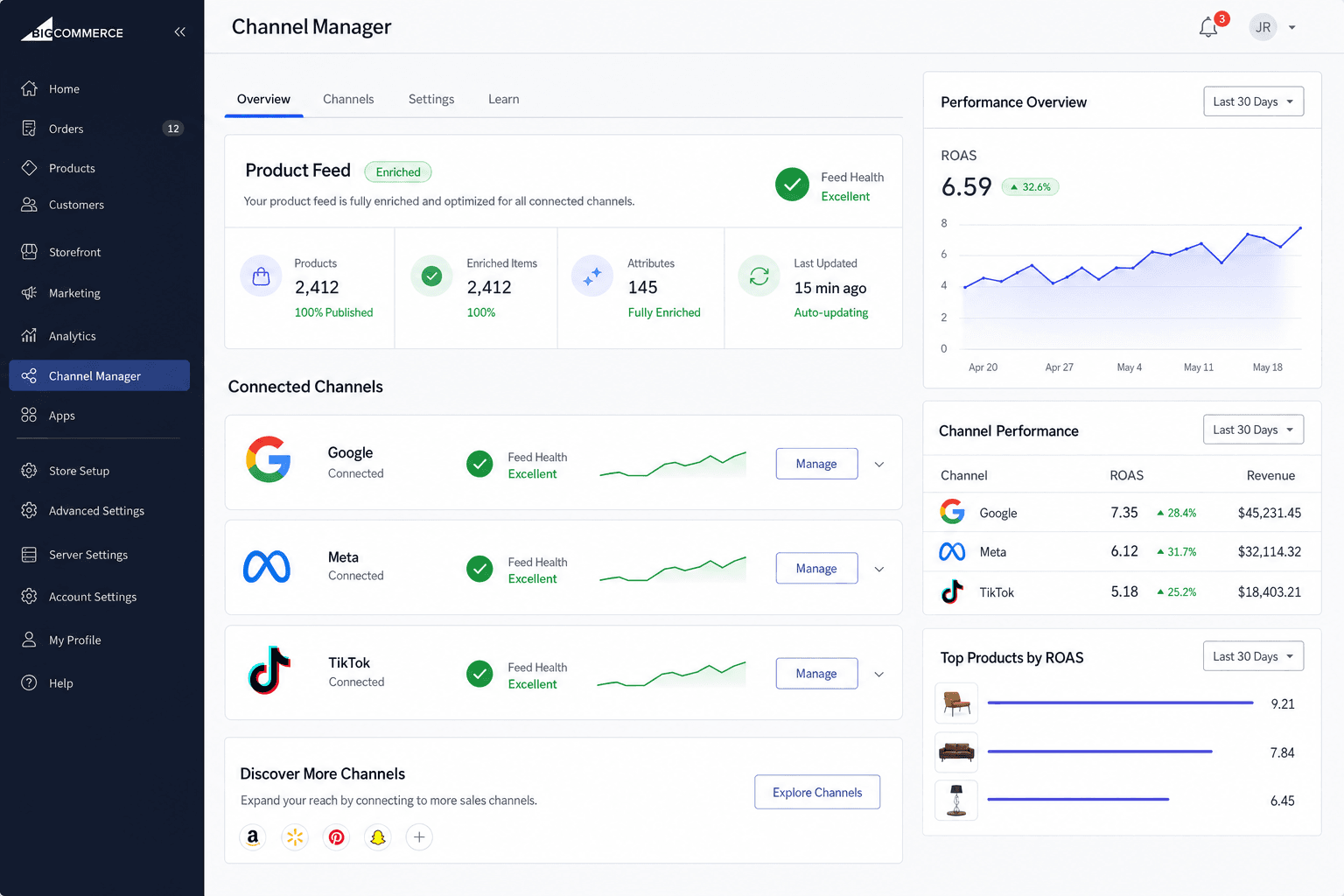
Surface is free in Channel Manager for up to 100,000 SKUs and includes AI-powered product categorization. Brands that rebuild feeds and fix tracking before peak season own impression share competitors need months to reclaim.
BigCommerce has announced Native Hosting on Cloudflare for Catalyst, which can lower the barrier to headless. Stencil brands that migrate with a performance partner ahead of competitors compound speed gains from day one.
The Mechanism
Where AI creates a real edge on BigCommerce
Real productivity, not AI theater. Here's where it actually moves a number for bigcommerce brands.
Analytics and Attribution
What AI does: AI models blended ROAS on top of GA4 and BigCommerce Analytics, reconciling channel-reported ROAS against blended revenue to show where a channel claims credit it didn't earn.
The result: You set bids and budgets against contribution margin after COGS, ad spend, and fulfillment.
Why it matters here: Native analytics shows orders and AOV but no blended ROAS across Google, Meta, TikTok, and marketplaces. AI flags a misfiring pixel before it misdirects budget.
Digital Ads and Feed Management
What AI does: AI rebuilds the default export with custom labels, GTIN population, variant-level attribute mapping, and supplemental feed layers, then watches Channel Manager continuously for disapprovals and bid signal quality.
The result: Shopping recovers impression share, CPCs drop on the impressions you win, and smart bidding gets clean signal.
Why it matters here: Weak feeds silently kill BigCommerce ROAS. Surface links the feed to Google and Meta in seconds, and AI monitors it more often than any team.
Conversion Optimization
What AI does: Inside your Stencil or Catalyst build, AI finds Open Checkout leaks, flags Core Web Vitals issues dragging Quality Scores, and runs Page Builder and script-based tests that skip a Stencil CLI deploy.
The result: Paid traffic converts better, higher Quality Scores lower Google CPCs, and you learn what works in days, not the weeks a dev-gated cycle takes.
Why it matters here: Theme-code tests on Stencil still need a dev deploy, so AI queues the highest-impact ones first. Catalyst's Next.js architecture allows faster iteration.
Creative
What AI does: AI produces and tests more ad angles per week across Google Performance Max, Meta, and TikTok, and we use the results to decide which SKUs the feed pushes or suppresses.
The result: You test five to ten angles a week versus one or two a month, find winners faster, and retire underperformers before they hurt blended ROAS.
Why it matters here: Surface feeds Google, Meta, TikTok, Pinterest, and Microsoft. On clean feeds, winners of fast testing lift CTR and Quality Score, cutting CPC and raising ROAS.
SEO
What AI does: AI monitors crawl health and rankings continuously while we fix faceted navigation bloat, variant canonicals, Multi-Storefront hreflang, indexing of Page Builder content zones, and native schema, weighing Stencil versus Catalyst trade-offs.
The result: Crawl budget moves off thousands of parameter-generated URLs onto high-value category and product pages, where rankings compound.
Why it matters here: Generic audits miss these platform-native problems, and better organic rankings mean less paid traffic for the same revenue, which improves blended ROAS.
Ready to see what this looks like for your bigcommerce brands business?
No obligation. A senior strategist will show you exactly where the wins are.
The Strategy
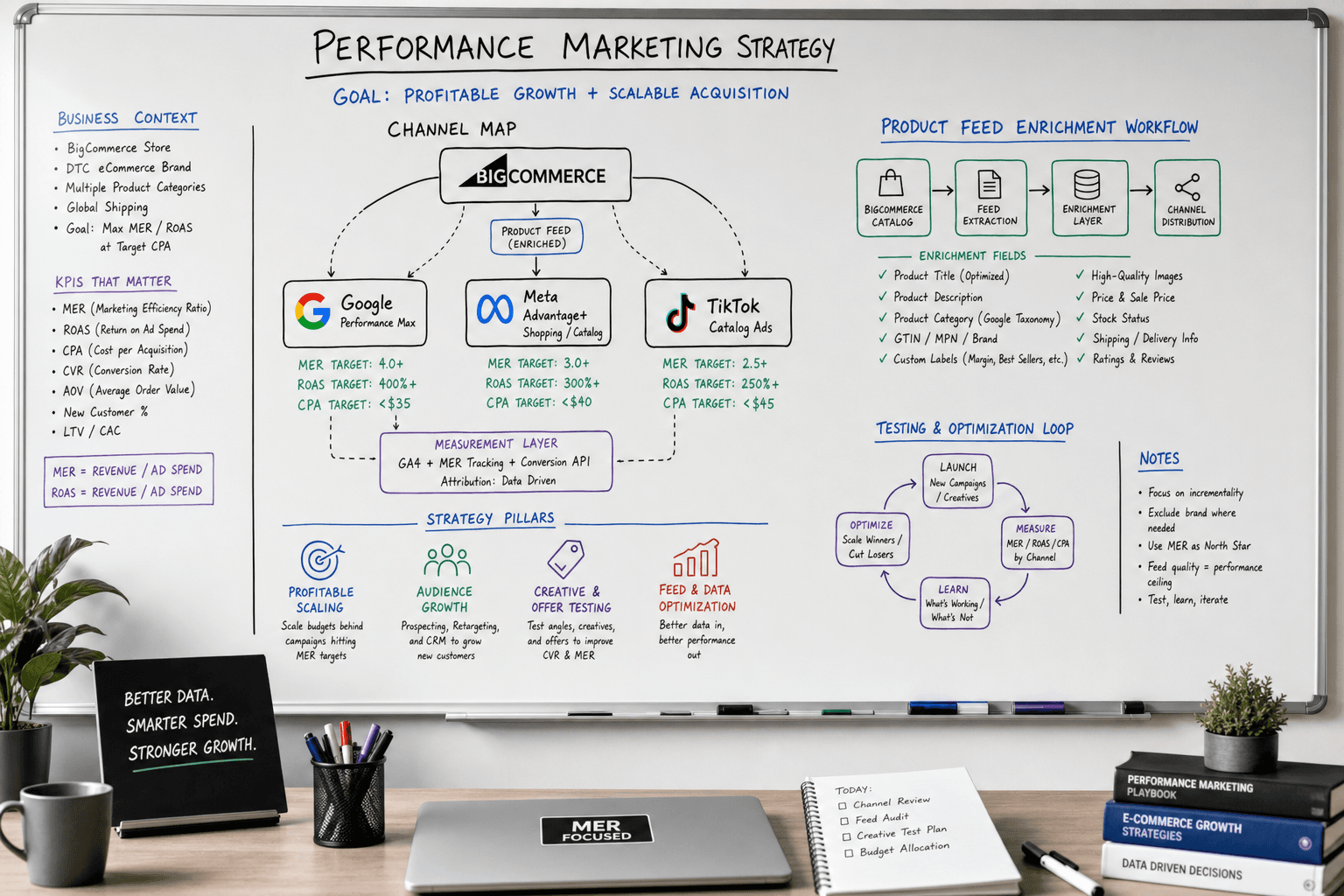
How performance marketing should run on BigCommerce
Fix the foundation first: custom-wire Google Ads Enhanced Conversions through checkout so smart bidding trains on purchase signal, and rebuild the default export into an enriched feed.
For most brands, Shopping and Performance Max run on that feed with target ROAS per SKU group, not catalog-wide, so high-margin products get spend and low-margin SKUs don't pad order count while eroding contribution margin.
On Meta, we run creative-led prospecting on lookalikes from your BigCommerce customer data and retarget by product category and purchase intent. TikTok is judged by category: for products with a visual or demonstration angle, catalog ads via Surface are a legitimate incremental ROAS channel.
On Multi-Storefront, B2B audiences with Price List assignments get their own creative, landing experiences, and bid logic. Blending them with DTC prospecting yields acceptable-looking numbers hiding an over- or under-funded B2B channel.
SEO runs in parallel: faceted navigation, canonical, and Core Web Vitals fixes on Stencil or Catalyst compound over 6 to 12 months, raising your organic baseline and cutting paid CPA. Treating SEO as a cost center separate from paid leaves blended ROAS gains on the table.
Strong in-platform ROAS with flat blended ROAS signals an attribution problem, and we find it before it compounds.
The one number that governs this
Blended ROAS (total revenue ÷ total ad spend across channels) governs every budget decision rather than channel-reported ROAS alone, checked against contribution margin.
How We Help
What we'd do for your BigCommerce store
We start where money leaks, fixing tracking and feed before campaign structure, because optimizations built on broken signal compound the error.
Conversion Tracking and Attribution Audit
Custom-wire Google Ads Enhanced Conversions through checkout and reconcile it against blended ROAS in Triple Whale or Northbeam.
Product Feed Rebuild and Channel Manager Setup
Rebuild the feed, connect it via Surface to Google, Meta, and TikTok, and monitor it continuously for disapprovals and quality degradation.
Paid Media Management: Google, Meta, TikTok
Run Shopping and Performance Max with target ROAS per SKU group, alongside Meta prospecting, TikTok where your category fits, and B2B/DTC splits on Multi-Storefront.
BigCommerce-Specific SEO
Fix BigCommerce's technical SEO, from faceted navigation crawl bloat to Multi-Storefront hreflang, while AI monitors crawl health and rankings.
Conversion Rate Optimization
Analyze Open Checkout, fix Core Web Vitals to lift Quality Scores and cut CPCs, and rank theme-code tests by impact so each dev deploy counts.
AI-Assisted Creative Production and Testing
Test more angles per week across Google, Meta, and TikTok, and use the results to choose which SKUs Shopping campaigns push.
Blended ROAS Reporting and Contribution Margin Tracking
Build a blended ROAS dashboard that reconciles channel-reported ROAS against revenue and contribution margin, reviewed with you at the pace your business moves.
Who's Behind This
Who we are, and what makes us different
Sagum is a performance marketing agency founded in January 2017 in St. George, Utah. We've spent 8+ years growing real brands and being judged on KPIs, not vanity metrics.
We deliberately limit how many clients we take so each one gets senior attention. We treat your numbers like our own, we never run generic playbooks, and your strategy is built for your business, because shouldn't your brand's marketing be custom to your brand?
Sagum.ai is our AI arm: the same proven operators now build AI into the work wherever it creates real edge, not as theater, but as leverage applied with discipline.
- 8+ years growing brands on performance KPIs, not vanity metrics
- Limited client roster, with senior attention on every account
- An extension of your team; your success is tied to ours
- Custom strategy per brand, never a generic playbook
- AI built in where it moves a number; judgment over hype
“Sagum is a performance marketing agency that's spent 8+ years growing brands by treating their numbers like our own. We take on few clients, never run generic playbooks, and now build AI into the work wherever it creates real edge, not hype. Your strategy is built for your business, and our success is tied to yours.”
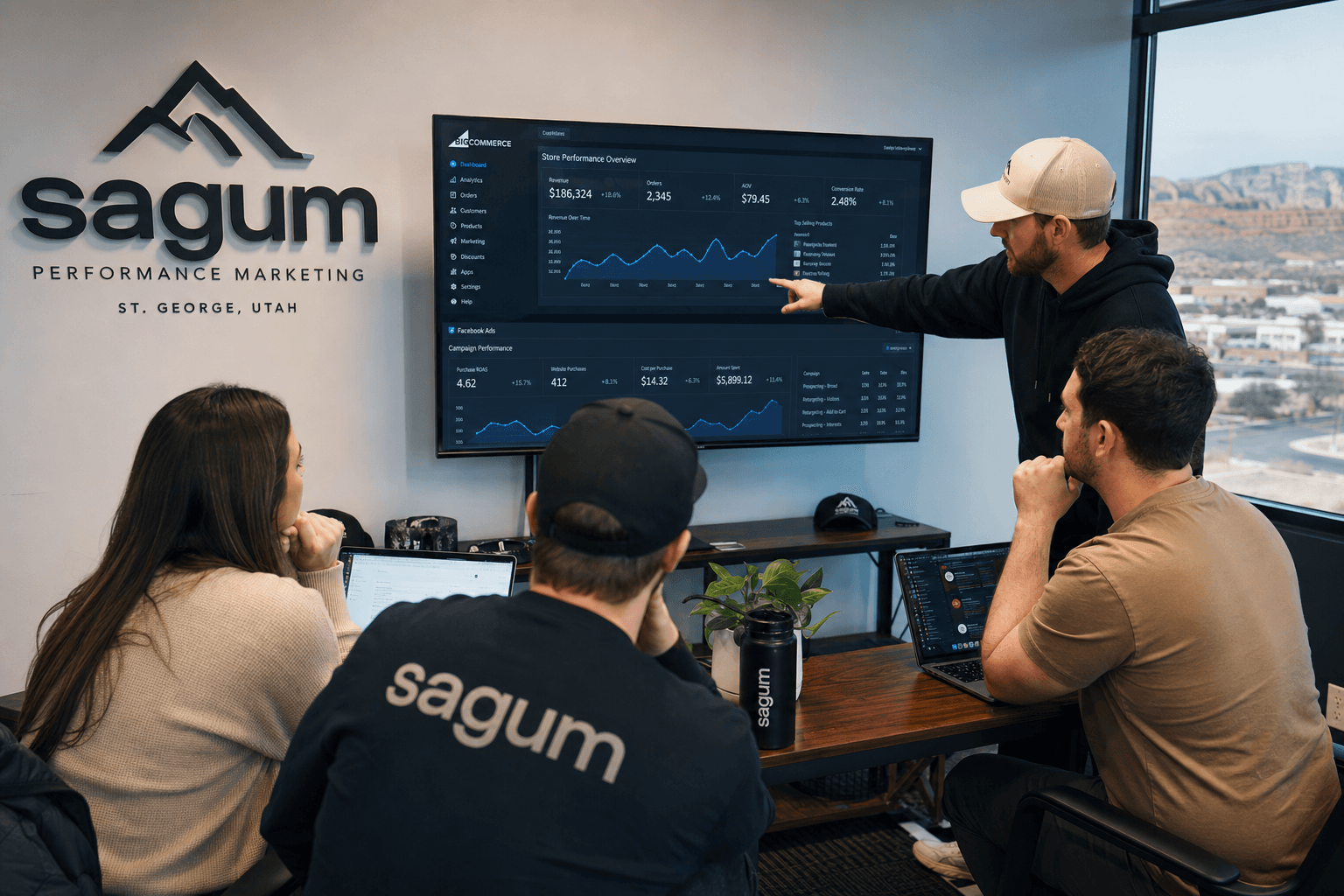
“After six years, Sagum is our most important partner: trusted, communicative, and caring about our business as if it's their own.”
Long-term partner
6-year client
Proof
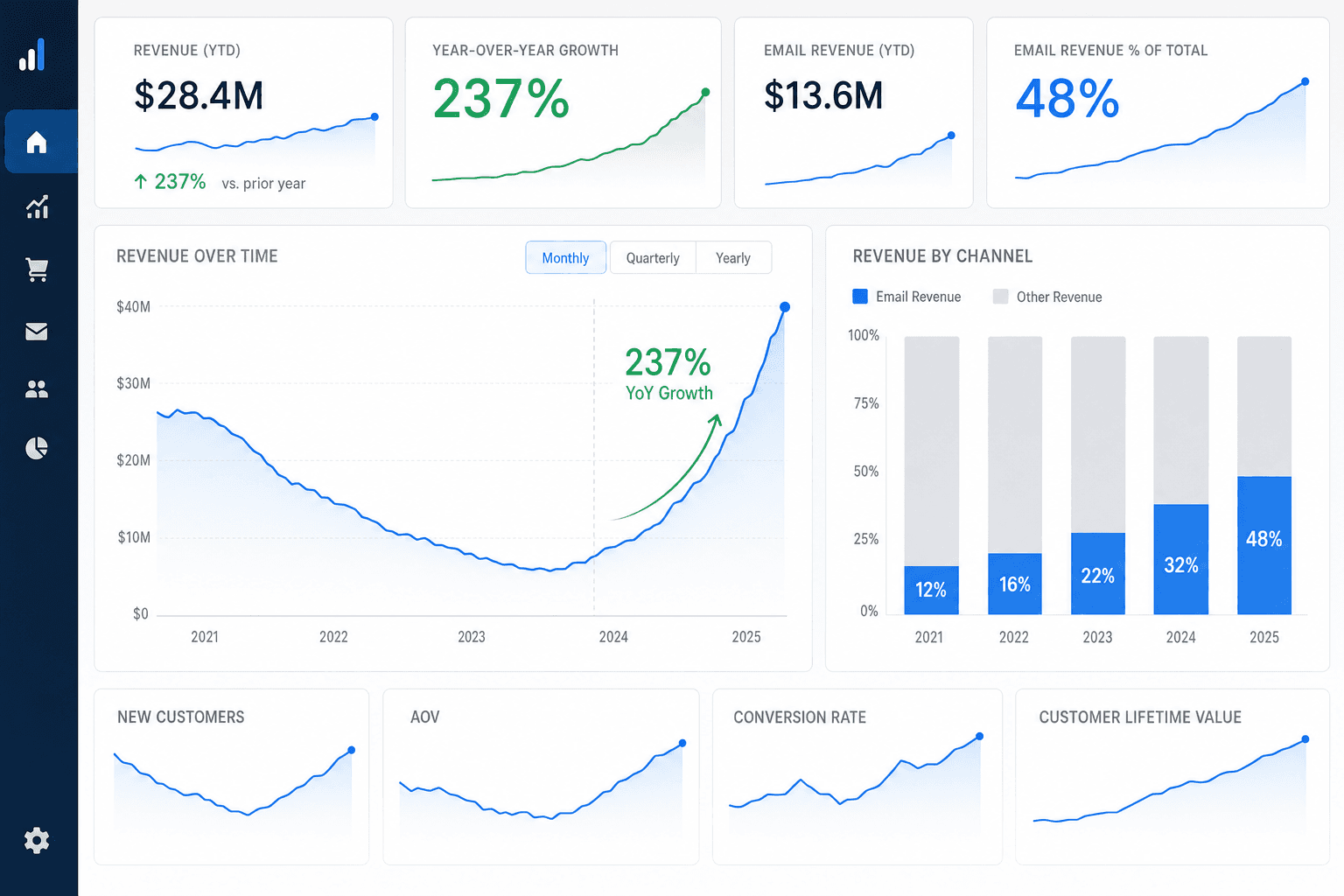
Reversed 3 years of decline to 237% YoY
Bisaddle
Challenge
Bisaddle came to us after three years of decline.
What we did
Sagum redesigned the site, doubling its speed, and grew email. The same speed and conversion work applies to a Stencil or Catalyst store.
Result
Bisaddle reversed three years of decline and reached 237% year-over-year growth. Site conversion rose 122%, and email grew to 48% of revenue.
Your BigCommerce store is more powerful than your marketing results suggest
No obligation. We'll review your feed quality, attribution setup, and channel mix against your margins and goals, and tell you exactly where your marketing falls short of what your store can do.
Sagum · January 2017 · St. George, Utah · 8+ years