

8+ years growing brands on KPIs, now with AI
Haircare marketing tuned to how people repurchase
Built around how shoppers discover and repurchase, so repeat revenue climbs instead of just reach.
8+ years of performance marketing · Google, Meta & TikTok partners · Results judged on ROAS and LTV, not vanity metrics


Get your free Growth Gap Analysis
Senior strategist review · response within one business day
Prefer to reach out directly?
The Challenge
DTC Haircare: One Person Juggling Low CLV and Shaky Attribution
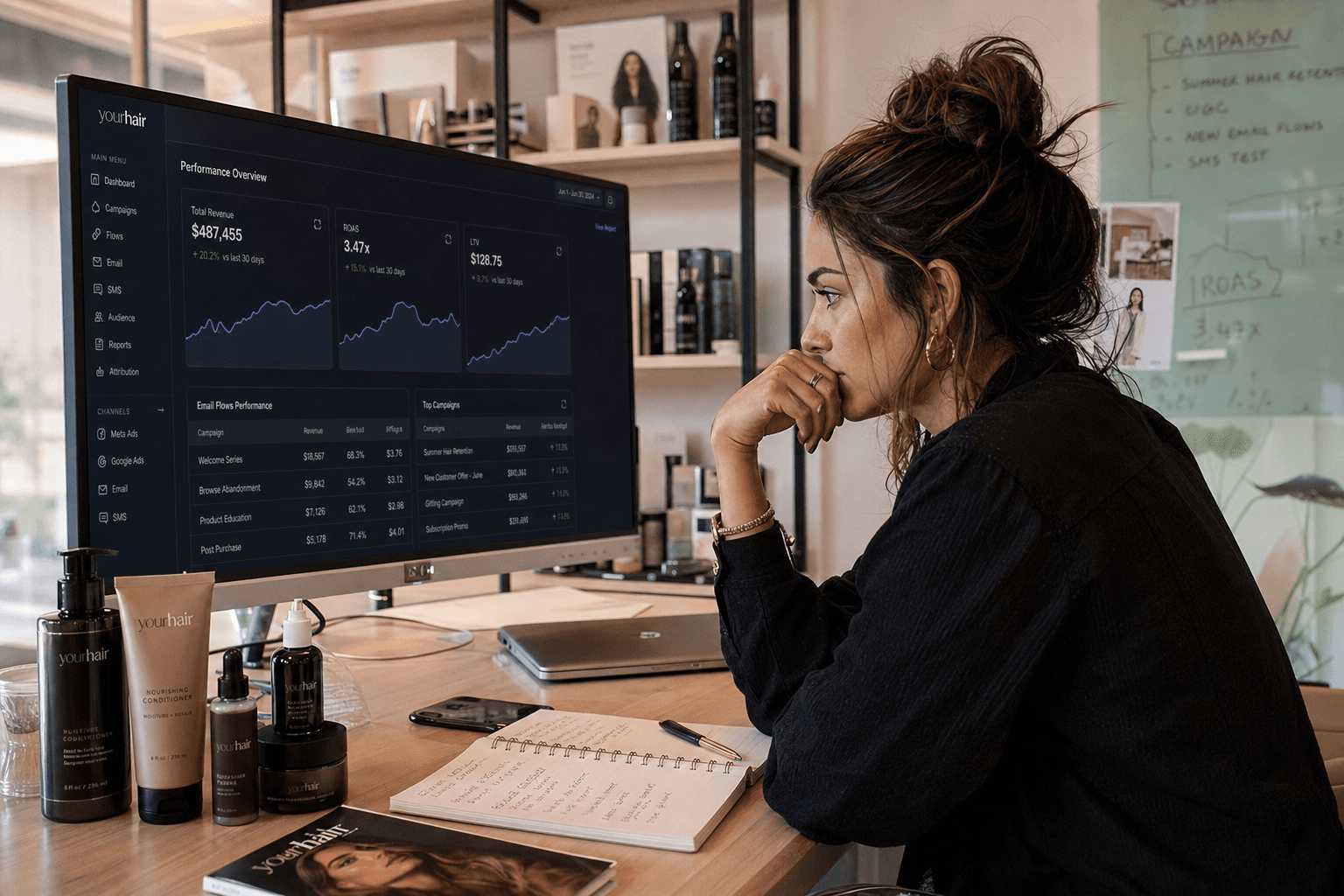
You watch blended ROAS on Triple Whale or Northbeam while running Klaviyo flows, a TikTok Shop storefront, and Meta campaigns. You seed creators too, and fewer than 500 per quarter leaves you underscaled. A Sephora or Ulta buyer may check your TikTok Shop GMV trends before a meeting.
Haircare sits at the bottom of beauty CLV benchmarks, around $56, with roughly 93 days between orders. CAC payback is tight, retention sits at or below beauty's 23% average, and one bad month of paid spend can put you underwater before a replenishment habit forms.
Your hero SKU must anchor the first purchase, justify the CAC, and set up the reorder. Then there's attribution. Post-iOS 14 you don't fully trust Meta, and incrementality testing typically shows 15–30% of platform-reported conversions are non-incremental, so scaling feels like gambling.
Amazon holds nearly 30% of beauty and personal care share online, and strategic acquirers like L'Oréal buy proven DTC haircare brands, so your window to scale independently won't stay open.
The Opportunity
Haircare Winners of the Next Three Years Are Building Acquisition Engines Now
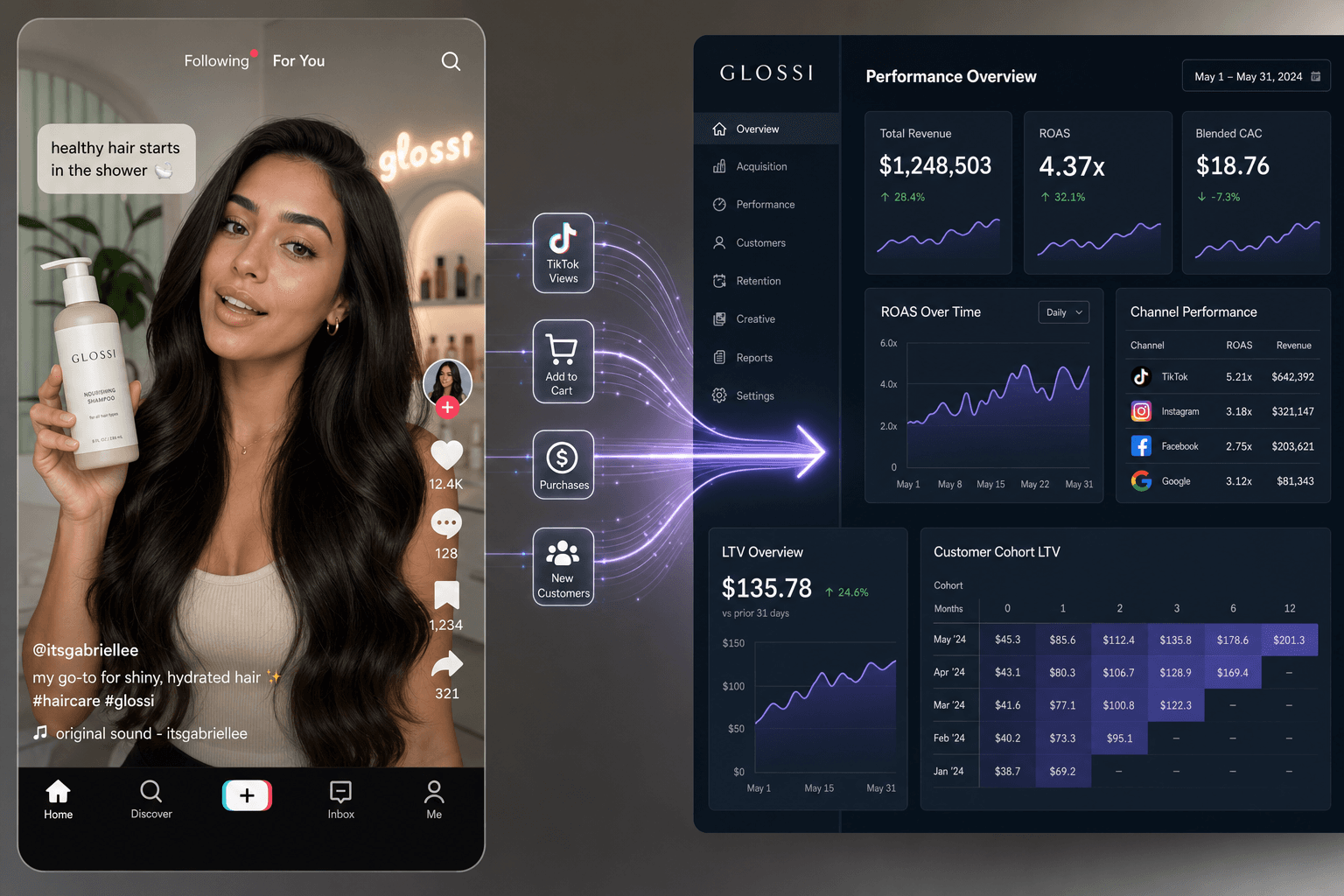
Online haircare demand is outpacing what most brands can staff for: ecommerce haircare is projected at a 7.8% CAGR through 2033, faster than offline retail, and TikTok Shop beauty GMV grew 94% year-over-year globally, with beauty at 22.5% of TikTok Shop's total GMV.
Email and SMS timed to product depletion turn more first-time buyers LTV-positive. Email, at 10–20x ROAS, is your main lever for raising LTV without raising CAC. Brands running only an abandoned cart flow and a monthly newsletter leave most of that LTV on the table.
Google Search and Shopping return 5–8x ROAS on problem-aware searches like 'bond repair shampoo', yet most haircare brands don't bid on them or lack an intent-matched landing page. 34.5% of U.S. consumers named scalp health a top hair concern in 2025, but most paid media teams haven't fully built scalp-first, ingredient-transparent creative.
What Most Get Wrong
What Most DTC Haircare Brands (and the Agencies They Hire) Get Wrong
Optimizing for first-order ROAS instead of payback period
A 3x first-order ROAS looks healthy until you count COGS, fulfillment, and the 77% of haircare customers who don't reorder. Without LTV:CAC modeling, you scale unprofitable acquisition.
Treating TikTok Shop as bonus revenue, not a discovery engine
TikTok Shop sells on impulse. Without a bridge from its buyers into Klaviyo, you lose the replenishment relationship: GMV shows up, but LTV never materializes.
Producing creative at a brand team's pace
At one or two ad concepts per month, your Meta CPMs rise and frequency kills performance. The brands winning on Meta test 10–15 creative angles per week.
Trusting platform-reported ROAS without an incrementality check
Meta and TikTok over-report conversions post-iOS 14. Scaling on dashboards alone, you often pay for non-incremental conversions and find out when pausing spend cuts revenue less than predicted.
Email flows built around time intervals, not product depletion cycles
7-, 14-, 30-day sequences prompt a 60-day shampoo buyer on day 14, too early. A day-35 prompt hits the consideration window and materially lifts repurchase, yet most brands skip it.
Why Now
Why the Next 12 Months Favor Haircare Brands That Move First
Haircare is consolidating: L'Oréal acquired Color Wow in 2025, and strategic acquirers keep buying proven DTC brands. Acquirers and retail buyers want proof: DTC revenue, TikTok GMV, Amazon review velocity, dermfluencer endorsement logs. Brands that build that proof in the next 12–18 months get acquired, get shelf space, or both. The rest fight Amazon's private label on price.
Most haircare brands run 2022-era paid media: static creative, flat monthly budgets, one Meta campaign, three Klaviyo flows. The gap to AI-assisted creative testing, real-time budget allocation, and depletion-triggered email is large and growing.
Close it now, with trusted attribution and TikTok Shop GMV feeding DTC retention, and you gain a cost-per-acquisition edge over slower competitors, one that compounds into BFCM, when ecommerce ROAS typically peaks.
The Mechanism
Where AI Gives a DTC Haircare Brand an Edge
Real productivity, not AI theater. Here's where it actually moves a number for haircare brands.
Creative
What AI does: AI builds and tests 10–15 concepts per week (UGC-style ingredient explainers, dermfluencer-format clips, before-and-after scalp transformations, bundle value frames) instead of recycling two hero ads.
The result: You find first-purchase angles faster, Meta CPMs fall, and your creative library stays fresh past two weeks.
Why it matters here: Shoppers judge your bond repair serum against four competitors on 6 seconds of video; the brand testing the most angles weekly finds the hook first.
Analytics
What AI does: AI reconciles platform-reported ROAS with blended ROAS and incrementality signals to show which channels drive revenue and which claim credit for sales that would happen anyway.
The result: You get blended ROAS and LTV:CAC numbers you can act on without second-guessing the Meta dashboard.
Why it matters here: At $56 average CLV, you can't afford non-incremental spend; every dollar a misfiring pixel misallocates belonged in email flows or TikTok creator seeding.
What AI does: AI maps depletion cycles (60-day shampoo, 45-day scalp serum, 30-use treatment mask) to time reorders, and tests subject lines, send times, and offers at a volume no single email manager can match.
The result: Reorder prompts land as customers run low, repurchase rates rise, and email keeps compounding LTV.
Why it matters here: With roughly 93 days between orders, reorder windows are narrow. A welcome sequence earning 10–20% of new subscriber revenue and depletion-timed reorders decide who repeats.
Digital Ads
What AI does: AI shifts budget in real time across Meta, TikTok, and Google toward whichever campaigns, audiences, and creative earn the best return against channel ROAS targets, pacing for Q4 seasonality.
The result: Budget follows performance, and a tested system captures BFCM and pre-summer peaks.
Why it matters here: Ecommerce ROAS typically peaks in Q4 and drops sharply in January; brands still building in October miss BFCM.
Conversion Optimization
What AI does: AI-assisted landing page analysis continuously finds where ingredient-skeptical shoppers drop off: missing clean/free-from claims, no dermfluencer social proof, bundle pages that skip replenishment logic.
The result: Conversion rates rise on problem-aware searches like 'bond repair for bleached hair', where a ready buyer needs a specific trust signal.
Why it matters here: Ingredient-literate shoppers arrive sold on the category and judging your brand; pages without ingredient answers or relatable social proof lose them.
Ready to see what this looks like for your haircare brands business?
No obligation. A senior strategist will show you exactly where the wins are.
The Strategy
How a DTC Haircare Brand's Performance Marketing Should Run
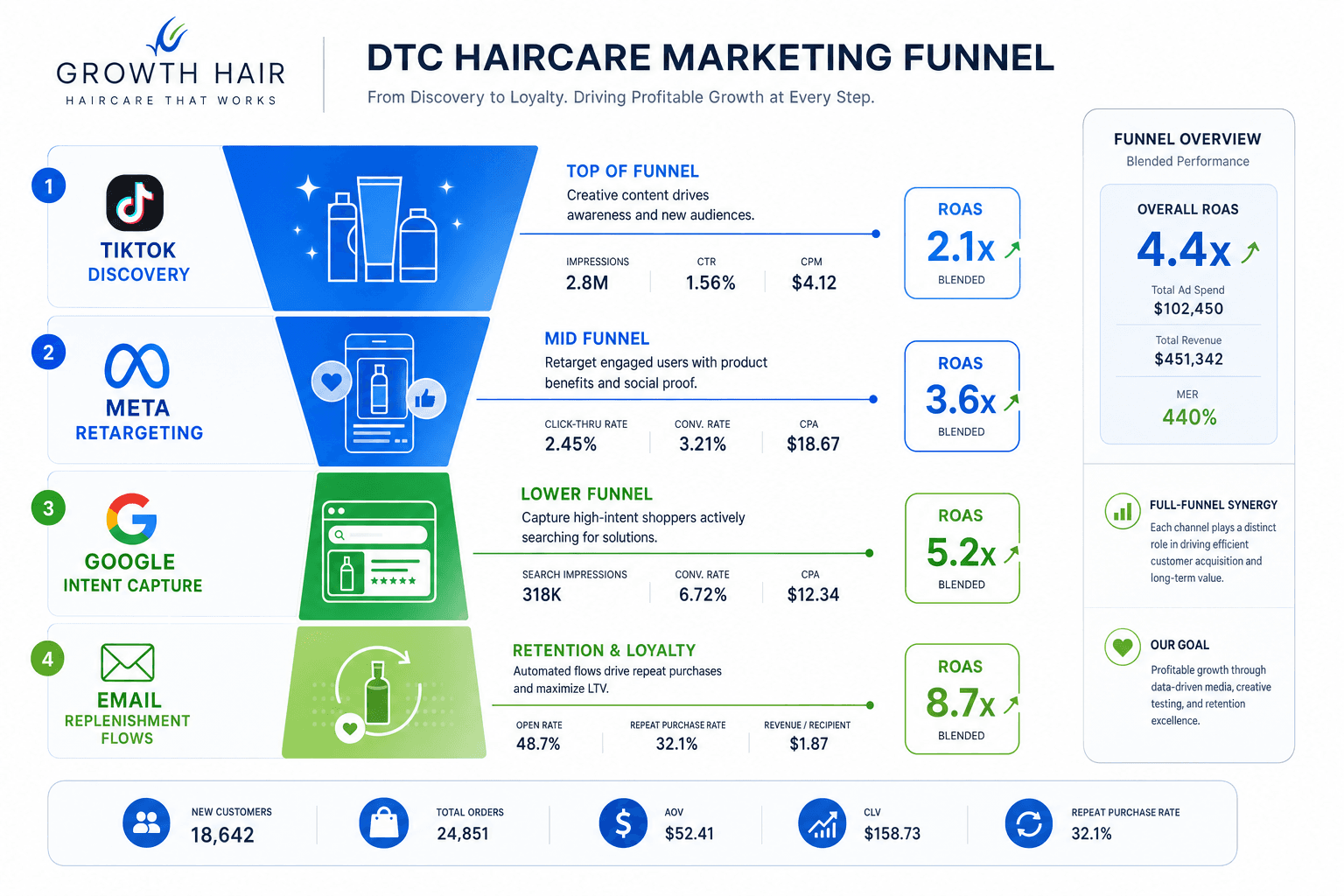
Start with attribution: reconcile platform-reported numbers against actual revenue, find the 15–30% of conversions that aren't incremental, and build a dashboard you trust for blended ROAS and LTV:CAC across all channels before scaling.
Then lead with Google Search and Shopping on problem-aware queries like 'scalp serum for hair loss' or 'sulfate-free shampoo for color-treated hair', which convert at 5–8x ROAS because intent is declared.
Use Meta for retargeting and lookalikes; retargeting averages 3.61x ROAS there versus 2.19x for cold audiences. TikTok and TikTok Shop drive discovery and impulse buys, with a deliberate bridge into Klaviyo so TikTok Shop buyers don't vanish after the first order.
Email and SMS are your LTV engine: welcome sequences, depletion-triggered reorder flows, post-purchase ingredient education, and bundle upsells timed to your replenishment calendar.
Creative runs at performance volume across UGC, dermfluencer ingredient explainers, scalp before-and-afters, and bundle value frames. Meta's delivery surfaces the winners, and each round's results set the next tests.
Pace budget to the haircare calendar: ramp spend into Q4 with tested creative and a warm list before BFCM, capture the January scalp-health and hair-growth resolution window, and front-load pre-summer heat protection and frizz control creative in April and May.
The one number that governs this
Blended ROAS, revenue over total ad spend, governs every decision, tracked with LTV:CAC and payback. Healthy haircare brands target 3–4x blended ROAS and 3:1 LTV:CAC.
How We Help
How Sagum Executes This for Your Haircare Brand
We start with attribution, checking your pixel and building a dashboard you trust, then build acquisition and retention around your unit economics.
Paid Media: Google, Meta, TikTok
We run Google Search and Shopping on high-intent queries, Meta retargeting and lookalikes, and TikTok campaigns that grow your Klaviyo list from TikTok Shop.
Analytics & Attribution
We reconcile platform numbers against actual revenue, flag non-incremental conversions, and keep one source of truth for blended ROAS and LTV:CAC.
Email & Automation
We rebuild Klaviyo flows around depletion cycles, with timed reorder triggers, welcome sequences, and post-purchase education that builds ingredient trust and reduces refunds.
Creative
We produce and test creative at performance volume, so your CPMs don't climb because Meta has served the same two ads 40 times.
Conversion Optimization
We add ingredient transparency, clean/free-from callouts, and dermfluencer social proof to landing pages, and make bundle pages justify the AOV by explaining replenishment.
AI Systems
We build AI into real-time budget allocation, depletion modeling, creative testing, and attribution monitoring that catches pixel errors early.
Who's Behind This
Who we are, and what makes us different
Sagum is a performance marketing agency founded in January 2017 in St. George, Utah. We've spent 8+ years growing real brands and being judged on KPIs, not vanity metrics.
We deliberately limit how many clients we take so each one gets senior attention. We treat your numbers like our own, we never run generic playbooks, and your strategy is built for your business, because shouldn't your brand's marketing be custom to your brand?
Sagum.ai is our AI arm: the same proven operators now build AI into the work wherever it creates real edge, not as theater, but as leverage applied with discipline.
- 8+ years growing brands on performance KPIs, not vanity metrics
- Limited client roster, with senior attention on every account
- An extension of your team; your success is tied to ours
- Custom strategy per brand, never a generic playbook
- AI built in where it moves a number; judgment over hype
“Sagum is a performance marketing agency that's spent 8+ years growing brands by treating their numbers like our own. We take on few clients, never run generic playbooks, and now build AI into the work wherever it creates real edge, not hype. Your strategy is built for your business, and our success is tied to yours.”

“Sagum roughly doubled our bottom line. They treat the work like it's their own business.”
Rachel Nilsson
CEO, RAGS
Proof
$0 → $500k/mo in months at a 4:1 ROAS target
Viori
Challenge
Viori, a new DTC brand, needed to scale from zero.
What we did
We built and scaled paid acquisition to a 4:1 ROAS target.
Result
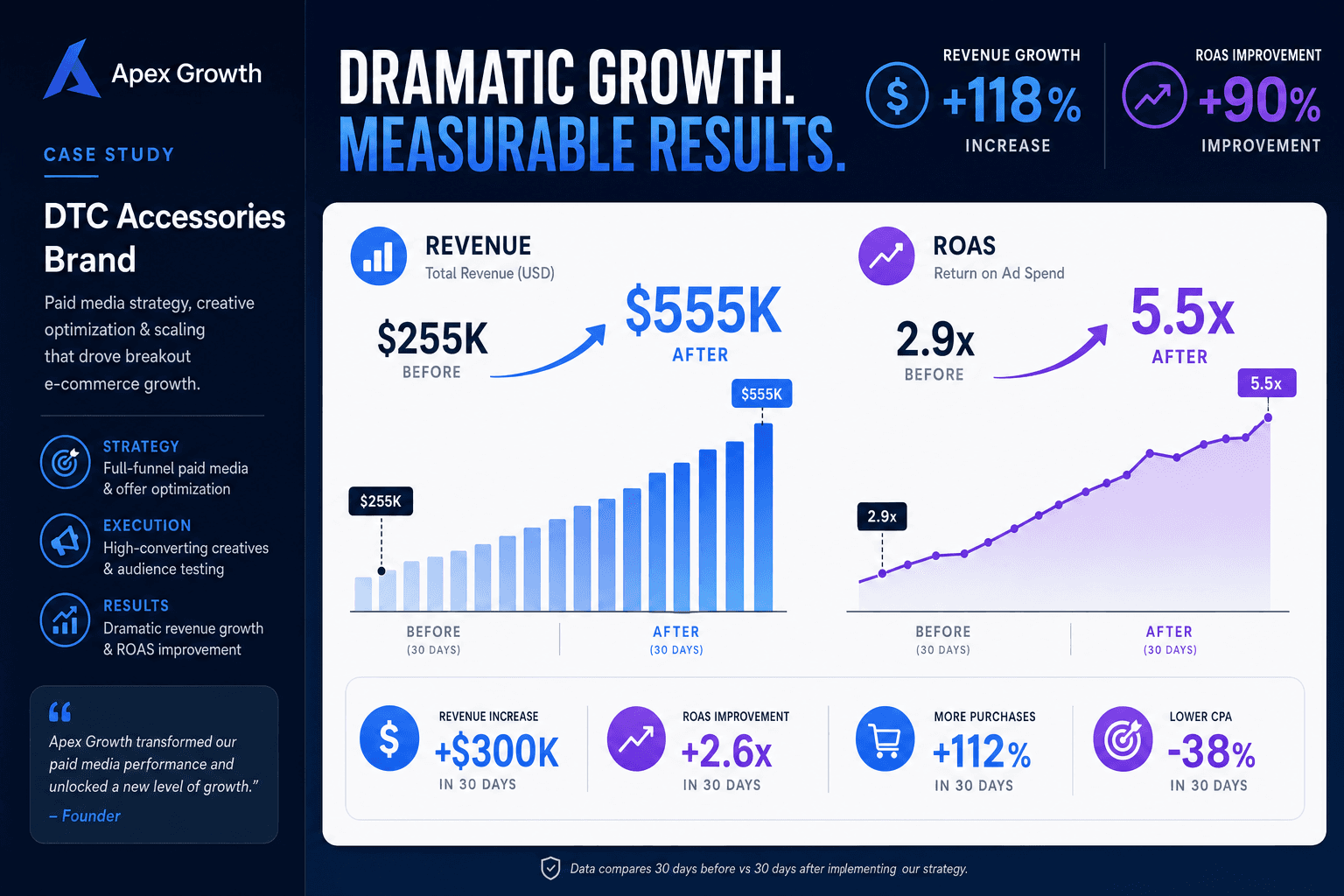
Viori scaled from $0 to $500k per month in months at a 4:1 ROAS target. The same discipline applies to any DTC haircare brand.
Let's Build Your Haircare Brand's Replenishment Engine
No obligation. One conversation on your blended ROAS, LTV:CAC, and email performance shows the gaps. We take few clients, and only when we're confident we can move their metrics. Every strategy starts from scratch.
Sagum · January 2017 · St. George, Utah · 8+ years