

8+ years growing brands on KPIs, now with AI
More Booked Solar Consultations, Fewer Wasted Leads
Performance marketing for residential solar installers built around held consultations and signed contracts, not raw form fills.
8+ years growing local service businesses · Google Ads · Meta · TikTok · AI-powered where it moves the number


Get your free marketing audit
Senior strategist review · response within one business day
Prefer to reach out directly?
The Challenge
Marketing Residential Solar Is Nothing Like Other Home Services
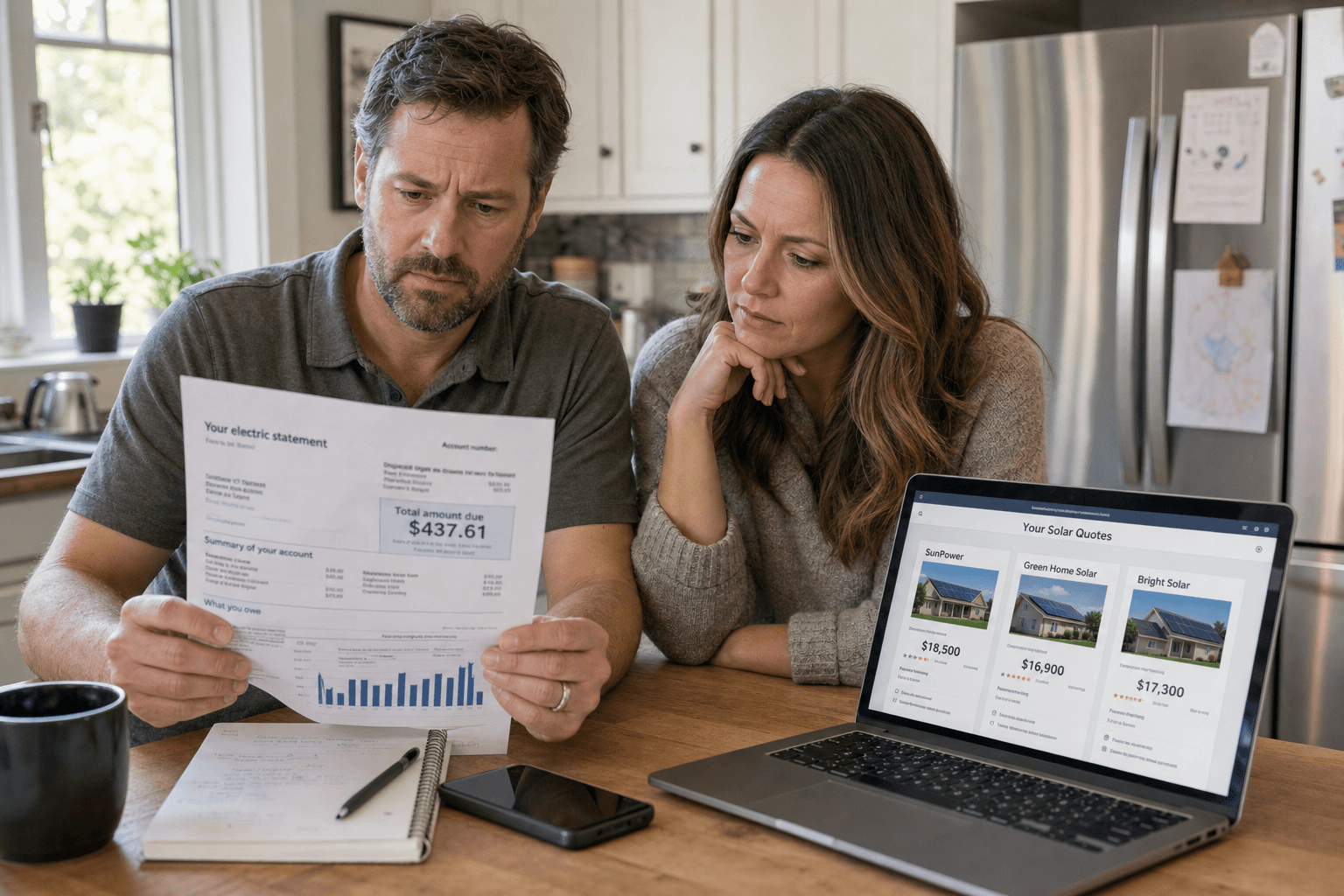
Other home services close in days. Solar buyers open a utility bill north of $200, then spend weeks comparing three to five quotes and reading Reddit threads about installer bankruptcies; the average cycle runs nearly nine months from first search to signed contract.
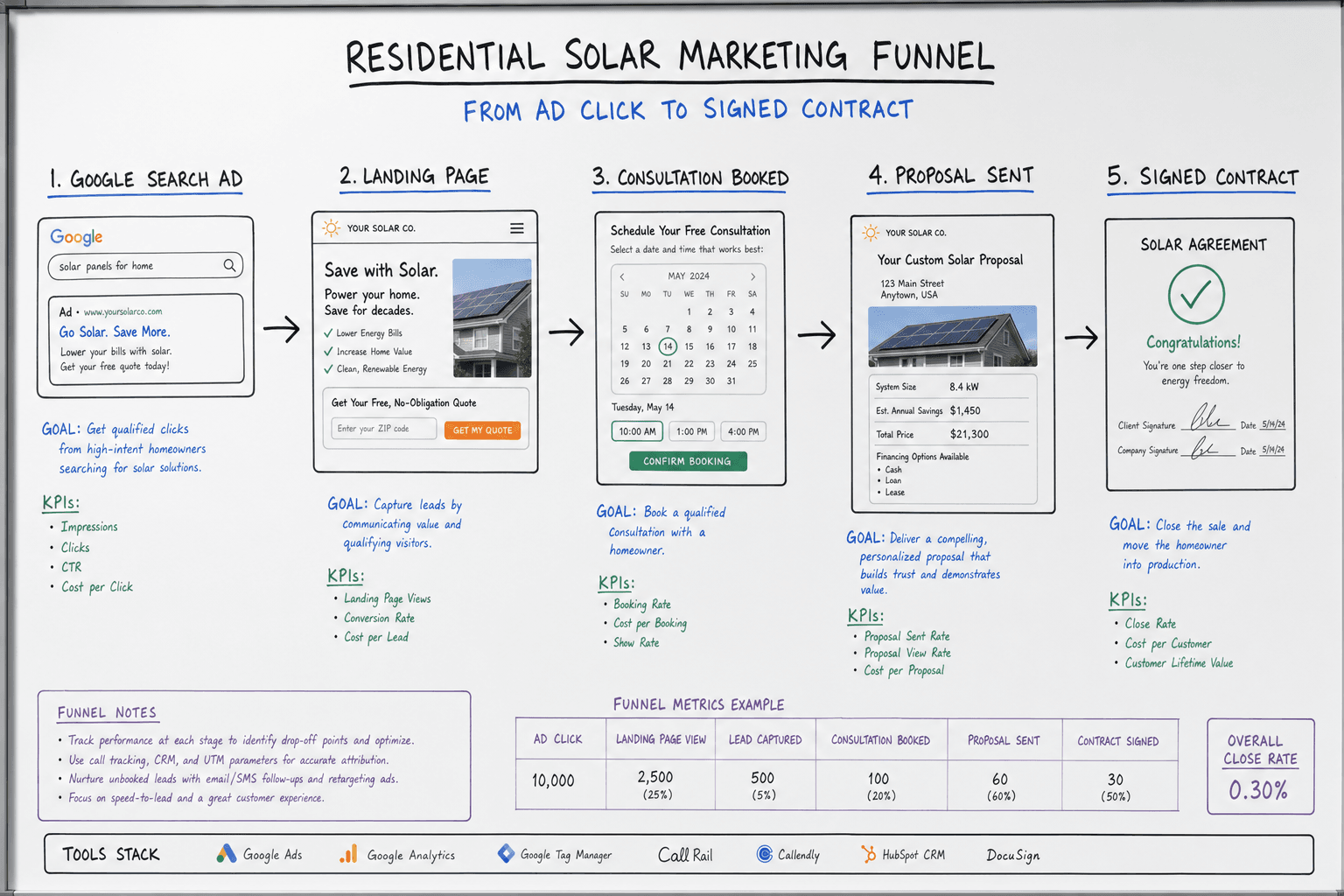
Any lead short of a held consultation is pure cost. A 7.2 kW system runs roughly $17,900 before incentives at a median $2.48 per watt, customer acquisition cost averages over $5,000 nationally, all-in, and a well-run installer books about half its inbound leads and closes roughly 30% of those, so fewer than one in six raw leads becomes an installed system.
Installer bankruptcies and misleading national-dealer tactics made buyers skeptical. They question savings numbers, want proof you'll be around in ten years for the workmanship warranty, and treat this as a 25-year financial decision.
California's NEM 3.0 changed the value proposition, federal incentives shifted sharply in mid-2025, and permitting backlogs in high-volume markets can push an October contract's install to March, raising cancellations unless you set expectations.
The Opportunity
Solar Buyers Are Searching Now, and Most Installers Miss Them
Residential electricity prices rose 6.5% between May 2024 and May 2025 to 17.5 cents per kWh nationally, and some states are worse. Each month more homeowners search 'solar quote [your city]', wanting a credible installer's price.
The federal tax credit's end-2025 deadline created a 205% year-over-year surge in homeowners actively working with installers, per EnergySage. Buyers now weigh payback and financing, not the credit.
Winning local installers don't compete on price; they show up first in search, reply within minutes, bring both homeowners in, and present believable savings. National dealers outspend you, but cancellations and bankruptcy headlines work against them. With tight attribution, qualification, and local proof, you can outperform a competitor spending three times as much.
Pitch storage in the first consultation: with batteries around $1,074 per kWh and backup-power interest rising, solar-plus-storage adds $10,000–$13,000 to the average ticket.
What Most Get Wrong
What Most Solar Installers and Their Agencies Get Wrong
Optimizing for lead volume over held qualified consultations
Cost per lead looks great until you find half are renters or homeowners with shaded north-facing roofs or sub-$150/month utility bills. Measure cost per held consultation with both decision-makers present.
Same creative and landing page for every buyer type
Lease or PPA prospects and purchase buyers (weighing payback without the expired 30% credit) raise different objections and need different economics, compliance language, and trust signals; mixing them kills conversion.
Bidding on broad solar keywords without intent filtering
'Solar panels' and 'how does solar work' draw renters, students, researchers, and DIY enthusiasts. Without negative keywords and geo-radius targeting, you spend much of your PPC budget educating non-buyers.
No attribution past the lead form
You can't tell if Google Search yields held consultations or Facebook leads cancel. Most agencies running solar campaigns never tie spend to installs, optimizing what's measurable, not what pays you.
Ignoring the two-person sale
Proposals presented without the spouse or partner stall, yet most marketing flows book one attendee. Building 'both homeowners available' into qualification and scheduling is among the highest-impact close-rate changes.
Why Now
Why Local Solar Installers Who Move Before Spring Win the Year
The tax credit deadline pulled demand forward. Homeowners who researched in 2024 and 2025 but didn't install know solar's cost, are rechecking the economics, and are watching who survives national consolidation. Disciplined local installers can take share from competitors cutting spend or running the lead-volume playbook that worked when incentives made every deal easy.
Buyers searching 'solar installation [your city]' weigh you against two or three local operators. AI lets you test more creative angles per week, shift budget in real time toward campaigns producing held consultations, and qualify leads on landing pages. Those gains compound while competitors reviewing monthly run on a slower clock.
Spring is the highest-intent window. Installers in market before March with tight campaigns and fast lead response own the season; April starters are already behind.
The Mechanism
Where AI Moves the Numbers for a Solar Installer
Real productivity, not AI theater. Here's where it actually moves a number for home solar installers.
Digital Ads (Google Search + Local Services Ads)
What AI does: AI shifts bids in real time toward keyword clusters and geo-radius combinations producing held consultations, not just form fills, and keeps expanding negative keywords to filter out renter, DIY, and low-intent traffic.
The result: Budget concentrates on the queries and geographies producing creditworthy homeowners ready to schedule.
Why it matters here: Traffic quality, not bids, explains almost all the gap between $90 and $160 CPLs, and AI can screen intent continuously across hundreds of keyword variants.
Analytics and Attribution
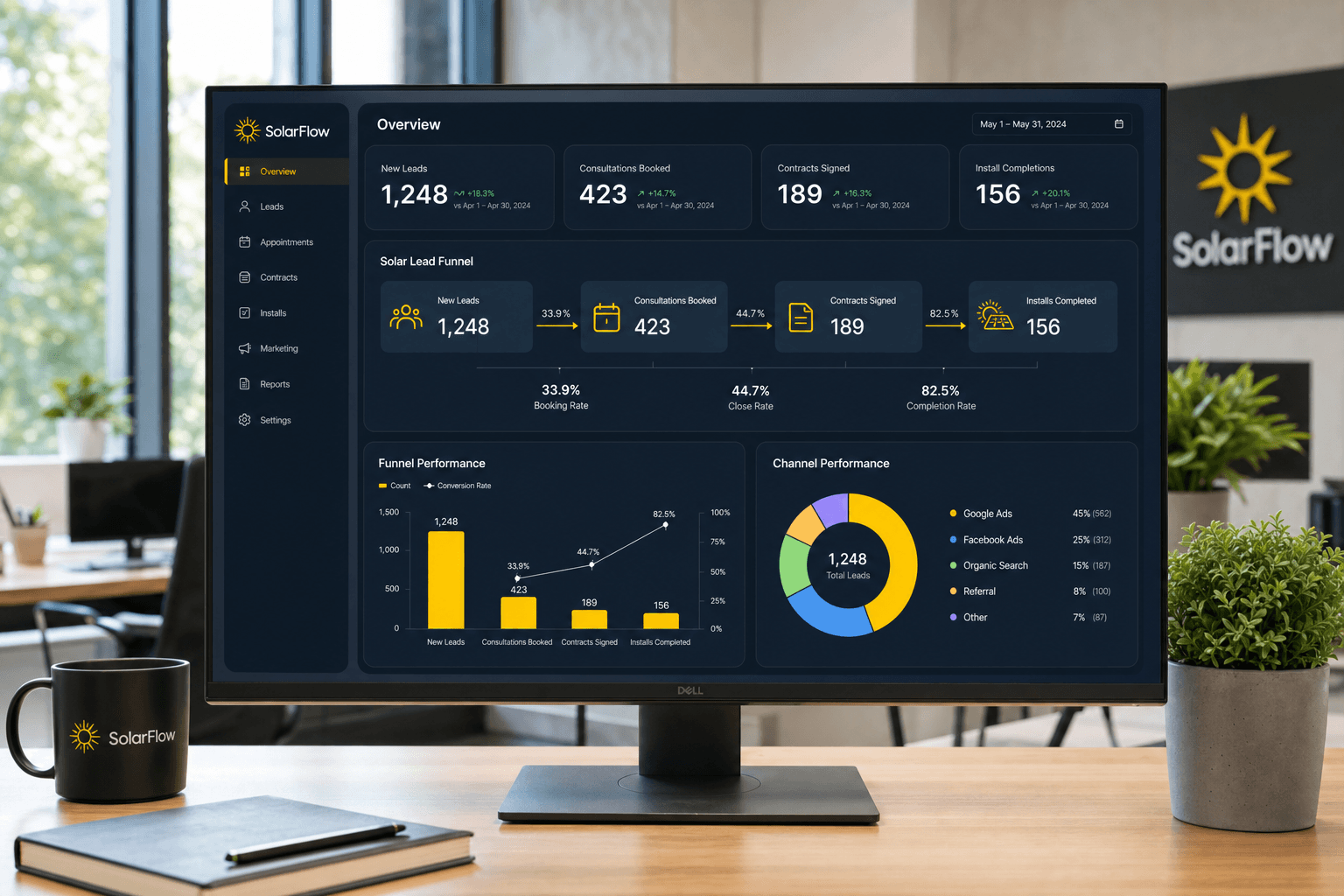
What AI does: Tracking runs from ad click through form fill, booking, held appointment, proposal, and signed contract; AI flags misfiring pixels, untracked calls, and duplicate lead counts before they distort decisions.
The result: You see which campaigns, keywords, and creative produce signed contracts and your true cost per contract by channel.
Why it matters here: At a 15% lead-to-install rate, $150 leads cost $1,000 per install, a profitable job; at 5%, lead cost triples to $3,000 before other acquisition costs.
Conversion Optimization (Landing Pages and Lead Qualification)
What AI does: AI-built landing pages pre-qualify visitors by ownership, utility bill size, roof type, and financing interest before they reach your calendar, and AI keeps reviewing them for conversion leaks.
The result: A higher share of consultations are held by creditworthy homeowners with viable roofs, so your sales team works closeable deals.
Why it matters here: Raising the close rate on held consultations from 28% to 35% often beats doubling unqualified lead volume, and landing-page pre-qualification drives that gain.
Creative Testing
What AI does: Instead of one creative running for months, AI generates and tests several new angles every week: utility bill relief, installer stability and warranty proof, local project proof, savings transparency, and battery backup.
The result: You can test twenty variations in the time one used to take, find what converts in your geo and competitive set, and cut losers early.
Why it matters here: Burned buyers distrust ads promising 'Save 80% on your electric bill' but trust 'What a 7 kW system produced in [your city] last year.'
Ready to see what this looks like for your home solar installers business?
No obligation. A senior strategist will show you exactly where the wins are.
The Strategy
The Marketing Strategy That Fits How Residential Solar Is Sold
Solar is a high-distrust, two-decision-maker sale, and a playbook built for a $300 impulse purchase won't fit it. Build on Google Search with homeowner-intent keywords in your service radius, like 'solar installation [city]' and '[utility name] solar savings.'
Local Services Ads (LSAs) alongside search add the Google Verified badge and above-the-fold placement, often at $40–$90 per lead versus $110–$160 for standard search.
Pre-qualifying landing pages send visitors who answer 'I rent' or 'my bill is under $150/month' to educational content instead of your sales calendar. You give up some form fills to protect your close rate and your sales team's time.
CRM nurture runs the full nine-month cycle, since most leads don't convert in the first 30 days: they compare quotes, talk to a spouse, wait for a tax refund, or recover from a competitor's high-pressure close.
Raise budget in February and hold it through May, when winter utility bills, tax refunds, and summer project planning drive spring demand. September and October are the secondary peak; December and January go to nurture and referrals.
Local proof is a moat national dealers can't copy. After the installer bankruptcies, homeowners want case studies with production data from their zip code, photos of local projects, and Google reviews from neighbors.
The one number that governs this
Cost per held qualified consultation, not form fills: both homeowners present, home owned, roof viable, bill at least $150/mo, credit-qualified. Secondary: cost per signed contract.
How We Help
How We Would Run Marketing for Your Solar Business
We start with attribution: before touching spend, we connect tracking from ad click to signed contract, then build acquisition and nurture on that foundation.
Paid Search (Google Search + Local Services Ads)
We rebuild Search around homeowner intent, add LSAs, and pace budget to your seasonal peaks, with negative keywords blocking renters, DIY searchers, and job seekers.
Full-Funnel Attribution and CRM Integration
We link ads to your CRM, report cost per held consultation and signed contract by campaign and keyword, and add call tracking and pixel audits.
Qualification-First Landing Pages
We build pre-qualifying pages with separate purchase and lease/PPA variants, compliant savings language, and prominent disclosures.
AI-Powered Creative Testing
We test several new angles every week, cut losers fast, and scale winners before competing installers find them.
CRM Nurture Sequences (Email + SMS)
We keep not-yet-ready leads engaged through the nine-month research cycle with automated email and SMS: local production data, payback math, financing clarity, and proposal follow-ups.
SEO and Educational Content
We build pages for 'how much does solar cost in [city]' and 'solar payback period [state]'; their CPL undercuts paid search, and their traffic compounds.
Who's Behind This
Who we are, and what makes us different
Sagum is a performance marketing agency founded in January 2017 in St. George, Utah. We've spent 8+ years growing real brands and being judged on KPIs, not vanity metrics.
We deliberately limit how many clients we take so each one gets senior attention. We treat your numbers like our own, we never run generic playbooks, and your strategy is built for your business, because shouldn't your brand's marketing be custom to your brand?
Sagum.ai is our AI arm: the same proven operators now build AI into the work wherever it creates real edge, not as theater, but as leverage applied with discipline.
- 8+ years growing brands on performance KPIs, not vanity metrics
- Limited client roster, with senior attention on every account
- An extension of your team; your success is tied to ours
- Custom strategy per brand, never a generic playbook
- AI built in where it moves a number; judgment over hype
“Sagum is a performance marketing agency that's spent 8+ years growing brands by treating their numbers like our own. We take on few clients, never run generic playbooks, and now build AI into the work wherever it creates real edge, not hype. Your strategy is built for your business, and our success is tied to yours.”
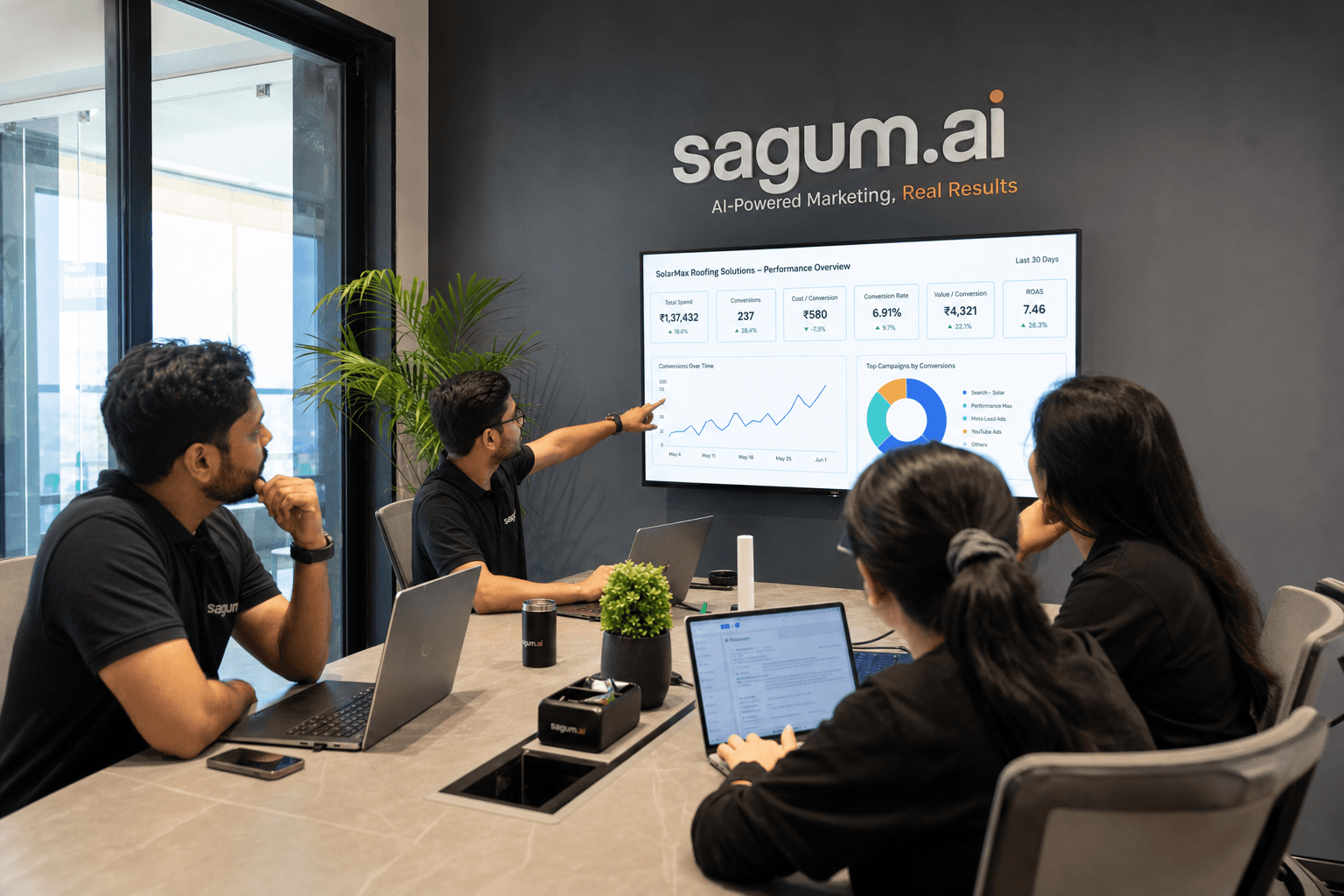
“After six years, Sagum is our most important partner: trusted, communicative, and caring about our business as if it's their own.”
Long-term partner
6-year client
Proof
From a $20 CPL goal to $13 CPL and 300+ leads/mo
Rizzoli's Automotive
Challenge
Rizzoli's Automotive set a goal of 100 qualified leads per month at roughly $20 cost per lead.
What we did
We built a custom, call-driving landing page and rebuilt paid search around high-intent service queries. We run residential solar campaigns with the same discipline.
Result
Cost per lead came in at $13 against the $20 goal, leads reached 300+ per month, and landing-page conversion topped 60%. The client opened multiple new locations.

- Cost per lead
- $13
- Leads / month
- 300+
- Landing-page conversion
- 60%+
Find Out Where Your Solar Marketing Is Leaking Before Peak Season
No obligation, no generic playbook. We review your campaigns, attribution setup, and consultation-to-contract funnel, then show you where spend isn't producing installs and what we would change.
Sagum · January 2017 · St. George, Utah · 8+ years