

8+ years growing brands on KPIs, now with AI
More Dispatched Jobs, Fewer Missed Calls
Performance marketing built around how homeowners find a restoration company at 2 AM, and why they call you first.
Google Ads Partner · 8+ years · Meta · TikTok


Get your free marketing audit
Senior strategist review · response within one business day
Prefer to reach out directly?
The Challenge
Restoration Marketing Is Nothing Like Marketing a Normal Business
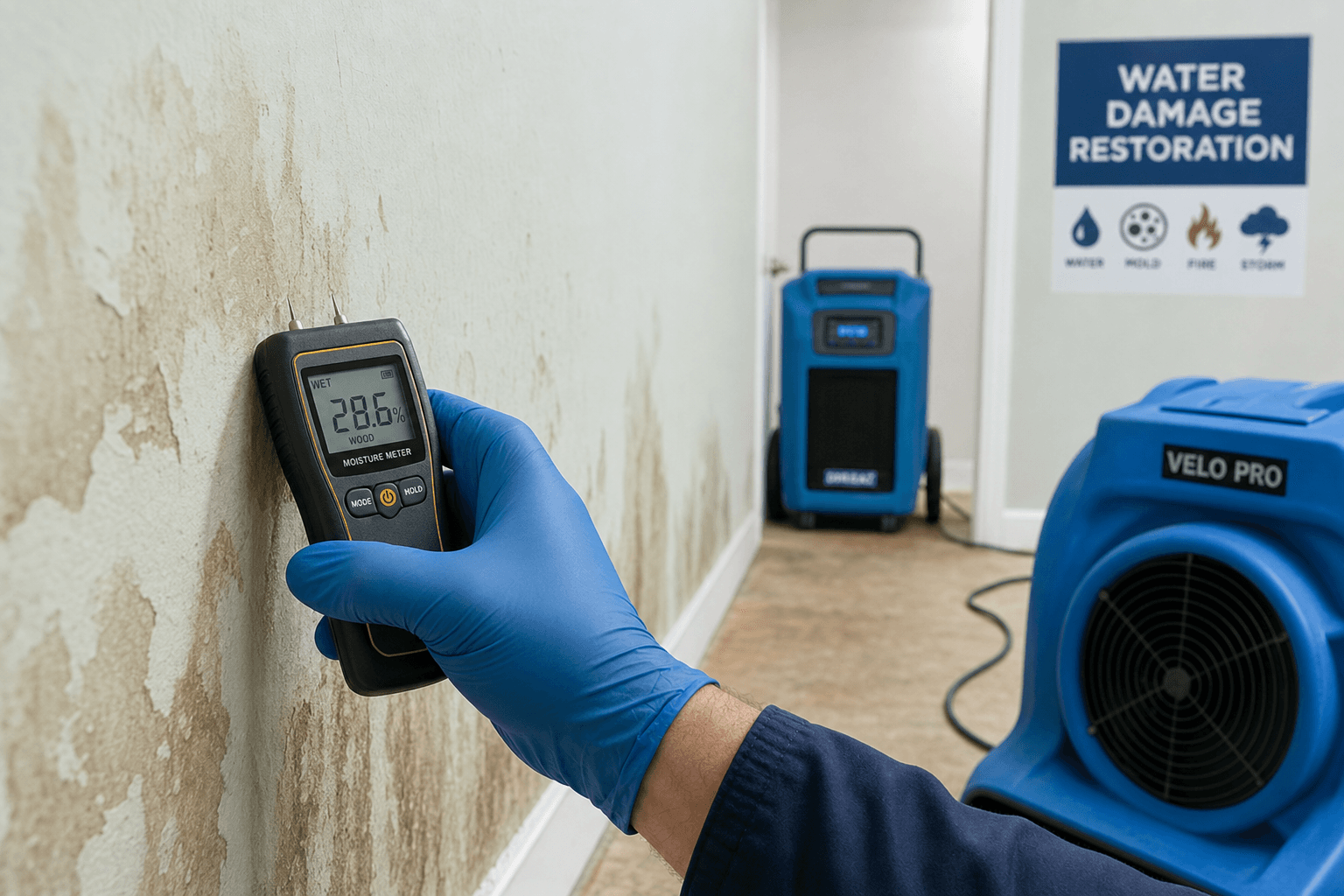
Your best customer stands in four inches of water at 11 PM, searches 'water damage restoration near me,' and calls the first credible result. If you don't answer, a competitor gets the dispatch, worth $3,500 to $8,000 in mitigation alone.
Unlike lawn care, your demand isn't seasonal. Weather events, burst pipes, kitchen fires, and sewage backups drive it: frozen pipes spike calls in January, hurricanes from August through October, and one local hail event can bring more calls in 72 hours than a slow month.
Mitigation rolling into mold remediation and reconstruction can total $40,000 to $120,000 from one address, but payment lags 90 to 120 days: 89% of revenue flows through insurance claims, and adjuster queues run long in a hard CAT market. Each job's margin buys equipment for the next.
One active plumber relationship can send 10 to 30 jobs a year at near-zero lead cost, and insurance agents, adjusters, and property managers pick vendors before homeowners search. Winning means owning the emergency search result and those relationships.
The Opportunity
The Demand Is There. Most Operators Can't Capture It Fast Enough.
FEMA declared more major disasters in 2020-2024 than any five-year period on record, amid rising hail, flood, wind, and hurricane losses. One more qualified loss a week, averaging $5,000 in mitigation, adds $260,000 a year before reconstruction.
One agency's client data showed $69 per Local Services Ads (LSA) lead versus $553 on Search: LSAs bill per lead and carry Google's trust badge. Most operators skip them or bid beyond their dispatch radius.
Answering within one hour books 31% of calls; next-day callbacks close 15%. At 3 AM, whoever answers usually beats national franchises with 90-minute dispatch radii.
A major storm in your county spikes emergency searches 300 to 500% while ad competition drops, since local businesses are hit too. Operators ready to launch a storm-activation campaign within hours capture that surge at a fraction of normal cost per lead (CPL).
What Most Get Wrong
What Most Restoration Companies and Their Agencies Get Wrong
Flat monthly budgets that ignore the weather
Surges come in unpredictable 72-hour windows (hard freeze, hail, tropical storm), and a budget set in January wastes spend in quiet weeks and runs out mid-surge, leaving you dark.
One campaign for water, fire, mold, and storm work
They differ in urgency, job value, certifications, and insurance workflow. Blend them and your ads are irrelevant half the time, pages convert poorly, and you can't see which is profitable.
No call tracking tied to keywords and campaigns
Most leads come by phone. Working from partial data, you may cut the campaign booking your best jobs and scale one full of tire-kickers who never sign a work authorization.
Skipping LSAs or the IICRC verification behind the badge
LSAs often cost several times less per lead than Search, because you pay per lead, not per click. Skipping either leaves you paying Search prices for the same leads.
No missed-call recovery or after-hours dispatch system
A homeowner calling at 2 AM about a burst pipe won't wait on voicemail. They call the next number, and whoever answers gets the dispatch and any reconstruction that follows.
Why Now
Why Operators Who Build Before the Next Storm Pull Ahead
Most restoration operators still run what they ran five years ago: a static Search campaign, a flat monthly budget, and no attribution to dispatched jobs. That setup can't raise bids when hail hits your county.
Weather-triggered bid automation works, raising budgets and bids within hours of local storm activity, yet almost no independent operator near you uses it. AI also flags unanswered calls and lets you test many more ad angles a week: urgency, certification trust, response-time guarantees.
Disaster frequency is rising, and markets hit in the last three years are statistically more likely to be hit again. Get LSAs, storm-activation campaigns, after-hours answering, and referral tracking running before the next freeze or storm. Build first and you own its call surge; build during it and you miss it.
The Mechanism
Where AI Creates a Real Edge in Restoration Marketing
Real productivity, not AI theater. Here's where it actually moves a number for restoration companies.
Digital Ads (Google LSA + Search)
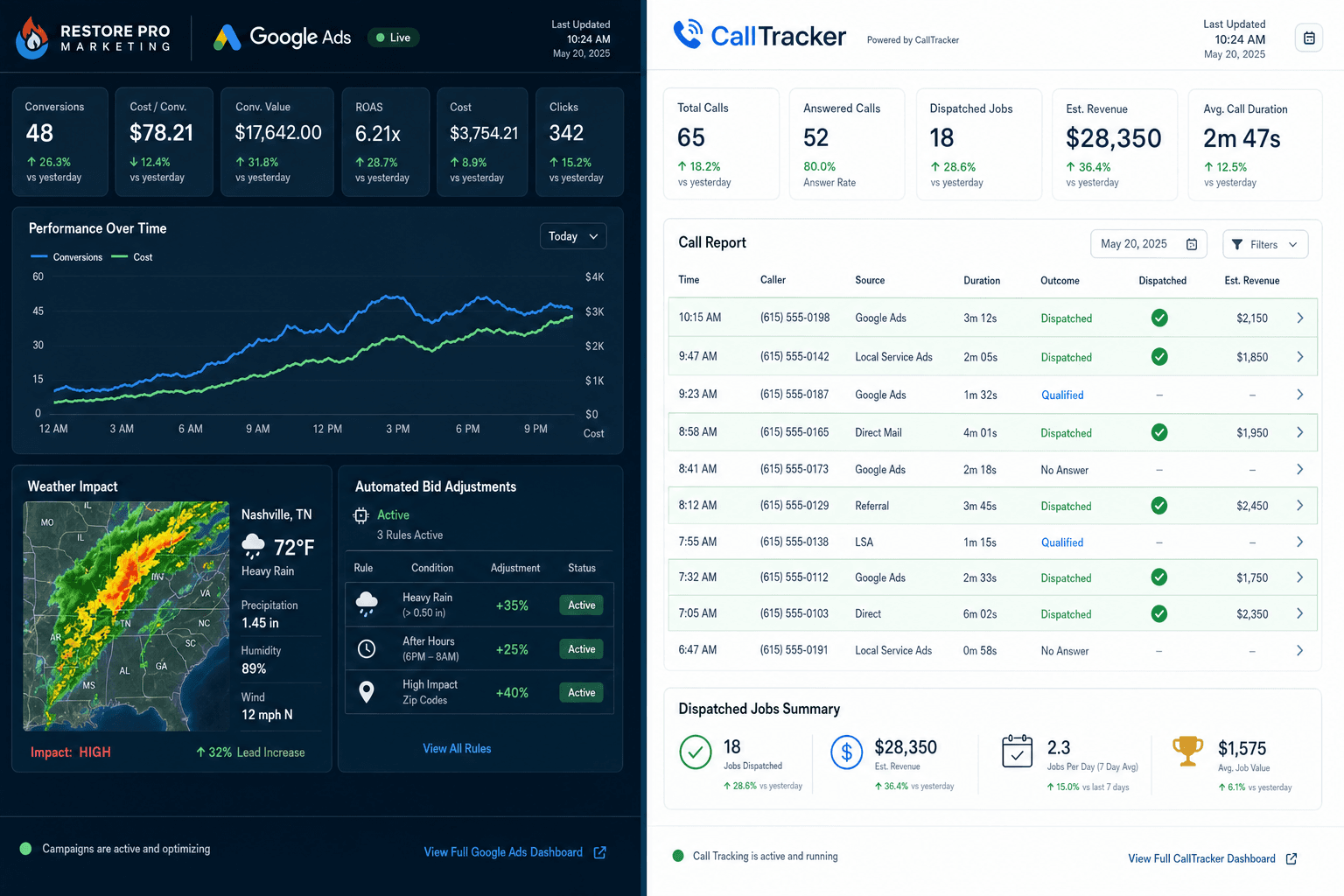
What AI does: AI adjusts LSA and Search bids in real time on weather, time of day, and each keyword's historical dispatch rate, moving budget to conditions that produce signed work authorizations.
The result: Budget follows demand: spend rises automatically in a storm surge and pulls back on a quiet mid-week morning in a dry month.
Why it matters here: Pay-per-lead LSAs undercut Search on cost per lead ($69 vs $553 in one agency's data), and AI bidding keeps you on top through storm surges.
Analytics and Attribution
What AI does: AI-assisted call tracking and recording analysis matches every inbound call to its keyword, campaign, and time of day, then flags which calls became dispatched jobs.
The result: You optimize on dispatched jobs and signed work authorizations, not form fills, and catch attribution errors that inflate apparent results before they skew budgets.
Why it matters here: Knowing that 'water damage emergency' books dispatched jobs while 'water damage cleanup' draws price-shoppers, and what each job costs you, changes every budget decision.
Conversion Optimization (Landing Pages and Call Handling)
What AI does: AI builds emergency landing pages for the 2 AM caller, tests them continuously on call-through rate rather than click-through alone, and automates missed-call recovery that reaches unanswered leads within minutes.
The result: A page built for a crisis decision converts materially better than a generic homepage, and automated recovery saves leads bound for the next competitor.
Why it matters here: Flooded homeowners want proof you'll show up fast; any friction costs a dispatch. Emergency pages and missed-call recovery are this category's two biggest conversion fixes.
Creative (Ad Copy and Messaging)
What AI does: AI generates and tests many more ad variations weekly across urgency signals, certification trust cues, response-time guarantees, and service-line specifics, so you stop running one static ad for months.
The result: You learn sooner which headline and offer drive calls in your county. One market may respond to '60-Minute Emergency Response'; another converts on 'IICRC-Certified, Insurance-Approved'.
Why it matters here: In a trust-at-crisis category, you find your market's winning message before competitors do by testing many more creative angles per week.
Ready to see what this looks like for your restoration companies business?
No obligation. A senior strategist will show you exactly where the wins are.
The Strategy
How Restoration Marketing Should Be Built
Restoration buyers act in a crisis, which changes your channel priority, KPI, creative, and infrastructure.
Start with LSAs and get your IICRC credentials and licensing verified to earn the badge. You pay per lead, at a fraction of Search CPL. Competing for the top three positions takes a 4.8-star average or better, so build a steady review-request process.
Search Ads cover what LSAs don't (commercial losses, mold remediation, contents pack-out, geographic expansion zones, branded protection) with emergency-intent keywords like 'emergency flood cleanup' and 'fire damage repair' over awareness terms. Each service line gets its own ad groups, landing pages, and CPL targets.
Pace budget to weather and season: keep a storm-activation campaign ready to deploy within hours of a local weather event, and keep daily budgets lean until demand signals trigger an automatic surge.
Tie every dollar to a dispatched job. Recorded call tracking is non-negotiable, and missed-call recovery triggers an immediate callback attempt.
Run local SEO and Google Business Profile (GBP) optimization in parallel. GBP ranking directly influences LSA position, and organic visibility compounds over 6 to 12 months into a lower blended CPL.
Track referral sources (plumbers, agents, independent adjusters, property managers) as their own attributed channel to see each relationship's dispatched jobs and cost per job.
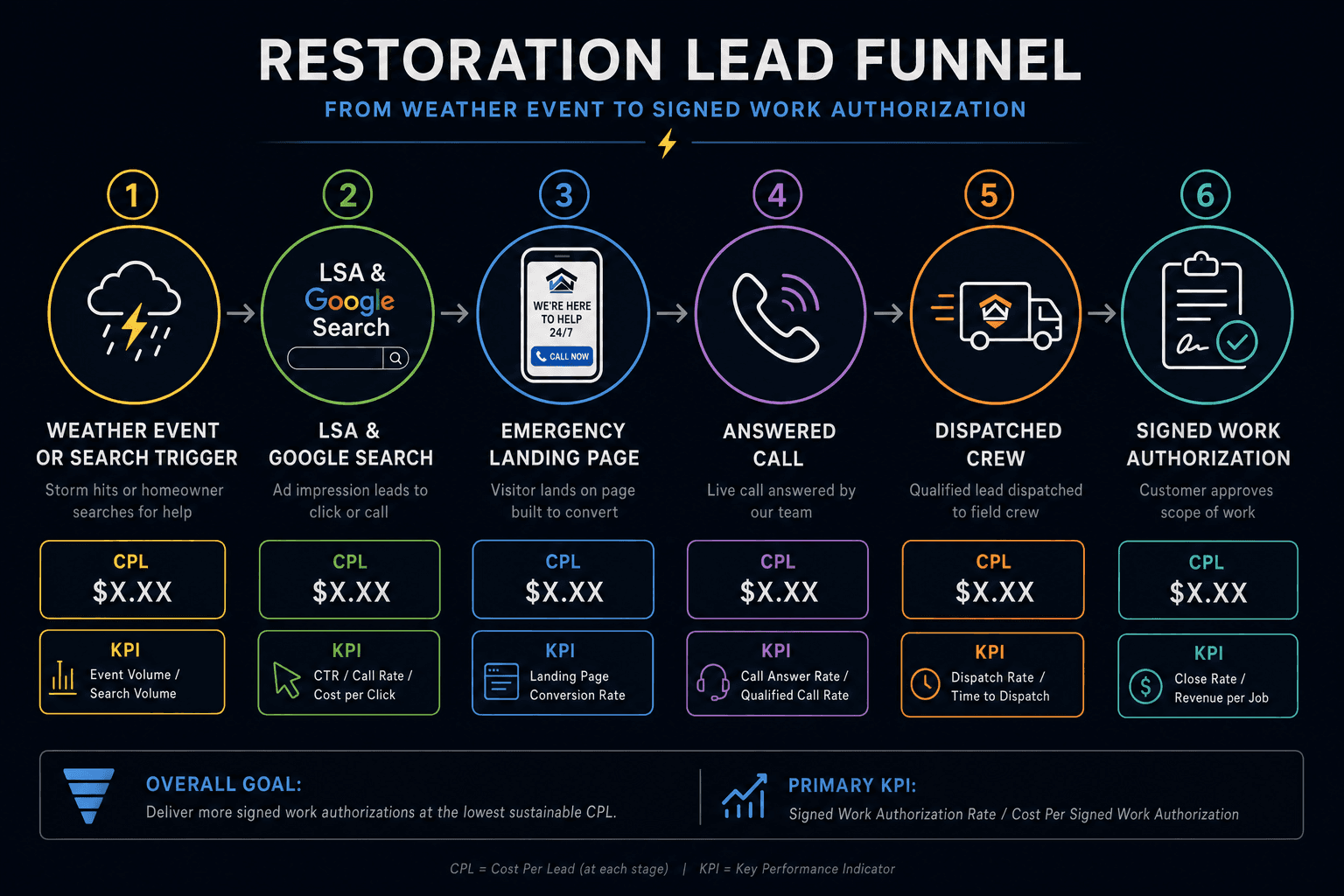
The one number that governs this
Your governing KPI is cost per dispatched job (qualified loss), measured from first call to signed work authorization, not cost per click or form fill.
How We Help
What We Would Build for Your Restoration Company
We start with tracking, attribution, and LSAs, since every decision depends on knowing which leads become dispatched jobs. Next we build campaigns, pages, and call handling, and then we optimize.
Call Tracking and Attribution Setup
We install recorded call tracking before ad spend and count dispatched jobs as conversions. You'll know your cost per dispatched job for the first time.
Google Local Services Ads Management
We get your IICRC credentials and licensing verified, tune review volume, response rate, and service area for top-three placement, and bid to your cost-per-job target.
Google Search Ads, Emergency and Service-Line Campaigns
Water mitigation, fire and smoke, mold remediation, and storm damage each get their own campaign, emergency-intent keywords, ad copy, landing page, and CPL target.
Weather-Triggered Budget Automation and Storm-Activation Campaigns
We build and maintain your storm-activation campaign, with automated bid increases tied to weather data and time-of-day patterns.
Emergency Landing Pages and Conversion Optimization
We build a landing page per service line (IICRC badge, phone above the fold, response-time guarantee, local project photos), continuously tested for call-through rate.
Missed-Call Recovery and After-Hours Lead Capture
Automated recovery triggers an immediate callback attempt for any unanswered call, so a 3 AM lead gets a response within minutes instead of voicemail.
Local SEO and Google Business Profile Optimization
We tune GBP for the service categories and geographic areas feeding LSA ranking, request reviews to hold the 4.8-star floor, and build local SEO content.
Referral-Source Attribution and Reporting
We report each referral source's dispatched jobs and effective cost per job, so you invest in the relationships that work.
Who's Behind This
Who we are, and what makes us different
Sagum is a performance marketing agency founded in January 2017 in St. George, Utah. We've spent 8+ years growing real brands and being judged on KPIs, not vanity metrics.
We deliberately limit how many clients we take so each one gets senior attention. We treat your numbers like our own, we never run generic playbooks, and your strategy is built for your business, because shouldn't your brand's marketing be custom to your brand?
Sagum.ai is our AI arm: the same proven operators now build AI into the work wherever it creates real edge, not as theater, but as leverage applied with discipline.
- 8+ years growing brands on performance KPIs, not vanity metrics
- Limited client roster, with senior attention on every account
- An extension of your team; your success is tied to ours
- Custom strategy per brand, never a generic playbook
- AI built in where it moves a number; judgment over hype
“Sagum is a performance marketing agency that's spent 8+ years growing brands by treating their numbers like our own. We take on few clients, never run generic playbooks, and now build AI into the work wherever it creates real edge, not hype. Your strategy is built for your business, and our success is tied to yours.”
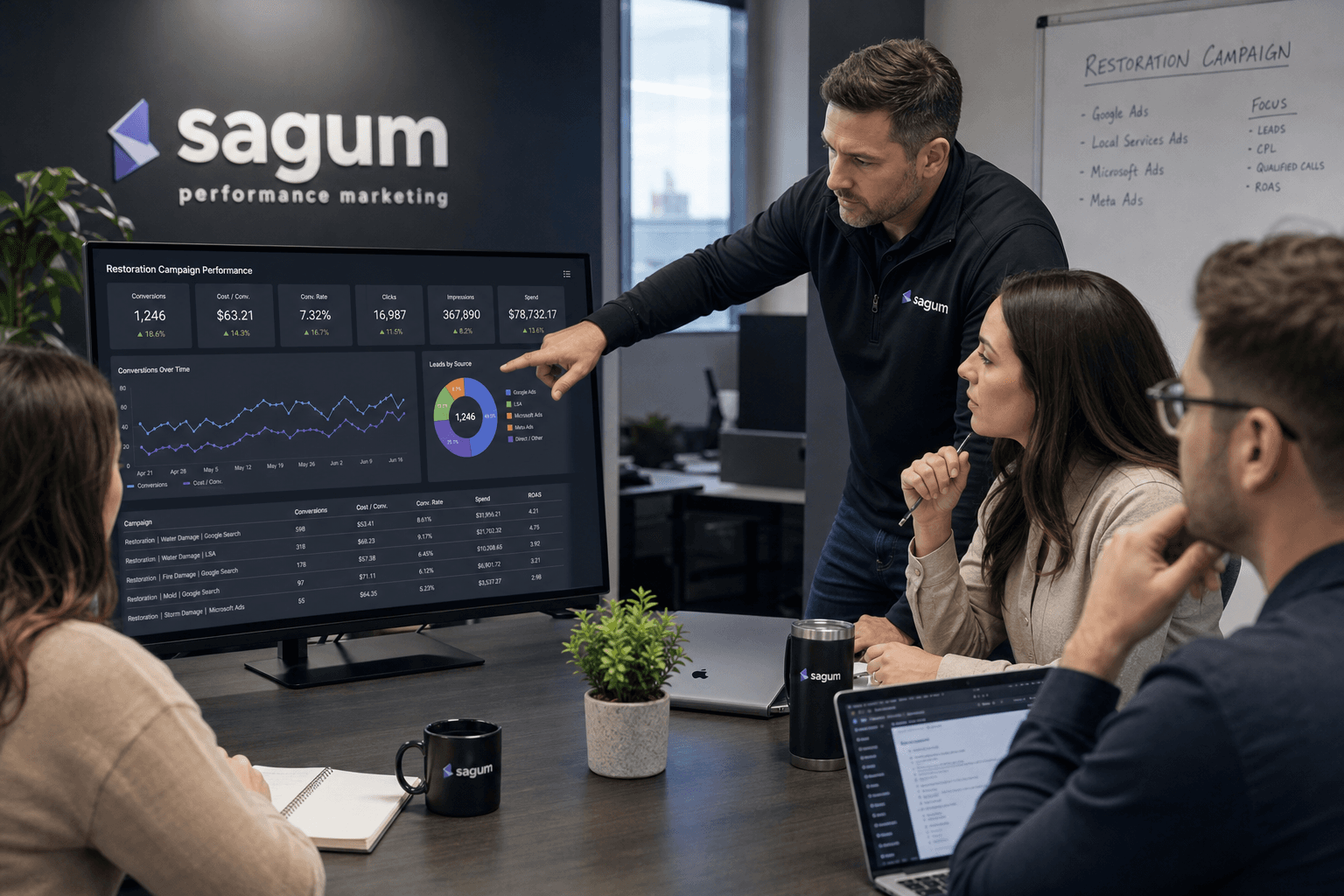
“After six years, Sagum is our most important partner: trusted, communicative, and caring about our business as if it's their own.”
Long-term partner
6-year client
Proof
From a $20 CPL goal to $13 CPL and 300+ leads/mo
Rizzoli's Automotive
Challenge
Rizzoli's Automotive set a goal of 100 qualified leads per month at roughly $20 per lead.
What we did
We built a call-driving landing page and rebuilt paid search around high-intent service queries, the same pairing we'd build for 'water damage restoration near me' searches.
Result
Cost per lead came in at $13 against the roughly $20 target, monthly leads exceeded 300, landing-page conversion topped 60%, and the client opened multiple new locations.
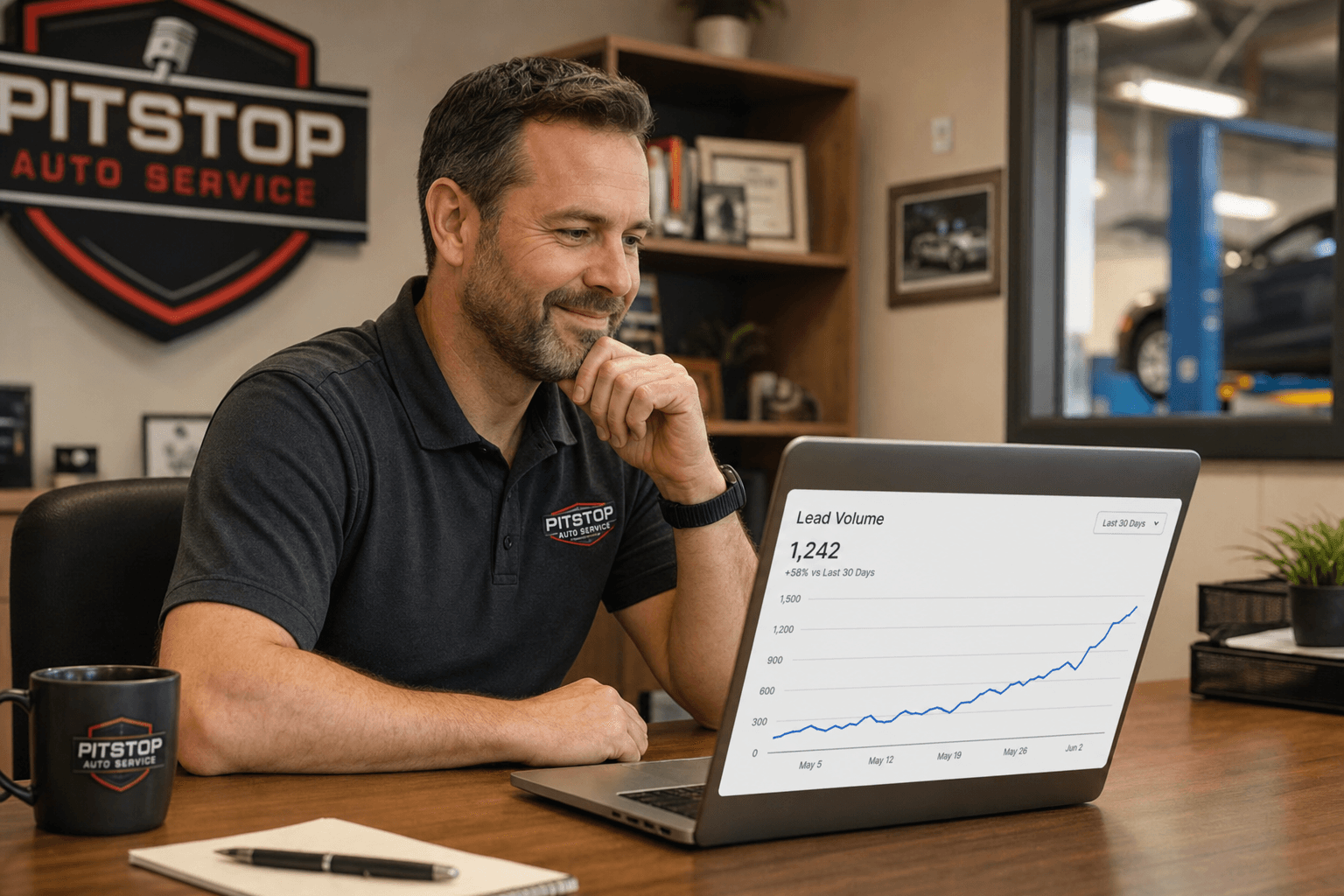
- Cost per lead
- $13
- Leads / month
- 300+
- Landing-page conversion
- 60%+
Find Out Exactly Where Your Restoration Company Is Missing Qualified Losses
No obligation. We review your LSA setup, call tracking, campaign structure, and attribution against your service lines, dispatch radius, and cost-per-job targets, and you leave with the specific gaps named.
Sagum · January 2017 · St. George, Utah · 8+ years