

8+ years growing brands on KPIs, now with AI
More Held Consultations for Tub Installers
Search and social campaigns that put qualified homeowners in front of your sales rep, screened and ready to decide.
Google Ads · Meta · TikTok Partner | 8+ Years Performance Marketing


Get your free marketing audit
Senior strategist review · response within one business day
Prefer to reach out directly?
The Challenge
Walk-In Tub Marketing Is Unlike Any Other Home Services Category
Average installed jobs run $12,000–$16,000, so you need held, qualified in-home consultations, not no-show form fills or visits with only the adult daughter home. Each wasted truck roll costs $300–$500.
The senior homeowner, typically 65–80 and protective of their independence, makes the decision. But an adult child worried about a fall often runs the 11pm 'walk-in tub installer near me' search. Both must feel respected, or neither books.
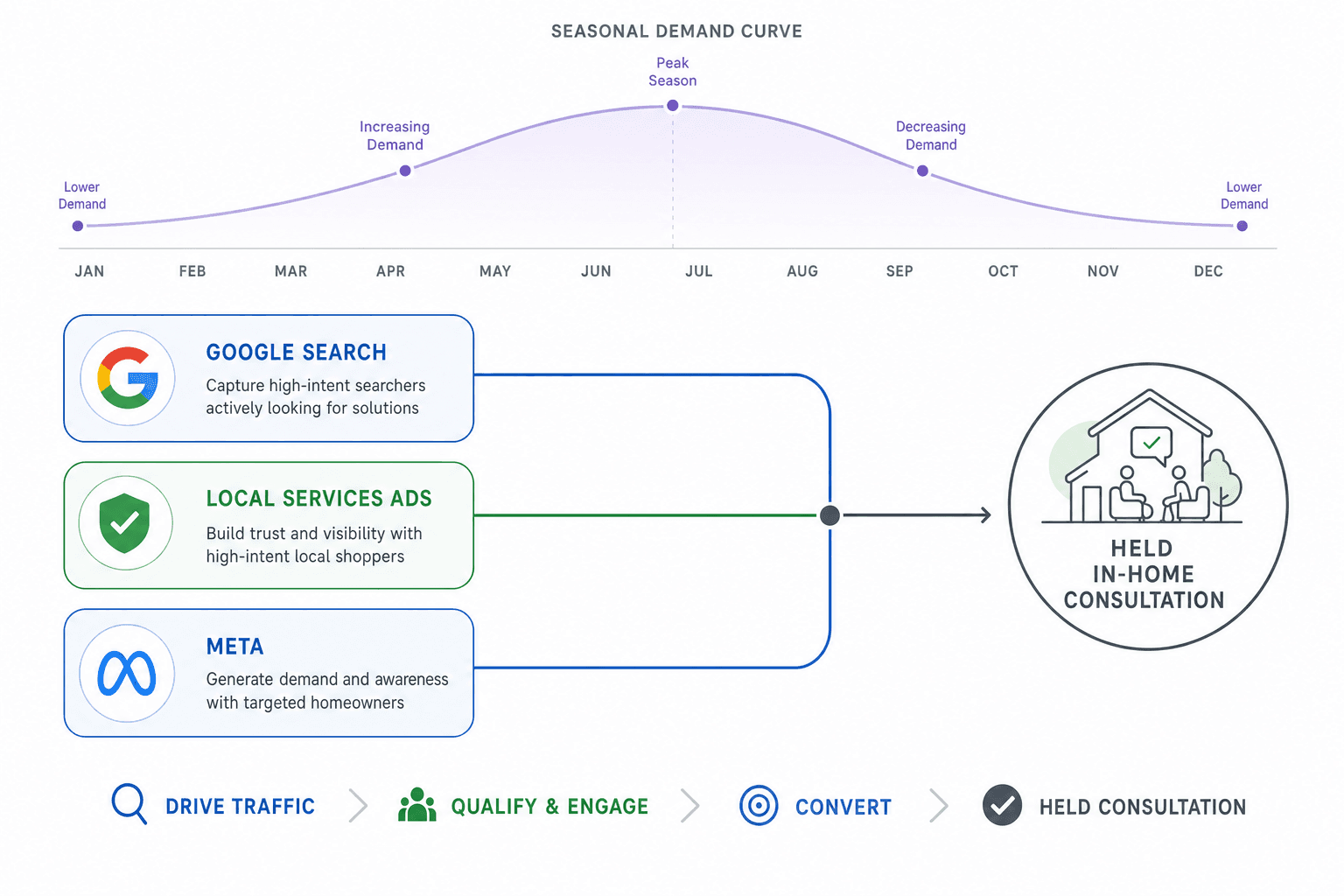
Demand has several peaks: it surges in January and February after holiday visits with aging parents, and spring tax refunds bring the year's strongest booking window. Late summer travel empties your calendar while CPL climbs 20–30%. September brings pre-winter urgency in cold climates.
Safe Step, Kohler Walk-In Bath, and American Standard spend millions on national TV and dominate paid search in every market you serve. Their high-pressure in-home sales leave prospects defensive, giving a trusted local installer an opening. Generic home-services marketing treats your consultation like a plumber's service call and your buyer like a coupon-seeker, filling your calendar with unqualified appointments.

The Opportunity
High-Intent Walk-In Tub Demand Mostly Goes Uncaptured
Homeowners in your drive radius search 'walk-in tub installer [your city]' and 'accessible bathtub near me' daily, many after a fall, surgery, or physician's recommendation. They're ready to book within two to six weeks. Bid up ZIPs with high 65-plus homeownership and filter out renter-heavy ones, whose clicks never become in-home consultations.
Hydrotherapy is nearly 40% of premium walk-in tub sales. Present therapeutic and comfort features credibly, not only safety, to compete in a higher-margin tier where tickets average well above $15,000 and national brands' awareness validates the category.
Meta reaches adult children and spousal caregivers driving research, women 45–65 converting at $30–$80 per lead vs. $80–$200 on search and responding strongly to 60–90-second video testimonials.
Most competitors drop leads after two calls; operators who nurture by call, email, and retargeting close jobs from leads 60 to 120 days old.
What Most Get Wrong
What Walk-In Tub Companies and Their Agencies Get Wrong
Making shared Angi or Modernize leads your primary channel
Three to five competitors buy each lead; your rep calls fourth in a price race. Exclusive leads close far better. At $13,000 average tickets, a few close-rate points decide profit.
Pitching 'keeping your loved one safe' only to adult children
The senior, who must consent at the consultation, feels patronized. Telling the senior 'you deserve to bathe safely, on your terms' books better appointments because the signer is bought in.
Flat monthly budgets with no seasonal adjustment
You overspend in late summer, when CPL spikes and the calendar is slow, and underspend in January–February and March–May, when intent peaks and competitors are sleeping.
No pre-qualification phone screen before booking
Consults for renters, absent homeowners, or bathrooms too small for the tub cost a truck roll and a rep's afternoon, keeping held-consultation rates low and cost per installed project high.
No call tracking on campaigns
Buyers call: a homeowner who just had a near-fall dials the ad's number. Without tracking calls by source and duration, you optimize to form fills and cut campaigns that work.
Why Now
Why the Months Before Your Spring Peak Decide the Year
By spring, when crews have capacity before summer heat, adult children alarmed over the holidays have researched for six to eight weeks. Reach them in winter, before Safe Step retargets them.
Most regional operators run set-and-forget Google campaigns: static keywords, no ZIP bid adjustments, no seasonal pacing, no copy testing. Beating them takes discipline and speed, not a national budget. AI lets a two- or three-crew installer test five creative angles a week instead of one a month, shift spend by ZIP and hour, and catch attribution errors.
Installers who do this first will own local search by next peak season. Platforms increasingly scrutinize accessibility ads with medical promises or fear-based language, so start dignity-forward creative off-peak and enter spring with account history and quality scores that protect you.
The Mechanism
Where AI Gives Walk-In Tub Installers an Edge
Real productivity, not AI theater. Here's where it actually moves a number for walk-in tub installers.
Digital Ads
What AI does: Adjusts bids by ZIP, hour, and device, bidding up 65-plus homeowner ZIPs in the morning, when seniors and caregivers research, and pulling back on low-converting inventory automatically.
The result: Budget follows the searches that book consultations instead of spreading evenly, without weekly manual adjustments.
Why it matters here: Demand is uneven by geography and hour, yet flat bids treat a renter-heavy ZIP like a retirement-community ZIP two miles away.
Creative
What AI does: Tests ad copy and video thumbnail variations weekly, rotating senior-voiced benefit lines ('bathe independently, on your schedule') against caregiver-voiced safety lines to find what books consultations.
The result: You find your area's converting message in weeks rather than months and drop ads that don't book.
Why it matters here: The senior-vs.-caregiver dynamic is unique to this category, and the wrong framing drives the senior away.
Conversion Optimization
What AI does: Reviews landing pages continuously for form length, phone number prominence, trust signal placement, and mobile load speed, flagging changes likely to lift booked consultations per click.
The result: More of the clicks you already pay for become held appointments, cutting cost per consultation without more ad spend.
Why it matters here: Your prospect is often 70, on a small phone. An eight-field form, a footer-buried phone number, and a three-second load lose her before she calls.
Analytics
What AI does: Ties calls, tracked by source, duration, and outcome, to their campaigns and keywords, showing which ad dollars produce held consultations and which produce form fills that no-show.
The result: You optimize toward the metric that pays your installers, not the one that's easy to measure.
Why it matters here: Untracked calls are the single most common reason regional operators cut their best-performing campaigns.
What AI does: Sends automated 90-day nurture sequences, triggered by a form fill or unbooked call, with process explainers, financing information, testimonials, and soft re-engagement offers.
The result: Some leads you'd have written off re-engage and book within 60–120 days; leads that old produce 20–30% of closed jobs for operators who nurture.
Why it matters here: Buyers without urgent triggers decide over three to six months; a lead unbooked in week one often books in week ten if you're still there.
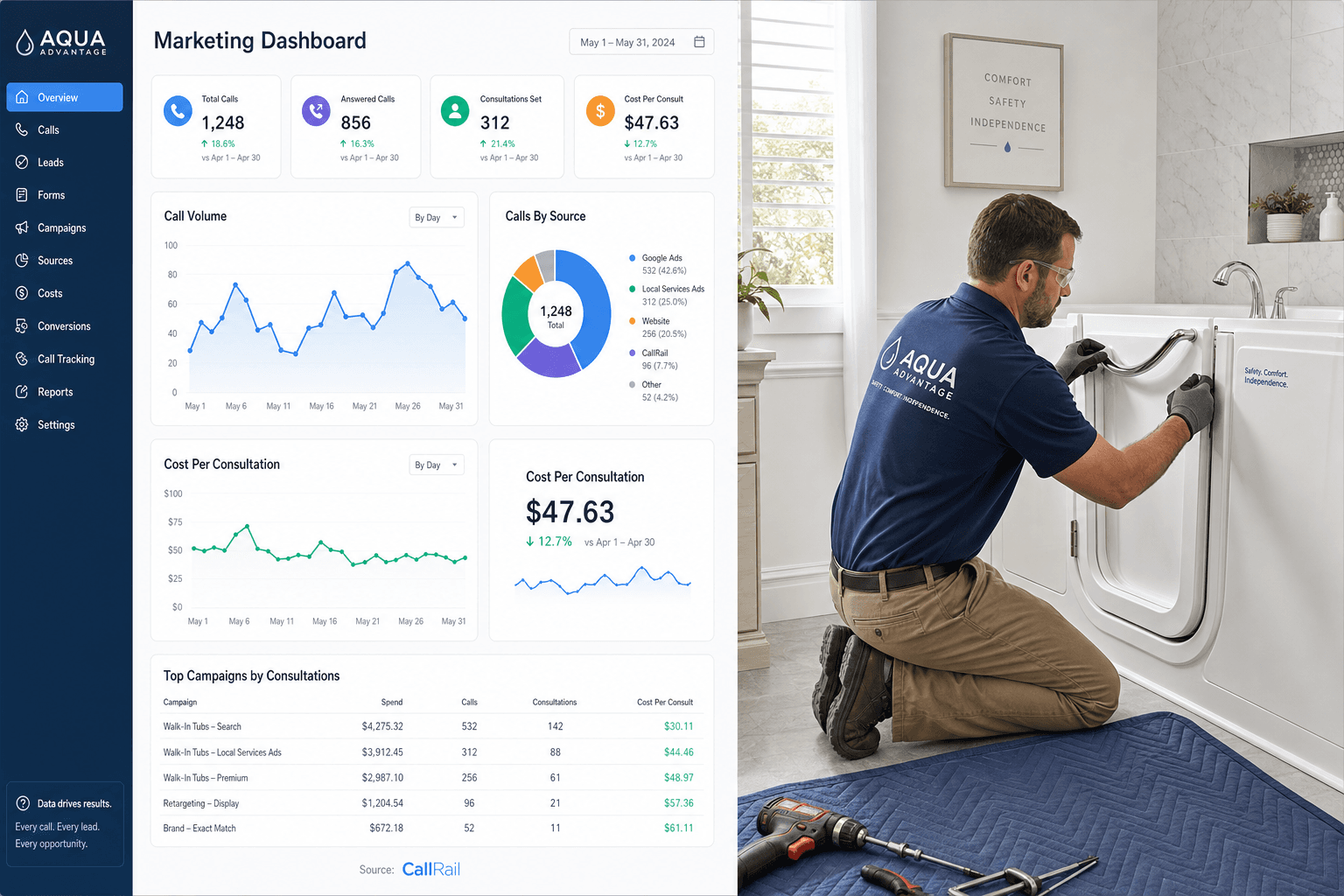
Ready to see what this looks like for your walk-in tub installers business?
No obligation. A senior strategist will show you exactly where the wins are.
The Strategy
How Walk-In Tub Marketing Should Be Run
Judge everything by cost per held qualified consultation, not CPL or CPC: no-shows cost nearly as much as held ones and earn nothing.
Split Google Search, your highest-intent, highest-CPL channel, into three tiers: emergency ('walk-in tub after a fall'), research ('how much does a walk-in tub cost,' 'walk-in tub vs walk-in shower'), and competitor (Safe Step or Kohler alternatives).
Give each tier its own bids, copy, and landing pages, since post-fall searchers differ from buyers researching prevention in March. Run Google Local Services Ads (LSA) alongside Search; families comparing three installers pick the LSA-verified one with the newest reviews.
Run Meta in parallel for retargeting and caregiver education, targeting women 45–65 interested in senior care, home accessibility, and aging parents. Its 60–90-second video testimonials about installation day beat static creative, and its leads need longer nurture than Search leads.
Track every call by source and duration, optimizing toward calls over 90 seconds from high-intent terms and screening out calls under 60 seconds.
Pace budget seasonally: reduce late-summer spend and tighten targeting to retirement-community ZIPs; run 'book now, install in January' messaging in November and December.
Bid ZIPs by 65-plus homeownership and household income, suppress renter-heavy and apartment-dense areas, and cap territory at crew capacity, keeping lead times under two weeks.
The one number that governs this
Measure every dollar by cost per held qualified consultation, where the homeowner is present, the bathroom qualifies, and a budget-holding decision-maker is in the room.
How We Help
What We'd Do for Your Walk-In Tub Business
We'd first fix the attribution most agencies skip, showing which campaigns book held consultations and which book expensive no-shows, then build only the pieces your market needs.
Call Tracking and Attribution Setup
We track every phone number in every ad, landing page, and LSA listing before touching a bid.
Google Search Campaign Build and Management
Emergency, research, and competitor tiers each get their own copy, bids, and landing pages for that buyer's stage.
Google Local Services Ads Management
We run LSA setup and verification and support review generation so your verified badge and recent reviews win 'near me' results.
Meta Ads (Caregiver and Adult-Child Audiences)
Testimonial videos and retargeting reach the adult children and caregivers doing the research, building your warm audience and nurturing Search leads that didn't book.
Consultation-Optimized Landing Pages
Each tier's page carries the phone number above the fold, a short pre-qualification form, financing, local project photos, and license, warranty, and process trust signals.
90-Day Lead Nurture Sequences (Email and Retargeting)
Unbooked form fills and calls trigger 90 days of email and retargeting, including testimonials and financing reminders.
Seasonal Budget Pacing and ZIP-Code Targeting
Budget is heavier in January–May and September–October and suppressed in late summer, with ZIP bids favoring senior homeowners and territory capped at crew capacity.
Creative Testing (Ad Copy and Video)
We rotate senior-voiced and caregiver-voiced messaging weekly, so you find what books consultations in your market before a competitor testing one ad per month would.
Who's Behind This
Who we are, and what makes us different
Sagum is a performance marketing agency founded in January 2017 in St. George, Utah. We've spent 8+ years growing real brands and being judged on KPIs, not vanity metrics.
We deliberately limit how many clients we take so each one gets senior attention. We treat your numbers like our own, we never run generic playbooks, and your strategy is built for your business, because shouldn't your brand's marketing be custom to your brand?
Sagum.ai is our AI arm: the same proven operators now build AI into the work wherever it creates real edge, not as theater, but as leverage applied with discipline.
- 8+ years growing brands on performance KPIs, not vanity metrics
- Limited client roster, with senior attention on every account
- An extension of your team; your success is tied to ours
- Custom strategy per brand, never a generic playbook
- AI built in where it moves a number; judgment over hype
“Sagum is a performance marketing agency that's spent 8+ years growing brands by treating their numbers like our own. We take on few clients, never run generic playbooks, and now build AI into the work wherever it creates real edge, not hype. Your strategy is built for your business, and our success is tied to yours.”

“After six years, Sagum is our most important partner: trusted, communicative, and caring about our business as if it's their own.”
Long-term partner
6-year client
Proof
From a $20 CPL goal to $13 CPL and 300+ leads/mo
Rizzoli's Automotive
Challenge
Rizzoli's Automotive wanted 100 qualified leads a month at roughly $20 per lead. Your consultations face the same test: qualified volume at a set cost, not raw lead count.
What we did
We built a custom call-driving landing page and rebuilt paid search around high-intent service queries, the same intent-first approach your emergency and research tiers need.
Result
Cost per lead reached $13 against a roughly $20 goal, with 300-plus leads a month and over 60% landing-page conversion; the client opened multiple new locations. We'd hold your campaigns to cost per held consultation.
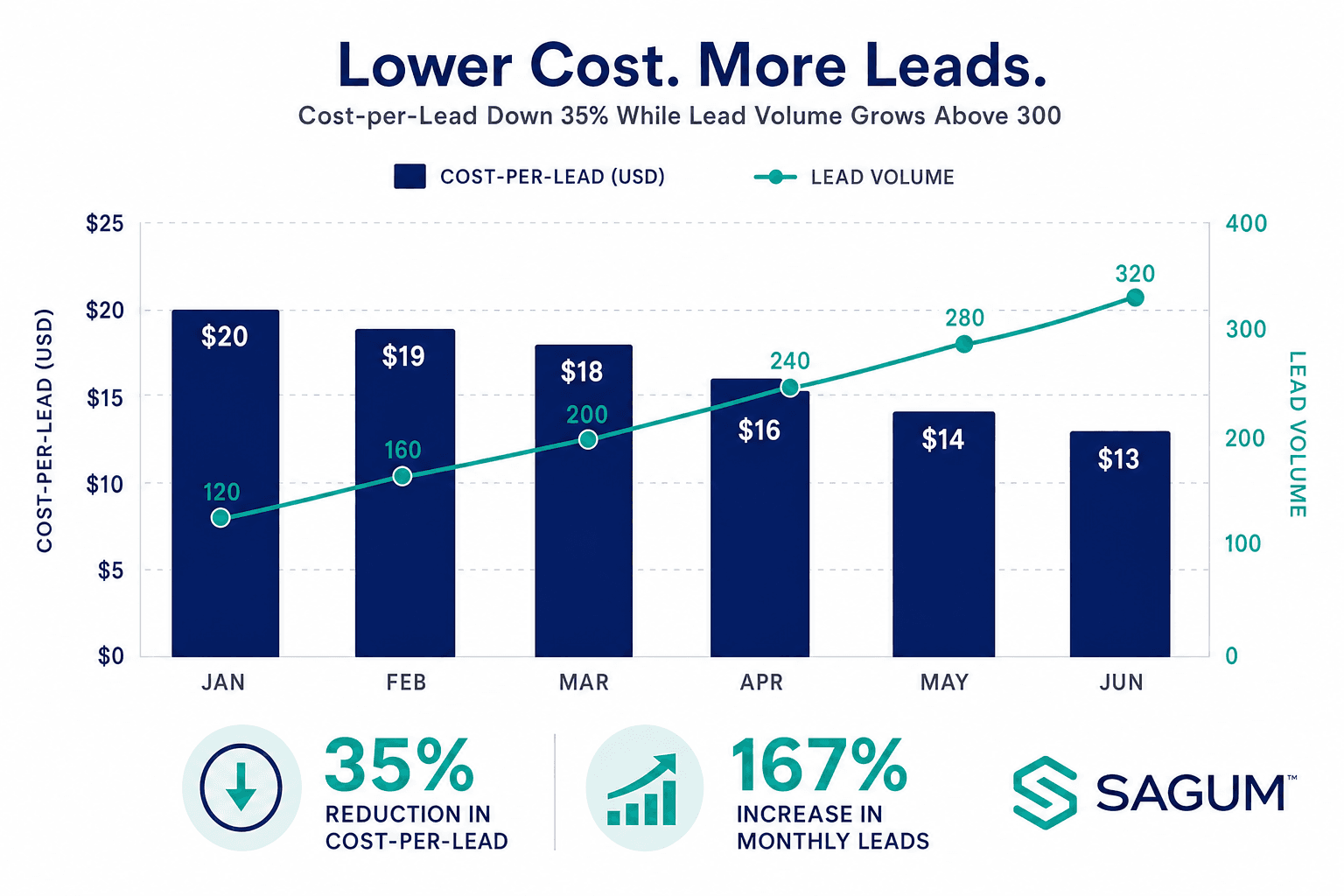
- Cost per lead
- $13
- Leads / month
- 300+
- Landing-page conversion
- 60%+
Find Out What Walk-In Tub Marketing Should Cost Per Consultation
No obligation, no pressure. We'll review your current campaigns, cost per held consultation, and service territory, then show you where the gaps are and what fixing them is worth.
Sagum · January 2017 · St. George, Utah · 8+ years