

8+ years growing brands on KPIs, now with AI
More Booked Estimates for Window Contractors
We build performance marketing systems that fill your install calendar with qualified full-home replacement appointments.
8+ years growing local service businesses · Google Ads · Meta · TikTok · AI-powered where it moves the number


Get your free marketing audit
Senior strategist review · response within one business day
Prefer to reach out directly?
The Challenge
Why Window Replacement Leads Are Slow, Seasonal, and Hard to Qualify
Your buyer deliberates for months, maybe years. The homeowner replacing 14 windows in a 30-year-old colonial noticed drafts last January, got a first quote in March, and now weighs you against Renewal by Andersen, a regional competitor, and whatever Angi texted. They're anxious, skeptical, and braced for a high-pressure pitch.
Full-home jobs typically run $9,000 to $13,000, so both spouses must be in the room; pitching one alone almost always loses the job. Marketing must produce more than a name and number: a confirmed appointment, with both homeowners present, for a multi-window replacement, when your crew can run it.
Weather drives demand: spring and summer bury you while Google Ads CPCs spike 15–25%. November through February goes quiet, yet January callers are often your most motivated buyers, ready to lock in pricing before the spring rush. Flat monthly budgets overpay at peak and go dark when leads are cheap.
Single-window repairs, broken hardware, and foggy-glass-only calls look like leads but eat sales capacity and distort cost-per-estimate; filter them at intake.

The Opportunity
Most Local Operators Leave Window Replacement Demand on the Table
Buyers searching 'window replacement [city]' or 'replace windows near me' have decided to buy and are comparing you with three competitors. Your ads, landing page, and follow-up win or lose them to aggressive bidders.
Local Services Ads (LSA) deliver window replacement leads at $25–$85 versus roughly $200 on standard Google Search, and the Google Verified badge eases licensing and trust anxiety. Most independents haven't set them up or built enough reviews to compete.
Leading your ads and landing page with lower energy bills from ENERGY STAR windows, and the rebates some utilities offer, turns 'this is expensive' into 'this makes financial sense right now.'
The biggest untapped pool in most window businesses is unsold estimates: a 5–7 touch follow-up sequence over 14 days recovers a measurable percentage of them without new ad spend.
What Most Get Wrong
What Window Companies and Their Agencies Get Wrong
Running one budget all year
You overpay during the March–August CPC spike and go dark November through February, when motivated buyers search while competition and costs are lower.
Mixing repair and replacement intent
Without a tight negative keyword list, you pay for searches like 'window repair,' 'broken window glass,' and 'window screen replacement' that bring calls your closers can't convert profitably, inflating cost-per-estimate.
Sending paid traffic to a generic homepage
A homepage showing your logo and phone number gives buyers no reason to book; a page answering who installs, what it costs, and whether they'll be pressured converts far better.
No attribution from lead to sold job
Without tracking through the in-home estimate to the signed contract, you optimize for the cheapest lead, often a repair call or no-show, over the most profitable job.
Ignoring unsold estimates
A large share of estimates miss the one-call close. Companies stopping at one follow-up email abandon them; top performers run a 14-day sequence and close a meaningful share of them.
Why Now
Why the Months Before Spring Are an Opening for Local Window Operators
Most independents still run two- or three-year-old setups: a few keywords, a static budget, the homepage as landing page. They don't test creative, pace to weather, or use AI to catch attribution problems and shift spend in real time. Those setups trail AI-assisted marketing further than ever.
Intent peaks in spring: after a winter of drafts and fogged panes, homeowners search in force and contractor schedules fill fast. Operators ready before spring capture that demand; those starting in April pay peak CPCs for leads they aren't set up to convert.
National franchises like Window World have brand budgets but not your crew, response time, or the trust a local owner builds in a one-call close. AI-assisted marketing gives comparison shoppers a reason to pick you before the franchises react.
The Mechanism
Where AI Gives Window Replacement Marketing a Real Edge
Real productivity, not AI theater. Here's where it actually moves a number for window installation companies.
Digital Ads
What AI does: AI monitors your Search, LSA, and remarketing campaigns, shifting budget to the keywords and ad groups that book confirmed estimate appointments.
The result: Spend follows what books jobs instead of a static allocation set in January.
Why it matters here: Google Ads leads can cost $85–$250, and one wasted campaign can burn ad spend worth a week of crew capacity, so real-time optimization beats reactive.
Creative
What AI does: AI generates and tests financing-led ('$0 down, 0% for 18 months'), energy-savings-led ('Cut your heating and cooling bills with ENERGY STAR windows'), and trust-led ('Our crew, not subcontractors') angles at once.
The result: You find what books estimates in your market faster and retire weak angles before they drain budget.
Why it matters here: Buyers compare 3–5 companies, and the ad surfacing the right trust signal (crew ownership, warranty clarity, financing) gets the call.
Conversion Optimization
What AI does: AI continuously reviews your estimate-booking landing pages for friction (form length, trust signals, financing callouts, load speed) and tests changes on your traffic.
The result: Paid traffic converts at 35–45%, where a generic homepage typically delivers 10–15%.
Why it matters here: At $5,000/month on Google Ads, a 40% landing-page conversion rate yields 60 estimate requests where 12% yields 18.
Analytics and Attribution
What AI does: AI audits your tracking for attribution errors (misfiring pixels, broken call tracking, forms not tied to their campaign), showing which ads produce booked estimates and signed contracts.
The result: You optimize toward cost per sold job instead of cost per lead.
Why it matters here: At $10,000+ per replacement job and 3–4 jobs per crew per week, cheap leads that don't sit or close are costly; bad attribution hides them.
Email and Follow-Up Automation
What AI does: AI runs 14-day sequences on unsold estimates, triggered by outcome (no-show, sat-but-didn't-sign, requested a second quote) and personalized to the financing offer or objection raised.
The result: You recover a measurable share of unclosed estimates without manual tracking by your sales team.
Why it matters here: Working unsold estimates turns leads you've already paid for into a second revenue stream.
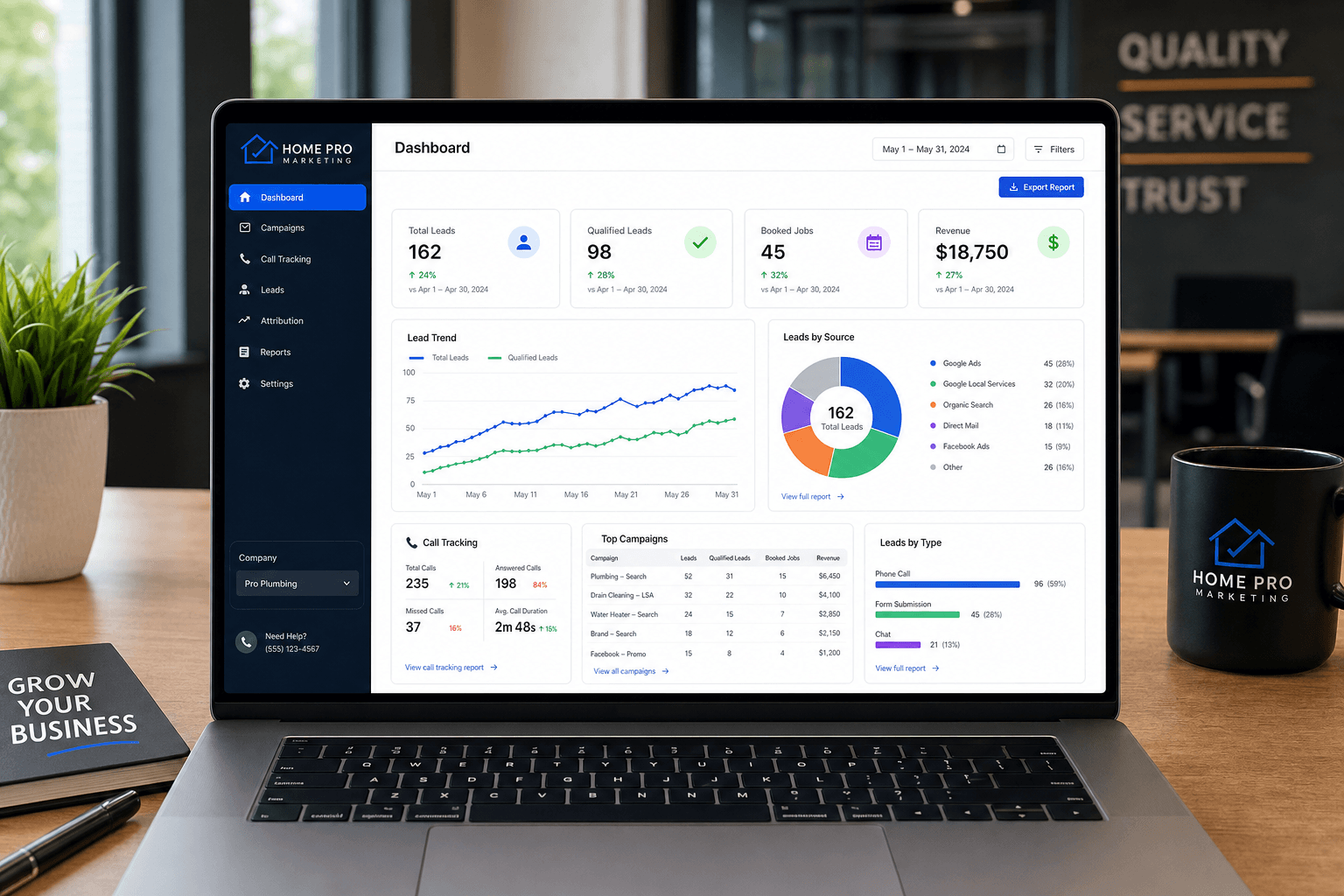
Ready to see what this looks like for your window installation companies business?
No obligation. A senior strategist will show you exactly where the wins are.
The Strategy
How Window Replacement Marketing Should Be Run
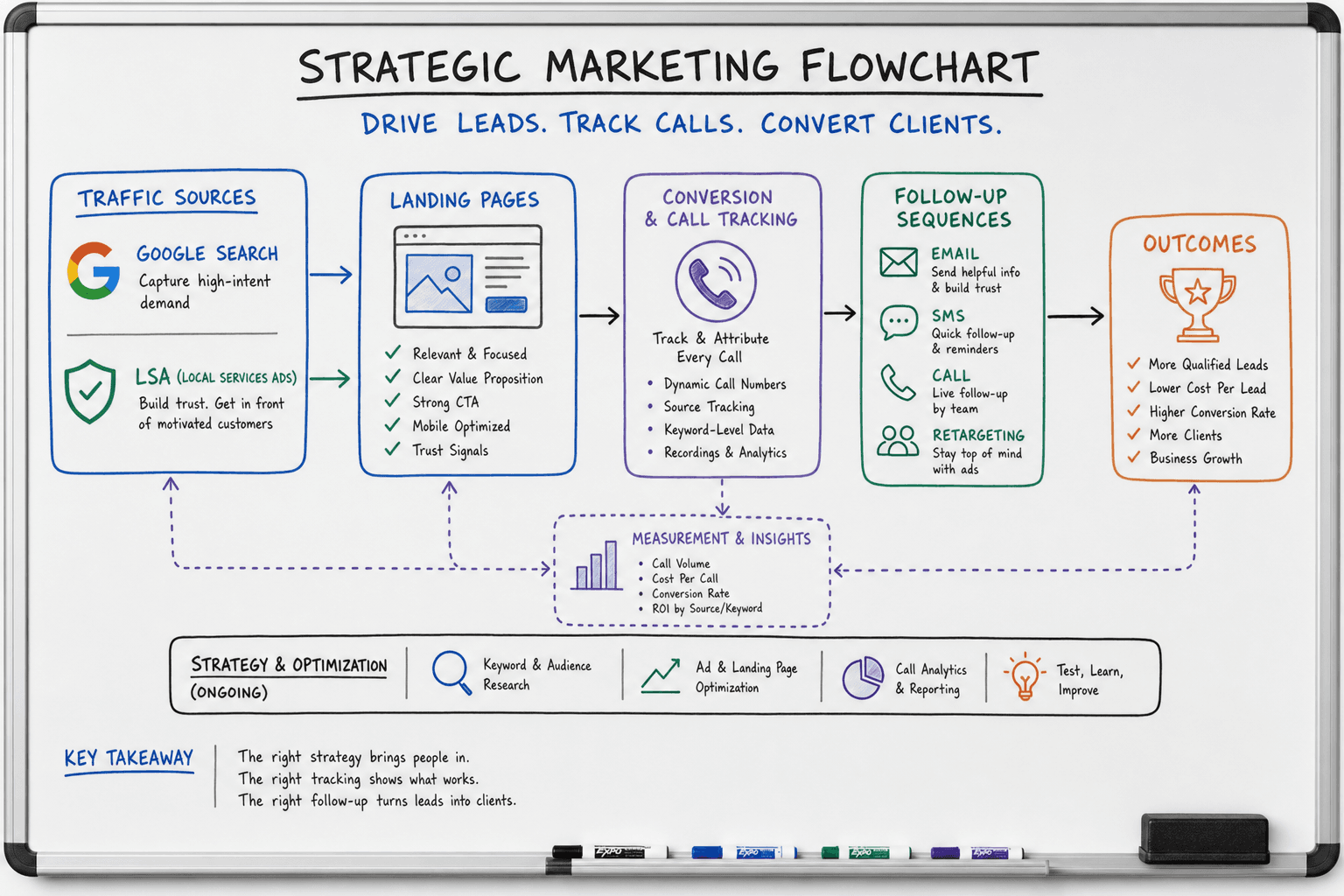
Start with Google Search and LSA targeted by service-area zip codes, built on replacement-intent keywords like 'double pane window replacement cost,' with negative keywords excluding repair, single-window, DIY, and glass-only intent.
LSA runs alongside Search: its Google Verified badge eases licensing and subcontractor worries, and its leads cost far less than Search leads, so channel mix matters as well as total budget.
Paid traffic goes to a landing page per city or suburb, each built to book both decision-makers into an in-home estimate by answering who installs, what it costs, and what happens if something goes wrong. Call tracking shows which campaign rang the phone.
Meta plays a support role because cold audiences for window replacement convert poorly there. We retarget visitors who didn't book, and we aim financing-led creative about locking in current pricing at lookalike audiences seeded from past customers.
Pace budget to season and crew capacity: spend more in spring and summer, run financing-led creative at lower CPCs November through February to fill the install calendar, and launch rapid-response campaigns after storms like Midwest hail or Southern freezes, because those buyers close fast.
Underneath everything, the unsold-estimate sequence fires automatically when an estimate doesn't close same-day; that's where a significant share of your revenue sits.
The one number that governs this
Optimize every campaign toward cost per qualified estimate appointment and ultimately cost per sold replacement project, not clicks, form fills, or impressions.
How We Help
What We Would Do for Your Window Business
We keep our client list limited so each gets senior attention. For a window company, we fix the foundation, build the conversion engine, then scale what works.
Attribution and Tracking Audit
First we confirm call tracking fires on every page, forms tie to their campaign, and your dashboard shows cost per booked estimate.
Google Search Campaign Build and Management
We build replacement-intent campaigns by service area, use negative keywords against repair and single-window intent, and optimize weekly on cost per qualified estimate.
Local Services Ads Setup and Optimization
LSA's Google Verified badge is a trust signal your landing page can't replicate; we build review velocity toward the 10–15 reviews that make LSA competitive.
Service-Area Landing Pages
Each city gets a '[city] window replacement' page built to book estimates, with local project photos, reviews, crew-ownership language, warranty clarity, and a financing callout.
Creative Development and Testing
We test financing, energy-savings, and trust angles at once to find what books estimates in your market, instead of one static ad for six months.
Meta Retargeting and Remarketing
Financing- and urgency-led creative reaches visitors who didn't book and past-customer lookalikes as a conversion nudge.
Unsold Estimate Follow-Up Automation
We automate the follow-up sequence of calls, texts, emails, and financing reminders to recover a measurable share of unsold estimates.
Seasonal Budget Pacing and Storm-Response Activation
We pace budget to season and crew capacity and launch storm-response campaigns fast, so you no longer overpay at peak or go dark in winter.
Who's Behind This
Who we are, and what makes us different
Sagum is a performance marketing agency founded in January 2017 in St. George, Utah. We've spent 8+ years growing real brands and being judged on KPIs, not vanity metrics.
We deliberately limit how many clients we take so each one gets senior attention. We treat your numbers like our own, we never run generic playbooks, and your strategy is built for your business, because shouldn't your brand's marketing be custom to your brand?
Sagum.ai is our AI arm: the same proven operators now build AI into the work wherever it creates real edge, not as theater, but as leverage applied with discipline.
- 8+ years growing brands on performance KPIs, not vanity metrics
- Limited client roster, with senior attention on every account
- An extension of your team; your success is tied to ours
- Custom strategy per brand, never a generic playbook
- AI built in where it moves a number; judgment over hype
“Sagum is a performance marketing agency that's spent 8+ years growing brands by treating their numbers like our own. We take on few clients, never run generic playbooks, and now build AI into the work wherever it creates real edge, not hype. Your strategy is built for your business, and our success is tied to yours.”

“After six years, Sagum is our most important partner: trusted, communicative, and caring about our business as if it's their own.”
Long-term partner
6-year client
Proof
From a $20 CPL goal to $13 CPL and 300+ leads/mo
Rizzoli's Automotive
Challenge
Rizzoli's Automotive, an auto service business, wanted 100 qualified leads a month at roughly $20 per lead, the same qualified-volume-at-a-set-cost test window companies face.
What we did
We built a custom, call-driving landing page and rebuilt paid search around high-intent service queries, the approach we'd use to separate repair calls from full replacement intent.
Result
Cost per lead came in at $13 against the roughly $20 goal, with 300-plus leads a month and landing-page conversion above 60%. The client also opened multiple new locations.
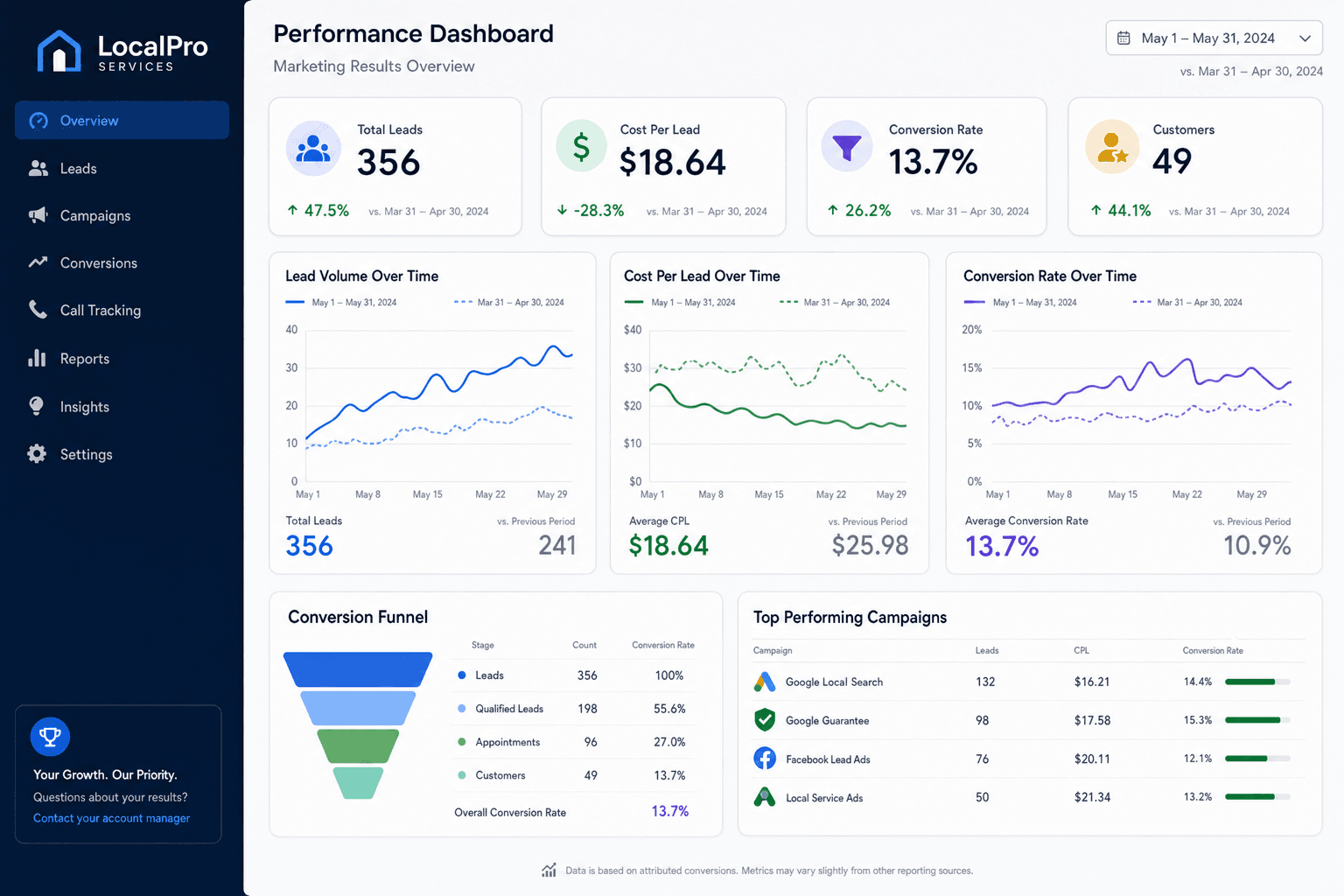
- Cost per lead
- $13
- Leads / month
- 300+
- Landing-page conversion
- 60%+
Find Out What Your Window Business Should Pay Per Booked Estimate
No obligation. We'll review your campaigns, attribution, and landing pages against your service area, season, and cost-per-sold-job target, and show you where the gaps are.
Sagum · January 2017 · St. George, Utah · 8+ years